
How to Maintain an Aluminum Jon Boat

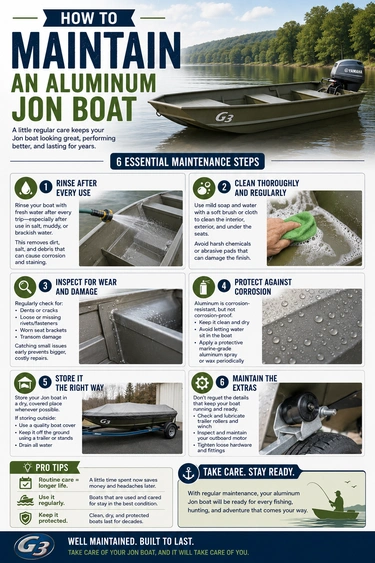
How to Maintain an Aluminum Jon Boat
Aluminum jon boats are popular for a reason. They are simple, rugged, easy to trailer, and useful for fishing, hunting, pond work, river exploring, and quiet mornings on the water. But even a tough aluminum hull needs the right care if you want it to stay reliable season after season.
Many shoppers start by asking whether aluminum jon boats are “low maintenance.” The honest answer is yes, compared with many larger recreational boats, but “low maintenance” does not mean “no maintenance.” A jon boat still needs regular cleaning, corrosion checks, outboard care, trailer inspections, battery maintenance, storage planning, and safety gear reviews.
For boaters in VA, PA, MD, WV, and nearby areas, seasonal use can be hard on a boat. Spring pollen, summer heat, shallow rivers, muddy ramps, fall leaves, cold-weather storage, and occasional brackish or saltwater use can all affect how you care for your aluminum jon boat.
MotoMember helps customers compare marine inventory, accessories, trailers, financing, service needs, and ownership questions across its dealership network in Virginia and Pennsylvania. Current availability can vary, so check MotoMember or contact the team before visiting.
Why Aluminum Jon Boat Maintenance Matters
An aluminum jon boat is built for utility, but maintenance protects three things: safety, performance, and resale value.
A clean hull moves more efficiently through the water. A properly serviced outboard starts more reliably. A dry, inspected bilge reduces corrosion risk. A maintained trailer makes every launch and ride home less stressful.
Routine maintenance also helps you catch problems early. Loose rivets, worn trailer bunks, damaged wiring, weak batteries, soft transom wood, cracked fuel lines, and corrosion around hardware are easier to fix when they are found before a long fishing trip or hunting weekend.
The good news is that most aluminum jon boat care is simple. A consistent checklist after each trip and a deeper inspection a few times per year can make ownership much easier.
Rinse and Clean the Boat After Every Use
The most important habit is also the simplest: rinse the boat after use.
After you pull the jon boat from the water, rinse the hull, interior floor, transom area, trailer, bunks, winch, and outboard exterior. This is especially important after muddy water, brackish water, saltwater, or any ramp where the trailer was submerged in dirty conditions.
Discover Boating recommends regular cleaning and year-round maintenance as part of basic boat ownership, including care for the hull, interior surfaces, engine, trailer, and seasonal checklists.
Use Mild Cleaners
Use fresh water and a mild boat-safe soap. Avoid harsh household chemicals, abrasive pads, and acidic cleaners unless the product is specifically approved for aluminum boats.
Strong cleaners can discolor aluminum, damage painted or coated surfaces, or leave residue that affects hardware and accessories. If your jon boat has a painted finish, camo finish, decals, flooring, or vinyl seats, follow the manufacturer’s cleaning recommendations.
Remove Mud, Leaves, and Plant Debris
Mud and organic debris trap moisture. That moisture can sit against seams, rivets, fasteners, carpet, flooring, and storage areas.
After each trip, remove leaves, weeds, fishing line, bait containers, shell fragments, and trash. Pay special attention to the stern, under seats, around drain plugs, and anywhere water collects.
Keep the Boat Dry Between Trips
Aluminum handles water well, but long-term trapped moisture is still a problem.
After rinsing, let the boat drain completely. Remove the drain plug while the boat is parked, as long as the boat is stored in a way that allows water to escape. Tilt the trailer slightly so water flows toward the drain.
Open Compartments
Open storage lids, livewell lids, battery compartments, and seat boxes so air can circulate. Moisture trapped in closed compartments can lead to mildew, odor, electrical corrosion, and hardware issues.
Watch Carpet and Wood
Many aluminum jon boats use carpeted bunks on the trailer, carpeted interior panels, plywood decking, or wood-backed accessories. Wet carpet and wood can hold moisture against aluminum.
That matters because contact between aluminum and certain metals, including copper, can contribute to galvanic corrosion when moisture is present. One common caution in aluminum boat ownership is avoiding direct contact between aluminum and pressure-treated wood, because many pressure-treated woods contain copper compounds.
Inspect for Corrosion
Aluminum does not rust like steel, but it can corrode. Corrosion may show up as white powdery oxidation, pitting, bubbling under paint, stains around fasteners, or damage near dissimilar metals.
Common Corrosion Areas
Check these areas regularly:
- Around transom hardware
- Near stainless fasteners
- Around drain plugs
- Under wet carpet or mats
- Around battery boxes
- Near trolling motor mounts
- Around trailer bunks
- Under aftermarket accessories
- Near welds, seams, and rivets
Galvanic corrosion can occur when dissimilar metals are electrically connected in the presence of an electrolyte, such as water. Aluminum boat owners should be especially careful when adding hardware, brackets, wiring, or accessories that contact the hull.
Avoid Mixing Metals Carelessly
When installing accessories, use marine-grade hardware and proper isolation materials where needed. Nylon washers, sealants, mounting pads, and manufacturer-recommended fasteners can help reduce direct metal-to-metal contact.
Do not guess when drilling into an aluminum hull or transom. Our team can help you compare accessory options, mounting locations, and service considerations before adding a trolling motor, fish finder, lights, storage boxes, rod holders, anchor system, or duck blind hardware.
Check Rivets, Welds, and Seams
Jon boats may be riveted, welded, or built with a combination of construction methods depending on the model. Either way, inspections matter.
Look for weeping seams, loose rivets, cracked welds, bent chines, dents, or areas where the hull flexes more than expected. A small leak may not seem urgent, but water intrusion can become a bigger issue over time.
Simple Leak Check
After the boat is clean and dry, inspect the inside hull after a trip. If water appears in the bilge or under the floor, try to identify where it is entering. Common sources include the drain plug, fittings, livewell plumbing, transom bolts, or hull damage.
Avoid filling the boat with large amounts of water on land unless the manufacturer or service professional recommends it. Water weight can stress the hull, trailer, and support points.
Maintain the Drain Plug and Bilge Area
The drain plug is small, but it is one of the most important pieces of equipment on a jon boat.
Inspect the plug for cracks, dried rubber, stripped threads, corrosion, or poor fit. Keep a spare plug in the boat. Many experienced boaters keep one in the tow vehicle, too.
Clean the bilge area so water can flow freely to the drain. If your jon boat has a bilge pump, test it before each trip and inspect the wiring, hose, outlet, and float switch.
Take Care of the Outboard Motor
A jon boat is only as dependable as its motor. Whether you run a small tiller outboard, a larger package motor, or a specialized shallow-water setup, regular engine care is essential.
Discover Boating notes that many boat owners rely on professional service for annual maintenance tasks such as engine oil changes, lubrication, winterization, and spring commissioning.
After Each Trip
After each outing, visually inspect the outboard. Look for fishing line around the prop, damaged blades, loose hardware, leaking fluids, weeds in the intake, and any new vibration or starting issue.
If the motor was used in saltwater or brackish water, follow the manufacturer’s flushing instructions. Use the correct flushing method for your specific motor.
Fuel System Care
Old fuel causes many small-engine headaches. Use fresh fuel, store it properly, and follow the outboard manufacturer’s guidance on fuel stabilizer, ethanol content, and storage.
Inspect fuel lines, primer bulbs, portable tanks, caps, vents, and fittings. Replace cracked, hardened, or leaking fuel components before they leave you stranded.
Propeller Inspection
The propeller takes abuse in shallow water. Rocks, stumps, sandbars, oyster beds, and submerged debris can bend, chip, or gouge the prop.
A damaged prop can reduce performance and create vibration. If you notice slower acceleration, unusual noise, or steering changes, inspect the prop and lower unit.
Maintain the Trolling Motor and Battery
Many aluminum jon boats are used for fishing, which means trolling motors, batteries, chargers, and wiring need attention.
Battery Maintenance
Keep batteries charged, clean, and secured. Loose batteries can move in rough water or while trailering. Corroded terminals can cause weak performance or intermittent power.
Use a marine battery box or tray, secure the battery properly, and inspect terminals for corrosion. Follow the battery manufacturer’s charging and storage instructions.
Wiring and Connections
Check wiring for chafing, loose connections, cracked insulation, and corrosion. Make sure wires are supported and protected from sharp aluminum edges.
If you add electronics, lights, pumps, or a trolling motor, use properly rated marine wiring, fuses, breakers, and connectors. Poor wiring can cause frustrating electrical problems and safety risks.
Protect the Transom
The transom carries the outboard, absorbs thrust, and supports hardware. It deserves regular attention.
Inspect the transom for flex, cracks, loose bolts, water intrusion, soft wood, corrosion around hardware, and damaged sealant. If the boat has a wood-core transom, moisture protection is especially important.
Do not ignore movement around the motor mount. If the transom flexes more than it should, stop using the boat until it is inspected.
Care for the Trailer
A reliable jon boat still needs a reliable trailer. Trailer maintenance is easy to overlook because the boat gets most of the attention.
Rinse the Trailer
Rinse the trailer after every launch, especially after saltwater, brackish water, mud, or winter road salt exposure. Pay attention to the axle, leaf springs, hubs, lights, winch, coupler, safety chains, and bunks.
Check Tires and Bearings
Before each trip, inspect tire pressure, tread, sidewalls, lug nuts, and the spare tire. Trailer tires can age out before they wear out, especially when the trailer sits outside.
Wheel bearings are critical. Listen for noise, feel for heat after towing, and service bearings according to the trailer manufacturer’s schedule.
Inspect Bunks and Rollers
Trailer bunks should support the hull correctly. Worn carpet, exposed staples, loose brackets, or rotted boards can damage the bottom of an aluminum boat.
If replacing bunk boards, be careful with material choice. Avoid direct contact between aluminum and copper-treated wood, and use proper carpet or isolation materials.
Store Your Jon Boat Correctly
Good storage prevents many problems.
Store the boat covered, tilted for drainage, and ventilated. Avoid trapping moisture under a tight cover with no airflow. A breathable marine cover is usually better than a tarp that sags, leaks, and holds water.
Outdoor Storage
If storing outside, keep the bow raised slightly so rainwater drains out. Remove the plug. Support the cover so water and snow do not pool.
Check the boat after heavy storms. A cover full of water can stretch, tear, or add unnecessary weight.
Winter Storage
Before winter, clean the boat, dry it thoroughly, stabilize or remove fuel as recommended, service the outboard, charge and store batteries properly, and protect electronics.
Cold weather can damage neglected batteries, fuel systems, pumps, and plumbing. If your jon boat has a livewell, bilge pump, or washdown system, make sure water is drained before freezing temperatures arrive.
Keep Safety Gear Current
Maintenance is not only about the hull and motor. It also includes safety equipment.
The U.S. Coast Guard states that recreational vessels must have a Coast Guard-approved wearable life jacket for each person onboard, and child life jacket rules may vary by state.
For Virginia boaters, the Virginia Department of Wildlife Resources provides required equipment guidance covering life jackets, fire extinguishers, sound-producing devices, engine cut-off switches, visual distress signals, and navigation lights.
Pennsylvania’s Fish and Boat Commission states that all boats must have a good, serviceable, USCG-approved life jacket onboard for each person, and boats 16 feet and over must also carry an immediately available throwable device.
Maryland DNR states that children under 13 must wear a USCG-approved life jacket while underway on recreational vessels under 21 feet on Maryland waters.
Because rules can vary by state, waterway, boat length, and equipment, check the official agency guidance for where you boat.
Safety Gear Checklist
Before each trip, confirm you have:
- Proper life jackets for every passenger
- Throwable flotation device if required
- Fire extinguisher if required
- Sound-producing device
- Navigation lights if boating near dark
- Anchor and line
- Paddle or emergency propulsion
- First-aid kit
- Phone or marine communication option
- Drain plug
- Basic tools
- Spare fuses
- Registration documents
- Engine cut-off switch lanyard when applicable
The U.S. Coast Guard Auxiliary also offers Vessel Safety Checks, which are free inspections that can be performed at your boat, including at a driveway or dock.
Aluminum Jon Boat Maintenance Schedule
A simple schedule makes maintenance easier.
After Every Trip
Rinse the boat, trailer, and outboard. Drain water. Remove trash and weeds. Check the prop. Open compartments to dry. Plug in the battery charger if needed.
Monthly During Boating Season
Inspect rivets, welds, seams, wiring, trailer lights, tire pressure, battery terminals, fuel lines, and safety gear. Clean the boat more thoroughly if it has been sitting outside.
Mid-Season
Service the trailer bearings if needed. Inspect bunks. Check the outboard’s service needs. Review electronics mounts, trolling motor hardware, and accessories.
End of Season
Deep clean the boat. Service or winterize the outboard. Stabilize fuel as recommended. Charge and store batteries. Cover the boat. Protect it from freezing water, rodents, leaves, and snow load.
Mistakes to Avoid
Aluminum jon boats are forgiving, but a few mistakes can shorten their lifespan.
Do not store the boat full of water. Do not leave wet gear, carpet, decoys, or life jackets sealed inside for months. Do not drill into the hull without understanding what is behind the surface. Do not mount accessories with mismatched hardware. Do not ignore small leaks. Do not assume the trailer is fine just because the boat floats.
Another common mistake is buying accessories before thinking through the whole setup. A trolling motor, battery, fish finder, anchor system, lighting kit, storage box, and trailer upgrade can all affect weight, balance, wiring, and usability.
MotoMember Expert Tip
Before choosing accessories or making modifications, think about how you actually use your jon boat.
A fishing setup may need a trolling motor, electronics, rod storage, and a stable casting area. A duck hunting setup may need open floor space, concealment options, decoy storage, shallow-water capability, and easy cleanup. A utility setup may need durability, simple seating, and trailer convenience.
Our team can help you compare jon boat layouts, trailers, Yamaha outboard options, G3 models, storage needs, batteries, service requirements, and accessories before you start drilling holes or adding weight.
Call to Action
Your aluminum jon boat headquarters starts at MotoMember.
Explore current marine inventory, compare new and used options, ask about G3 jon boat availability, and talk with the MotoMember team about outboards, trailers, accessories, financing, trade-ins, and service support.
Visit MotoMember, explore financing options, or contact the team at a nearby MotoMember location in Virginia or Pennsylvania.
Large selection. Straightforward shopping. Real powersports and marine expertise.
Stop dreaming. Start riding—and boating—with MotoMember.
Conclusion
Maintaining an aluminum jon boat does not have to be complicated. The key is consistency.
Rinse it after use. Keep it dry. Watch for corrosion. Inspect seams, rivets, hardware, wiring, batteries, outboard components, and trailer parts. Store it correctly between seasons. Keep safety gear current for the waters where you boat.
For riders, anglers, hunters, and weekend boaters across VA, PA, MD, WV, and nearby areas, a well-maintained jon boat can deliver years of simple, useful, low-stress time on the water.
FAQ
How often should I clean my aluminum jon boat?
Rinse your aluminum jon boat after every use, especially after muddy, brackish, or saltwater conditions. Do a deeper cleaning several times per season and before long-term storage.
Can aluminum jon boats corrode?
Yes. Aluminum does not rust like steel, but it can corrode, especially around dissimilar metals, trapped moisture, battery areas, wet carpet, and hardware. Regular rinsing, drying, and inspections help prevent problems.
Should I wax or polish an aluminum jon boat?
It depends on the finish. Bare aluminum, painted aluminum, and camo-coated boats may require different products. Use marine-safe products approved for your boat’s surface, and follow manufacturer recommendations.
What is the best way to store a jon boat outside?
Store it covered, ventilated, and tilted so water drains out. Remove the drain plug, support the cover to prevent pooling, and check the boat after storms or snow.
Does MotoMember service jon boats and marine equipment?
MotoMember supports powersports and marine customers with inventory guidance, accessories, financing, trade-ins, and service resources. Contact the team to discuss your specific boat, outboard, trailer, and maintenance needs.