
How to Prepare Your ATV or UTV for Winter Storage

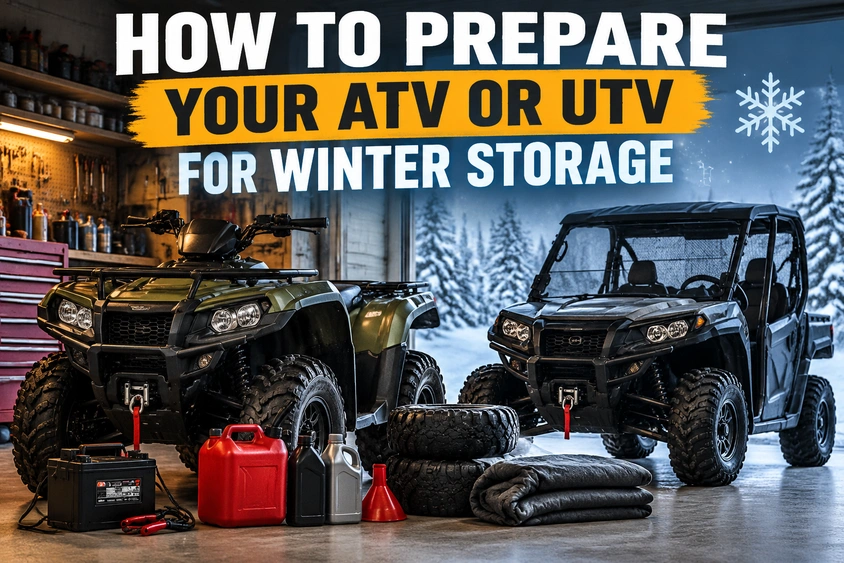
Proper ATV winter storage takes more than parking the vehicle and covering it. Fuel, battery care, fluids, tires, lubrication, cleaning, corrosion prevention, rodent protection, and the storage environment can all affect how easily your ATV or UTV returns to service in spring.
At MotoMember, we recommend following the storage procedure for your exact make, model, and year instead of relying on one universal routine. Our service teams support riders from Purcellville and Manassas, Virginia, our Select location in Purcellville, and Chambersburg, Pennsylvania.
What Should ATV or UTV Winterization Include?
If your vehicle will sit unused for several months, we recommend:
-
Washing and completely drying it
-
Completing repairs that should not wait until spring
-
Preparing the fuel system according to the manufacturer
-
Changing oil or other fluids if service is due
-
Inspecting the air filter
-
Preparing and maintaining the battery
-
Lubricating specified points
-
Inspecting tires and pressure
-
Protecting against moisture, corrosion, and rodents
-
Using a dry, ventilated storage location
-
Following the owner's manual for the exact vehicle
Polaris ATV storage guidance and Can-Am ATV and side-by-side winterization guidance cover many of these areas, but some instructions differ. The owner's manual for your vehicle should take priority over a generic checklist.
Decide Whether You Are Storing It or Using It Through Winter
Not every ATV or side-by-side needs to be put away. Some owners continue using a UTV for property work, hunting, snow removal, or winter riding.
If you plan to keep using the vehicle, we recommend a cold-weather maintenance plan rather than full long-term storage. If it will remain parked for weeks or months, complete the storage process before the inactive period begins.
Clean and Dry the Vehicle Before Storage
Do not leave mud, vegetation, road grime, or moisture on the vehicle all winter.
We recommend cleaning the undercarriage, suspension areas, wheels, cargo bed, skid plates, radiator area, and wheel wells, then allowing everything to dry completely.
Polaris cautions owners not to direct high-pressure water at sensitive components such as bearings, seals, electrical parts, switches, and fuel-system components. Can-Am also recommends cleaning and fully drying the vehicle before storage.
Handle Repairs and Service Before Spring
If you already know the vehicle needs brakes, a tire, belt work, battery service, a leaking seal, or scheduled maintenance, we would rather address it before storage than discover the same problem on your first spring ride.
Our service department handles inspections, oil and fluid changes, filters, tires, batteries, radiator service, repairs, accessory installation, and seasonal preparation.
Winterization is a practical time to combine storage preparation with maintenance that is already due.
Prepare the Fuel System Correctly
Fuel preparation is one area where one-size-fits-all advice can cause problems.
Polaris storage guidance for many ATVs includes treating fuel with an approved stabilizer and circulating treated fuel through the system. Can-Am also discusses fuel treatment as part of winter storage.
We do not recommend automatically draining or filling every tank based on a generic checklist. Check the owner's manual, use the specified product and amount, and follow the procedure for your exact ATV or UTV.
Check Oil, Fluids, and the Air Filter
If an oil change is due, completing it before storage can help you start the next season with current maintenance.
Depending on the vehicle, we may also inspect transmission or gearcase fluid, coolant, brake fluid, and the air filter. Service intervals, fluid specifications, capacities, and procedures vary by model.
We recommend using the vehicle's maintenance schedule rather than assuming every ATV and UTV needs the same service.
Give the Battery a Winter Plan
A neglected battery is one of the most common reasons a stored vehicle will not start in spring.
For extended storage, manufacturer guidance may call for removing the battery, fully charging it, storing it in a cool and dry location, monitoring charge, or using an appropriate maintainer.
Battery type matters. Follow the battery and vehicle manufacturer's instructions and use a compatible charger or maintainer.
Inspect Tires, Lubrication, and Corrosion Protection
Inspect tires for damage, cracking, abnormal wear, pressure loss, or punctures. Use the tire pressure specified for your vehicle.
Also check the maintenance chart for lubrication points such as suspension fittings, cables, joints, axles, chains, or other applicable components.
If the manufacturer recommends supporting the vehicle during long storage, follow its procedure rather than copying another machine's pressure or lifting recommendation.
Protect Against Moisture and Rodents
Whenever possible, store an ATV or UTV in a dry, ventilated garage, barn, or shed.
Polaris warns that non-breathable covers can trap condensation. Can-Am recommends indoor storage when possible and suitable protection if outdoor storage cannot be avoided.
Rodents can damage wiring, insulation, and air intakes. Inspect the storage area and follow model-specific guidance if openings need protection. Remember to remove any temporary blockage before startup.
Do Not Start a Stored Vehicle Just to Let It Idle
Occasionally starting a properly stored ATV or UTV for a few minutes is not automatically helpful.
Some manufacturer procedures specifically advise against starting the engine during storage after the vehicle has been prepared correctly. We recommend following one complete model-specific procedure rather than combining conflicting tips from different vehicles.
What Should You Check When Spring Returns?
Before the first ride, inspect for leaks, rodent damage, tire condition, brakes, fluid levels, lights, controls, battery condition, and unobstructed intake and exhaust areas.
Reconnect the battery correctly and follow the manufacturer's return-to-service procedure. If anything looks questionable, address it before riding.
Schedule ATV or UTV Seasonal Service With MotoMember
If your ATV or UTV is due for maintenance before winter storage, we can help prepare it before it sits for the season.
Our technicians provide inspections, fluid and filter service, batteries, tires, repairs, OEM replacement parts, and seasonal preparation across our Virginia and Pennsylvania locations.
Our parts and accessories department can also help identify compatible maintenance parts, covers, and accessories.
You can also find the MotoMember location nearest you to plan service before storage.
FAQs
Should I Change My ATV Oil Before Winter Storage?
If the oil change is due, we recommend completing it before long-term storage. Follow the maintenance schedule and storage instructions for your exact model.
Should I Drain the Fuel From My ATV for Winter?
Not automatically. Fuel-storage procedures vary by manufacturer and model. Follow your owner's manual rather than applying one drain-or-fill rule to every ATV or UTV.
Should I Remove My ATV Battery During Winter Storage?
Some manufacturers recommend battery removal for extended storage. Follow the instructions for your vehicle and battery type, including the correct charging or maintenance procedure.
Is Indoor ATV Storage Better Than Outdoor Storage?
Generally, yes. Indoor storage provides better protection from precipitation and changing weather. If outdoor storage is unavoidable, use the type of cover and ventilation recommended by the manufacturer.
Can MotoMember Help Prepare My ATV or UTV for Storage?
Yes. Our service department offers inspections, fluids, filters, battery service, repairs, wash/detail work, and seasonal preparation. Contact the MotoMember location nearest you to discuss your vehicle and storage needs.