
What Size Fishing Boat Do You Need?

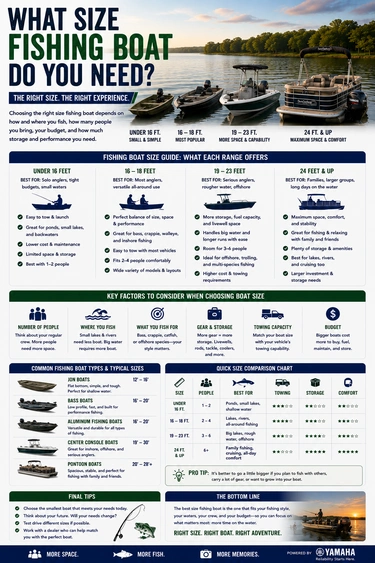
What Size Fishing Boat Do You Need?
Choosing the right fishing boat size is one of the biggest decisions a buyer can make. Too small, and the boat may feel cramped once you add rods, tackle, batteries, a cooler, safety gear, and passengers. Too large, and the boat may be harder to tow, store, launch, clean, and use as often as you planned.
So, what size fishing boat do you need?
The answer depends on where you fish, how you fish, who comes with you, what you tow with, and how much comfort you expect on the water. A solo river angler may be happiest in a smaller aluminum boat or jon boat. A bass angler may want a mid-size fishing boat with casting space and storage. A family fishing on lakes and reservoirs may be better served by a larger aluminum fishing boat or fishing pontoon.
For shoppers in Virginia, Pennsylvania, Maryland, West Virginia, and nearby areas, MotoMember can help compare fishing boats, pontoons, Yamaha-powered packages, trailers, accessories, financing, trade-ins, and service support. MotoMember lists new powersports and marine inventory, including marine, outboard motor, and trailer categories, and serves customers through locations in Purcellville, Manassas, and Chambersburg.
Quick Answer: The Right Fishing Boat Size
There is no single right fishing boat size for every angler. A good starting point is to match the boat to your most common use.
| Common Use | Typical Size Direction |
|---|---|
| Solo fishing, ponds, creeks, small rivers | Smaller aluminum or jon boat |
| Two anglers, small lakes, light gear | Small to mid-size aluminum fishing boat |
| Bass, crappie, catfish, mixed freshwater | Mid-size aluminum fishing boat |
| Larger lakes and reservoirs | Mid-size to larger fishing boat |
| Family fishing and cruising | Larger aluminum boat or fishing pontoon |
| Comfort-first lake days | Fishing pontoon |
Use these categories as a planning tool, not a rule. Hull design, layout, width, storage, seating, motor setup, trailer fit, and passenger capacity can matter as much as length.
The best boat is not always the biggest boat. It is the boat that fits your real fishing life.
Start With Where You Fish Most
Your favorite water should guide the size decision before anything else.
A boat that works beautifully on a calm small lake may feel limited on a windy reservoir. A larger boat that feels comfortable on open water may become frustrating on a tight river ramp. A pontoon that is perfect for family lake days may not make sense if most of your fishing happens in shallow creeks.
Before choosing a model, think about the water you fish most often, not the water you might visit once or twice a year.
Small Lakes and Ponds
For small lakes and ponds, many anglers do not need a large boat. A smaller aluminum fishing boat, jon boat, or compact fishing setup can be easier to tow, easier to launch, and easier to store.
This is especially helpful for first-time buyers. A manageable boat can build confidence at the ramp and reduce stress when fishing alone.
The tradeoff is space. If you carry several rods, multiple tackle boxes, a trolling motor battery, electronics, a cooler, and a fishing partner, a very small boat can feel crowded fast.
Rivers and Creeks
River anglers should be careful about buying too much boat. Current, shallow sections, gravel bars, tight ramps, debris, and changing water levels can make size a disadvantage.
Smaller aluminum boats and jon boats are popular because they are practical, durable, and easier to manage in tighter water. G3 describes its Gator Tough Jon Series as all-welded aluminum jon boats built for fishing, hunting, utility use, and shallow-water confidence, with package jon options shown in 20-foot to 17-foot lengths and duck boat options shown in smaller size ranges.
If you fish rivers often, focus on control, launch ease, shallow-water practicality, and safe movement around the boat. Bigger is not always better in current.
Reservoirs and Bigger Lakes
Reservoirs can change quickly. Wind, boat traffic, longer runs, open water, and changing weather can make comfort and confidence more important.
For reservoir fishing, many shoppers look at mid-size or larger fishing boats with more seating, storage, electronics space, livewell access, and freeboard. A larger fishing pontoon may also make sense if your reservoir days include family, guests, coolers, shade, and relaxed fishing.
The key is balance. You want enough boat for your normal water, but not so much that towing, storing, and launching become a chore.
Match Boat Size to Your Fishing Style
The right fishing boat size also depends on how you fish.
A bass angler who stands and casts all day needs room to move. A crappie angler may care more about seating, rod holders, and electronics. A catfish angler may need open deck space, anchors, rod holders, and easy cleanup. A family angler may need space for people who are not fishing at all.
Bass Fishing
Bass anglers usually benefit from a boat with enough length and width for casting decks, rod storage, tackle access, trolling motor control, and two anglers fishing comfortably.
A very small boat may work for ponds and protected water, but it can feel cramped when you add multiple rods, tackle boxes, a net, electronics, and a second angler. A mid-size aluminum fishing boat can often provide a better balance for bass fishing on lakes, rivers, and reservoirs.
When comparing sizes, stand on the bow and picture the boat fully loaded. If you do not have room to cast, work the trolling motor, and move around safely, the boat may be too small for your fishing style.
Crappie and Panfish
Crappie and panfish anglers often fish seated, use rod holders, work brush piles or bridge pilings, and rely on electronics. That means the ideal size is not only about length. It is also about layout.
A compact boat can work well for one or two anglers. A larger boat may be better if you use multiple rods, carry live bait, bring family, or spend long days on the water.
Pay attention to seat placement, livewell access, rod storage, and how easily passengers can move without stepping over gear.
Catfish
Catfish anglers often need more open space than they expect. Heavy rods, bait, anchors, nets, coolers, lights, rod holders, and tackle can fill a boat quickly.
If you fish rivers, a manageable aluminum boat may still be the best fit. If you fish lakes and reservoirs with friends or family, a larger aluminum boat or fishing pontoon may provide the space and stability you want.
For catfish buyers, cleanup should also influence size and layout. More room can make the boat easier to work in, but a simpler layout may be easier to rinse and maintain.
Family Fishing
Family fishing usually pushes buyers toward more space. Kids, spouses, grandparents, friends, coolers, towels, snacks, bags, and extra life jackets all take up room.
A boat that feels perfect for one serious angler may not feel comfortable for a family. Fishing pontoons can be especially appealing for this reason. They provide deck space, seating, storage, and a more relaxed environment for passengers who may not fish all day.
If your boat will be used for fishing and family cruising, size up enough to make passengers comfortable without buying more boat than you can tow and store.
Think About Passenger Count
Your regular passenger count matters more than your maximum passenger count.
Many shoppers say they want room for six people, but most of their trips involve one or two anglers. Others buy a small boat for solo fishing and quickly realize the family wants to come along every weekend.
Ask yourself who will ride most often. Then size the boat around that normal group.
One Angler
Solo anglers can often use a smaller boat successfully. The advantages are simple: easier towing, easier launching, lower storage demands, and less cleanup.
However, solo anglers still need safe room for rods, tackle, batteries, anchor, life jackets, and basic tools. Do not choose a boat so small that gear management becomes unsafe or frustrating.
Two Anglers
Two anglers usually need more room than first-time buyers expect. Both people need space to cast, sit, move, store rods, and access tackle.
A small boat may work for casual trips, but a mid-size fishing boat often feels better for regular two-person fishing. Width and layout become very important here.
Family or Group Trips
For families and groups, seating and movement matter as much as fishing features. A larger aluminum boat, deep-V style fishing boat, or fishing pontoon may be a better choice.
Think about the least experienced person on board. Kids and newer passengers need clear walking paths, secure seating, easy boarding, and access to life jackets.
Boat Length Is Only Part of the Size Question
Length gets most of the attention, but it is not the only measurement that matters.
Two boats of similar length can feel completely different on the water. Width, hull shape, deck layout, storage, seating, console placement, and pontoon design can all change how large the boat feels.
Width and Stability
A wider boat often feels more stable and gives anglers more room to move. This can matter for casting, landing fish, moving around passengers, and carrying gear.
Stability is especially important if kids, older passengers, or newer anglers will be on board. It also matters if you stand and cast for long periods.
Layout and Usable Space
Usable space matters more than raw length. A boat with smart storage, open casting areas, and efficient seating may feel larger than a longer boat with an awkward layout.
Before choosing a model, walk through the boat as if you are fishing. Open storage hatches. Stand where you would cast. Sit where passengers will sit. Picture rods, tackle, coolers, and safety gear on board.
Hull Style
A jon boat, modified-V fishing boat, deep-V fishing boat, and pontoon all feel different even at similar lengths.
Jon boats can be simple and practical for rivers and shallow water. Modified-V boats can work well for mixed freshwater fishing. Deep-V boats may feel better on bigger lakes and reservoirs. Pontoons provide deck space and comfort for family-friendly lake use.
The right size depends on the hull style as much as the number on the spec sheet.
Towing and Storage Can Set Your Real Limit
A fishing boat has to fit your life on land before it can work on the water.
Many buyers focus on water performance first and then discover the boat is difficult to store, tow, or launch. That can reduce how often the boat gets used.
Tow Vehicle
Your tow vehicle should be part of the conversation early. Do not assume a vehicle can comfortably tow a boat package just because it can move it down the road.
You need to consider the full boat, motor, trailer, batteries, fuel, accessories, and gear. Ask the MotoMember team to help you think through the boat-and-trailer package, not just the boat length.
Storage Space
Storage length is not the same as boat length. The trailer tongue, outboard position, transom saver, spare tire, guide posts, and accessories may all add space.
Measure your garage, driveway, storage unit, or marina space before deciding. A boat that barely fits can become frustrating after a few trips.
Launch Confidence
A smaller boat that you can launch confidently may be better than a larger boat that makes every ramp visit stressful.
This is especially true for first-time buyers and solo anglers. If you plan to launch alone, tell the dealership team. Launching and retrieving should influence size, trailer setup, and boat layout.
Safety Requirements Can Change With Size
As boat size changes, equipment requirements can change too. BoatUS notes that U.S. Coast Guard minimum equipment requirements are organized by vessel length categories, including boats less than 16 feet, 16 feet to less than 26 feet, 26 feet to less than 40 feet, and 40 feet to less than 65 feet.
BoatUS also explains that recreational boats must carry Coast Guard-approved personal flotation devices in good and serviceable condition and in the appropriate size for the intended user, with wearable PFDs readily accessible and throwable devices immediately available when required.
This does not mean one size is safer for everyone. It means safety planning should be part of the buying process.
Before choosing a fishing boat, ask about required and recommended safety gear for your boat size, state, passenger count, and intended water. Requirements can vary by boat type, length, engine, location, and use.
New vs. Used Fishing Boats by Size
Boat size matters whether you buy new or used.
A new boat may help you compare current layouts, trailer packages, motor pairings, and accessory options from the start. MotoMember’s new inventory page includes marine, outboard motor, and trailer categories, and current availability can vary by location, unit, model year, and equipment.
A used boat may help you manage upfront cost or find a package that already includes fishing accessories. MotoMember also lists pre-loved inventory categories, including marine and trailers when available.
When buying used, size affects inspection needs. Larger boats may have more systems, more seating, more wiring, more trailer components, and more accessories to evaluate. Smaller boats may be simpler, but condition still matters.
Always check the hull, transom, motor, trailer, tires, wiring, batteries, flooring, seats, livewell, electronics, title paperwork, and service history.
Do Not Buy for One Perfect Trip
One of the biggest fishing boat sizing mistakes is buying for a dream trip instead of normal use.
A buyer may choose a large boat because they imagine big reservoir days with friends. But if most trips are solo after work on a small lake, that boat may be more than they need.
Another buyer may choose a small boat to keep things simple, then realize the family wants to join every weekend. That boat may suddenly feel too small.
Think about your next 20 trips. Where will you launch? Who will come along? What gear will you carry? How far will you tow? How often will you fish alone?
The right size usually becomes clearer when you focus on the trips you will actually take.
MotoMember Expert Tip
When customers ask, “What size fishing boat do I need?” our team usually starts with five questions:
Where will you fish most often?
How many people will usually be on board?
What species and techniques matter most?
What will you tow with?
Where will the boat be stored?
Those answers are more useful than choosing by length alone. A compact jon boat may be perfect for a solo river angler. A mid-size aluminum fishing boat may be ideal for bass, crappie, and catfish. A larger fishing pontoon may be the better choice for family lake days.
Bring your tow vehicle information, storage measurements, preferred fishing waters, normal passenger count, and must-have accessories when you visit. MotoMember can help you compare sizes, layouts, trailers, Yamaha power, financing, trade-ins, and service needs in a practical way.
Service and Ownership Support Matter
The right size boat should also be easy to maintain.
A larger boat may offer more comfort and space, but it may also require more cleaning, more storage planning, more trailer attention, and more seasonal prep. A smaller boat may be simpler, but it still needs routine care.
MotoMember’s service page lists support such as routine maintenance and inspections, oil, fluid, and filter changes, battery service, accessory installation, pickup and delivery, detailing, and seasonal prep.
That support can matter after the sale. As you use your boat, you may want to add electronics, upgrade batteries, install accessories, adjust trailer setup, or schedule seasonal service.
Call to Action
Your fishing boat headquarters starts at MotoMember.
Explore current MotoMember marine inventory, compare fishing boat sizes, ask about aluminum boats and fishing pontoons, and talk with the team about trailers, Yamaha-powered packages, accessories, financing, trade-ins, service, towing, and storage.
Current availability can vary, so check MotoMember inventory or contact the team before planning around a specific model, size, price, equipment package, or promotion.
Large selection. Straightforward shopping. Real powersports and marine expertise.
Stop dreaming. Start riding—and fishing—with MotoMember.
Conclusion
So, what size fishing boat do you need?
Choose a smaller boat if you fish solo, use tight ramps, explore rivers, tow with a smaller vehicle, or want simple ownership. Choose a mid-size fishing boat if you fish with one partner, carry more gear, and want a stronger balance of storage, casting space, and comfort. Choose a larger fishing boat or fishing pontoon if you bring family, fish bigger water, want more seating, or plan full-day lake and reservoir trips.
The best fishing boat size is not just about length. It is about usable space, stability, layout, safety, towing, storage, passenger count, and how you fish most often.
For anglers and families in VA, PA, MD, WV, and nearby areas, MotoMember can help you compare options side by side and choose a fishing boat size that fits your real life on and off the water.
FAQ
What is the best fishing boat size for beginners?
Many beginners do well with a manageable small to mid-size aluminum fishing boat or compact fishing pontoon. The right size should be easy to tow, launch, store, and control while still offering enough room for passengers, gear, and safety equipment.
Is a 16-foot fishing boat big enough?
A 16-foot fishing boat can be enough for many solo anglers or two-person trips on smaller lakes, rivers, and protected water. It may feel limited if you regularly bring family, carry lots of gear, or fish larger reservoirs.
What size fishing boat is best for a family?
Family buyers often prefer a larger aluminum fishing boat or fishing pontoon because seating, storage, shade, and open deck space become more important. The best size depends on passenger count, water type, tow vehicle, and storage space.
What size fishing boat is best for rivers?
River anglers often prefer smaller, manageable aluminum boats or jon boats because they can be easier to control, tow, launch, and use in shallow or tighter areas. Conditions vary, so match the boat to your ramps, current, depth, and normal gear load.
Can MotoMember help me choose the right size fishing boat?
Yes. MotoMember can help shoppers compare fishing boat sizes, aluminum boats, fishing pontoons, trailers, Yamaha-powered packages, accessories, financing, trade-ins, and service support across VA, PA, MD, WV, and nearby areas.