
Trolling Motor Setup Guide for Fishing Boats

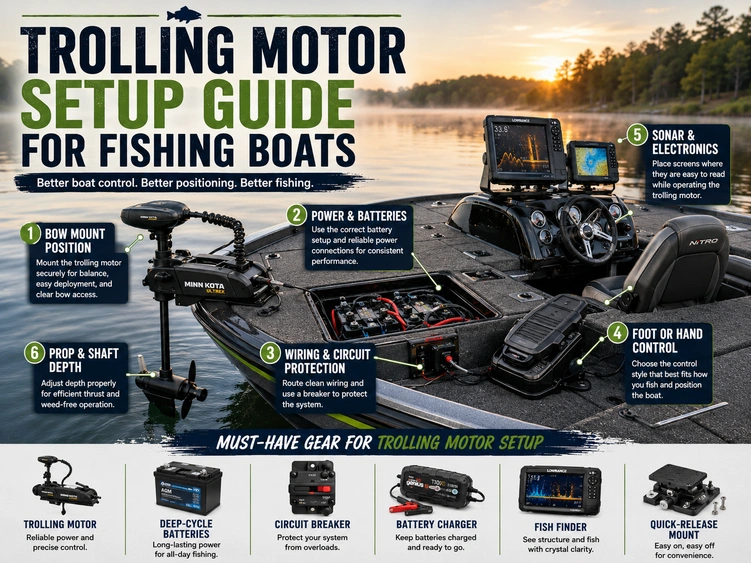
Trolling Motor Setup Guide for Fishing Boats
A good trolling motor setup can completely change how your fishing boat feels on the water. It helps you move quietly, hold position, work a shoreline, control your drift, and fish more efficiently without constantly firing up the outboard.
But getting the setup right takes more than buying a trolling motor and bolting it to the boat. You need the right mount location, shaft length, voltage system, battery setup, wiring plan, charger, controls, and fishing features for the way you actually use your boat.
For anglers in Virginia, Pennsylvania, Maryland, West Virginia, and nearby areas, MotoMember helps shoppers compare fishing boats, G3 aluminum boats, SunCatcher pontoons, marine accessories, service support, financing, and trade-ins. MotoMember’s inventory pages include new and pre-loved powersports and marine categories, with availability changing by location, season, and model.
This trolling motor setup guide will walk through the key decisions before you install, upgrade, or shop for a fishing boat that is already trolling-motor-ready.
Why Trolling Motor Setup Matters
A trolling motor is one of the most useful fishing upgrades on many boats. It gives you low-speed boat control while casting, jigging, trolling, drifting, or positioning near docks, points, grass lines, brush piles, ledges, and shoreline cover.
The mistake many shoppers make is focusing only on thrust. Thrust matters, but so does shaft length, mounting style, battery capacity, control type, deck layout, wiring quality, and how the trolling motor works with your electronics.
A poorly matched trolling motor may cavitate, lose bite in choppy water, drain batteries too quickly, interfere with storage compartments, or make the bow feel cluttered. A smart setup feels natural, balanced, and easy to use.
Before choosing a model, consider your boat type, typical water, fishing style, passenger load, battery space, and whether you want advanced features like GPS anchoring, route tracking, heading hold, or integrated sonar.
Start With the Boat: What Are You Setting Up?
The best trolling motor setup starts with the boat, not the motor.
A lightweight jon boat used on ponds and small lakes does not need the same setup as a deep-V aluminum boat used in wind and current. A bass-style fishing boat has different needs than a family pontoon with fishing seats. A center-console aluminum boat may need a different bow-mount solution than a tiller layout.
G3 Boats describes its lineup as aluminum fishing boats built for anglers, families, and outdoor adventures, including Sportsman, Angler V, SunCatcher pontoon, and Gator Tough-style options. MotoMember also provides G3-focused buyer guidance for shoppers comparing jon boats, aluminum fishing boats, SunCatcher pontoons, boat-motor-trailer packages, trolling motor options, accessories, service support, financing, and trade-ins.
Before you choose a trolling motor, write down:
-
Boat length and hull style
-
Bow height above the water
-
Typical passenger and gear load
-
Fishing conditions, including wind and current
-
Battery storage location
-
Whether the boat has existing wiring
-
Whether you want bow mount or transom mount
-
Whether you fish seated, standing, solo, or with partners
Our team can help you compare these setup details before you buy the boat, not after you discover the layout does not fit your fishing style.
Bow Mount vs. Transom Mount
The first major trolling motor decision is mounting location.
Bow-Mount Trolling Motors
A bow-mount trolling motor is usually the preferred choice for anglers who want precise control while fishing. Pulling the boat from the bow often gives better boat positioning than pushing from the stern, especially when working shorelines, docks, points, or structure.
Bow mounts are common on bass boats, aluminum fishing boats, multi-species boats, and many serious fishing setups. They can be controlled by foot pedal, hand control, remote, or app-based systems depending on the model.
A bow mount is usually best if you:
-
Cast from the front deck
-
Use a bow-mounted fish finder
-
Fish shorelines or cover
-
Need strong boat control in wind
-
Want GPS anchoring or advanced positioning
-
Fish bass, crappie, walleye, striper, or multi-species patterns
The biggest considerations are bow space, deck strength, storage hatch clearance, deployment room, and whether the shaft can stow without blocking seats or walkways.
Transom-Mount Trolling Motors
A transom-mount trolling motor attaches at the rear of the boat. It is often simpler, more affordable, and easier to install on small jon boats, utility boats, pond boats, and lightweight fishing setups.
Transom mounts are practical when you want basic electric propulsion or low-speed control without building out a full bow deck system. They are also useful for compact boats where the bow does not have the structure or room for a larger mount.
A transom mount is usually best if you:
-
Fish small lakes, ponds, and protected water
-
Own a simple jon boat or utility boat
-
Want a lower-complexity setup
-
Do not need GPS anchoring features
-
Prefer stern operation
-
Want easy removal and storage
The tradeoff is control. A stern-mounted motor may not position the boat as precisely for casting as a bow-mounted motor.
Choosing the Right Shaft Length
Shaft length is one of the most important trolling motor setup details. If the shaft is too short, the prop may come too close to the surface, especially in waves or when weight shifts in the boat. If the shaft is too long, the motor may be awkward to stow, deploy, or use in shallow water.
Minn Kota recommends measuring carefully and keeping the motor section properly submerged; its shaft-length guidance says the center of the motor section should generally be at least 12 inches below the waterline, with extra length recommended for rough water or some hand-control bow-mount setups.
For bow-mount motors, measure from the bow mounting surface down to the waterline. For transom-mount motors, measure from the transom mounting point down to the waterline. Then compare your measurement with the manufacturer’s current shaft-length chart for the motor you are considering.
MotoMember Setup Advice
When in doubt, do not guess from the boat’s length alone. Two boats of the same length can need different shaft lengths because of bow height, deck design, hull shape, passenger load, and where batteries are stored.
For anglers in VA, PA, MD, and nearby areas who fish windy reservoirs, rivers, or open lakes, shaft length matters even more. A motor that works well on calm water may ventilate or lose bite when the bow rises and falls in chop.
Choosing Thrust and Voltage
Thrust is the pushing or pulling force of the trolling motor. More boat weight, more wind, stronger current, and heavier fishing loads generally call for more thrust.
Voltage is the electrical system the motor uses. Many trolling motors are built around 12V, 24V, or 36V systems. The right choice depends on the motor model, thrust range, boat size, expected run time, and battery space.
A simple small-boat setup may use a 12V motor and one dedicated battery. A larger fishing boat may use a 24V or 36V system with multiple batteries. Higher-voltage systems can offer stronger performance and longer usable fishing time, but they also require more battery space, proper wiring, compatible charging, and more planning.
Do not mix and match voltage casually. The motor, batteries, charger, wiring, circuit protection, and plug system need to match the manufacturer’s requirements.
Battery Setup: Plan Before You Install
A trolling motor is only as useful as the battery system behind it. A strong motor with weak batteries will still disappoint.
Common setup questions include:
-
Where will the batteries fit?
-
Will the boat stay balanced?
-
Can the battery compartment ventilate properly?
-
Is there room for a charger?
-
Can wiring be routed safely?
-
Will the batteries be easy to inspect and maintain?
-
Are the batteries dedicated to the trolling motor?
For many fishing boats, it is best to use dedicated trolling motor batteries rather than pulling power from the starting battery. This helps protect the outboard starting system and keeps electronics, lights, and accessories from competing with the trolling motor.
Battery type also matters. Lead-acid, AGM, and lithium options may each have different charging, weight, monitoring, and compatibility considerations. Follow the battery manufacturer, trolling motor manufacturer, and charger manufacturer guidance before choosing a setup.
Garmin’s trolling motor battery management information notes that battery setup settings help calculate reported battery status, which is a useful reminder that the motor or control system needs to know what kind of battery system it is reading.
Wiring, Circuit Breakers, and Safety
Trolling motor wiring is not the place to cut corners. Undersized wiring, poor connections, missing circuit protection, or loose battery terminals can create performance issues and safety risks.
Minn Kota’s trolling motor wiring and battery guide states that an over-current protection device, such as a circuit breaker or fuse, must be used and that conductor gauge and circuit breaker sizing depend on the motor and wiring length. It also cautions that longer wire extensions may require a qualified marine technician.
That matters because trolling motors can draw heavy current. A small wiring mistake can cause voltage drop, reduced thrust, heat, breaker trips, or damaged components.
A good trolling motor wiring plan should include:
-
Proper marine-grade wire size
-
Correct voltage configuration
-
Manufacturer-approved circuit protection
-
Clean battery terminals
-
Secure cable routing
-
Protection from sharp edges
-
Strain relief near plugs and connectors
-
Waterproof or marine-rated components where appropriate
-
A charger matched to the battery type
The U.S. Coast Guard’s Boating Safety Division focuses on reducing recreational boating deaths, injuries, and property damage by improving boater knowledge and skills, which makes safe electrical setup and responsible operation part of the bigger ownership picture.
For most customers, the smartest move is to have a knowledgeable marine or dealership service team inspect the setup, especially when adding a bow mount, upgrading voltage, relocating batteries, or installing a new plug and breaker system.
Foot Pedal, Hand Control, or Remote?
Control style affects how the boat feels while fishing.
Foot Pedal Control
Foot pedal control is popular with bass anglers and anyone who casts constantly from the front deck. It lets you steer while keeping both hands free for fishing.
The advantage is immediate control. The disadvantage is that it takes deck space and may require a stable standing position.
Hand Control
Hand-control trolling motors are simple and intuitive. They are common on smaller boats, transom mounts, and some bow-mount setups.
The advantage is simplicity. The disadvantage is that you may need to take a hand off the rod to steer or adjust speed.
Remote and GPS Control
Remote-controlled trolling motors can be excellent for anglers who move around the boat, fish with partners, or want advanced features. Depending on the model, GPS-based systems may offer anchor-style positioning, heading hold, route functions, or integration with compatible electronics.
The advantage is flexibility. The disadvantage is added cost, setup complexity, and the need to understand the control system before relying on it in wind, current, or boat traffic.
Mounting Location and Deck Layout
A trolling motor should feel like part of the boat, not an afterthought.
Before mounting, check the bow deck carefully. Make sure the motor can deploy over the water without hitting rails, cleats, navigation lights, seats, lids, or electronics. Also make sure it can stow securely without blocking the driver’s view, passenger space, rod storage, or trailer winch area.
On aluminum fishing boats and jon boats, mounting plates may be needed depending on the bow design. On pontoons, the mount location must be planned around fencing, gates, deck structure, and fishing seat positions.
Many shoppers start by asking, “Can I add a trolling motor to this boat?” A better question is, “Can I add a trolling motor cleanly, safely, and in a way that fits how I fish?”
Matching the Trolling Motor to Fishing Style
Different anglers need different setups.
Bass Fishing
Bass anglers usually benefit from a bow-mount trolling motor with foot pedal or GPS control. The setup should prioritize quick steering, quiet operation, and clean bow-deck movement.
A recessed foot pedal tray, bow electronics, and organized rod storage can make the setup feel more natural, depending on the boat.
Crappie Fishing
Crappie anglers may want smooth low-speed control, front seating, electronics visibility, and excellent battery life. GPS anchoring can be useful when holding over brush piles or structure.
For spider rigging or slow presentations, fine speed adjustment matters more than raw power alone.
Catfish and River Fishing
Catfish anglers often need strong control in current, room for multiple rods, and a wiring setup that can handle long periods of use.
A center-console, open jon, or larger aluminum fishing boat may need a higher-capacity battery setup, especially if fishing long evenings or anchoring electronically in current.
Family Fishing and Pontoons
Fishing pontoons need a setup that balances fishing function with passenger comfort. A bow-mounted motor may be useful, but gate access, deck furniture, seat placement, and battery storage all need attention.
SunCatcher pontoons are part of the G3 family, and G3 lists SunCatcher pontoon models alongside its aluminum fishing boat lineup. For a family-focused boat, the trolling motor setup should support both fishing and relaxed cruising.
Accessories That Make a Setup Better
A trolling motor setup often includes more than the motor itself.
Helpful accessories may include:
-
Quick-release mounting bracket
-
Trolling motor plug and receptacle
-
Correct circuit breaker
-
Onboard battery charger
-
Battery trays or boxes
-
Marine-grade wiring
-
Prop nut kit or spare prop
-
Remote lanyard
-
Foot pedal tray
-
Stabilizer support for trailering
-
Compatible fish finder integration components
Not every boat needs every accessory. The right list depends on the motor, boat, fishing style, and how often you remove or service the system.
MotoMember’s inventory and service resources include marine and powersports categories, service and parts, financing, new inventory, and pre-loved inventory links that can support the broader ownership process.
Common Trolling Motor Setup Mistakes
Many trolling motor problems start with planning mistakes.
Common issues include:
-
Choosing shaft length by boat length only
-
Undersizing thrust for wind, current, or load
-
Using the wrong battery charger
-
Skipping a properly sized circuit breaker
-
Mounting where the motor cannot deploy cleanly
-
Blocking storage hatches or fishing seats
-
Running wiring where it can rub or pinch
-
Mixing battery types without checking compatibility
-
Forgetting trailer clearance when the motor is stowed
-
Ignoring total boat weight and balance
A little planning before purchase prevents a lot of frustration after installation.
MotoMember Expert Tip
Before choosing a trolling motor, stand where you actually fish on the boat.
Picture the motor deployed. Where is your foot pedal? Where is your rod tip? Can you open the front storage hatch? Can your fishing partner move around you? Can you see the fish finder? Will the motor shaft stay deep enough when the bow lifts in chop?
Many shoppers compare motors by thrust and features first. In the showroom, our team often starts with layout, shaft length, battery location, and wiring path because those details determine whether the setup will work cleanly on the water.
Large selection. Straightforward shopping. Real powersports and marine expertise.
Call to Action
Ready to set up your fishing boat with the right trolling motor?
Contact MotoMember or browse current inventory to compare fishing boats, G3 aluminum boats, SunCatcher pontoons, marine accessories, service support, financing options, and trade-in opportunities. Current availability can vary by location, season, model, and equipment, so check with the MotoMember team before planning around one exact boat or accessory setup.
Our team can help you think through mount type, shaft length, battery layout, wiring, charger selection, service needs, and the way you actually fish.
Your fishing boat setup starts at MotoMember.
Stop dreaming. Start boating.
Conclusion
The best trolling motor setup for a fishing boat is the one that matches your boat, water, and fishing style.
Start with the basics: bow mount or transom mount, correct shaft length, enough thrust, proper voltage, safe battery placement, correct wiring, and manufacturer-approved circuit protection. Then think about the details that make fishing easier, such as control style, GPS features, electronics integration, charger setup, and deck layout.
For anglers in Virginia, Pennsylvania, Maryland, West Virginia, and surrounding areas, MotoMember can help compare boats, marine accessories, G3 options, SunCatcher pontoons, service needs, financing, and trade-ins. A trolling motor should not feel like a random add-on. It should feel like a smart part of the boat.
FAQ
What size trolling motor do I need for my fishing boat?
The right trolling motor depends on boat size, weight, wind, current, fishing style, and how much gear you carry. Do not choose by length alone. Compare thrust, voltage, shaft length, battery capacity, and manufacturer recommendations before buying.
How do I know what trolling motor shaft length to choose?
Measure from the mounting surface to the waterline, then compare that measurement with the trolling motor manufacturer’s shaft-length chart. Minn Kota recommends keeping the motor section properly submerged and adding length for rough water or certain bow-mount setups.
Do I need a circuit breaker for a trolling motor?
Yes, trolling motor manufacturers commonly require or recommend proper over-current protection. Minn Kota’s wiring guide states that an over-current protection device, such as a circuit breaker or fuse, must be used and sized correctly for the motor and wiring setup.
Is a bow-mount trolling motor better than a transom mount?
For serious fishing control, a bow mount is usually better because it pulls the boat from the front and helps with precise positioning. A transom mount can still be a smart choice for small jon boats, utility boats, pond boats, and simpler setups.
Can MotoMember help with trolling motor setup?
Yes. MotoMember can help shoppers compare fishing boats, G3 boats, SunCatcher pontoons, trolling motor options, marine accessories, service support, financing, and trade-ins. Current availability and accessory options can change, so contact the team for current guidance.