
Protect Aluminum Jon Boats from Rocks

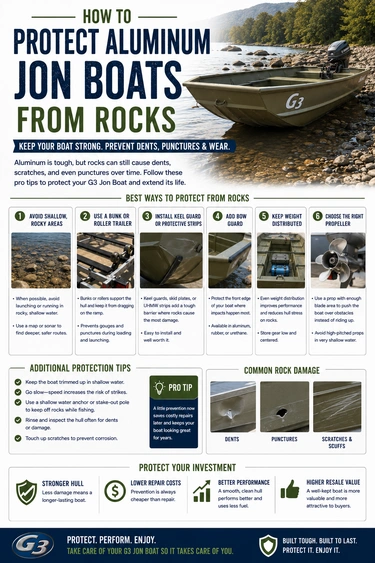
How to Protect an Aluminum Jon Boat from Rocks and Stumps
Aluminum jon boats are built for practical water use. They are popular with anglers, hunters, landowners, and weekend boaters because they can handle shallow water, simple launches, muddy banks, and hard-working days better than many other small boats.
But aluminum is not invincible.
Rocks, stumps, submerged logs, sandbars, gravel ramps, broken concrete, and shallow-water debris can dent the hull, damage paint, loosen hardware, bend a propeller, crack welds, stress rivets, scrape the bottom, or hit the lower unit. A jon boat can take a lot of use, but smart owners still protect it.
For boaters in Virginia, Pennsylvania, Maryland, West Virginia, and nearby areas, this matters because local waterways often change by season. A river channel that felt safe in spring may expose rocks in late summer. A lake cove may hide stumps after a water-level change. A shallow ramp may look fine until the trailer drops off the edge.
MotoMember helps customers compare jon boats, G3 aluminum boats, Yamaha outboards, trailers, accessories, financing, trade-ins, and ownership support from dealership locations in Virginia and Pennsylvania. MotoMember’s site lists locations in Purcellville, Manassas, and Chambersburg and describes the group as a full-service dealership for powersports and related products.
Why Rocks and Stumps Are Hard on Jon Boats
A jon boat’s flat or modified-V hull helps with stability, shallow water, and utility use. That same shallow-water capability often tempts owners into places where submerged hazards are common.
The danger is not always a dramatic crash. Many jon boat damage problems come from repeated smaller impacts. Dragging the boat across gravel, bumping stumps at idle, beaching hard on rocky banks, running through shallow riffles, or loading crooked on a rough trailer can gradually wear the hull.
G3’s fish boat owner’s manual specifically identifies shallow water, rocks, tree stumps, sandbars, and submerged or semi-submerged cables and pipes as hazards. It advises boaters to ask local authorities and other boaters for information, consult marine charts on unfamiliar waters, and try to avoid known and unknown hazards.
That is the core of jon boat protection: avoid impacts first, then add smart protection where impacts are likely.
Know Your Water Before You Run It
The best hull protection is local knowledge.
Before running a jon boat through unfamiliar water, slow down and learn the area. Ask other boaters, marina staff, local anglers, waterfowl hunters, park staff, or ramp regulars about shallow spots, rock bars, stump fields, underwater cables, old bridge foundations, and changing water levels.
A waterway that looks open may still have hidden hazards below the surface. Stumps can sit just under the waterline. Rocks may only appear when the sun angle is right. Sandbars can move after storms. Debris can collect near bridges, locks, and bends.
BoatUS notes that floating debris can build up around lock systems because water level and flow are regulated, and that debris can damage boats if it gets caught between a vessel and structure.
Even if you are not boating near locks, the lesson applies: moving water collects debris, and debris can move into places that were clear last season.
Slow Down in Shallow or Unknown Water
Speed increases damage. A slow bump into a stump may scratch paint or dent aluminum. A fast strike can damage the hull, motor, propeller, lower unit, transom, or passengers.
When you enter unknown water, idle or move slowly. Keep a lookout at the bow when appropriate and safe. Watch for color changes, ripples, current breaks, exposed rocks, standing timber, floating branches, and sudden depth changes.
Use Your Eyes, Ears, and Boat Feel
A jon boat gives feedback. If the boat starts scraping, the prop ventilates, the outboard kicks up, or steering changes suddenly, slow down and reassess.
Do not “power through” a questionable area. That can turn a light scrape into a hard impact.
Avoid Running on Plane in Stump Fields
Running on plane through timber or stump fields may feel faster and smoother until something goes wrong. If the area is known for stumps, logs, rocks, or hidden structure, slow operation is the safer choice.
For anglers and hunters, saving a few minutes is not worth damaging a hull or lower unit before the trip really starts.
Choose the Right Jon Boat for Rocky or Stumpy Water
Boat choice matters before accessories are added.
A wider, heavier-duty jon boat may feel more stable and may handle real-world gear better than a narrow lightweight hull. A smaller utility jon may be easy to move and trailer, but it may not be the right choice for rocky rivers, stump-filled hunting water, or repeated shallow-water impacts.
G3 offers aluminum boats and owner resources, and G3 advises owners to read component manufacturer information carefully, including instructions, warranties, and other important materials.
Before choosing a jon boat, compare:
Hull thickness and construction style
Boat length and beam
Transom design
Maximum horsepower rating
Weight capacity
Flooring and interior layout
Trailer support
Expected water depth
Fishing, hunting, or utility use
Outboard type and mounting needs
Do not choose only by length. A 16-foot jon boat built for utility use may feel very different from a wider, more equipped fishing or hunting model.
Consider a Keel Guard or Hull Protection Product
Some owners use protective strips, keel guards, or bottom-protection products to reduce wear from beaching, gravel, ramps, and light contact. These can be helpful, but they are not magic armor.
A keel guard may help protect the centerline area that sees repeated contact during beaching or loading. Bottom coatings or protective treatments may help reduce abrasion in certain use cases. However, the right product depends on whether the boat is bare aluminum, painted aluminum, camo-coated, or already modified.
Before installing anything, confirm compatibility with aluminum and your boat’s finish. Improper products, poor surface prep, or incorrect adhesives can create problems.
Where Protection Helps Most
Protective products may make sense around:
The bow contact area
Center keel or centerline
High-wear beaching areas
Trailer loading contact points
Frequently scraped bottom zones
They are most useful for repeated light abrasion, not high-speed impacts with rocks or stumps.
Add UHMW or Wear Protection Only With Care
Some shallow-water users consider UHMW, polymer, or skid-style bottom protection. These products are common in some workboat, river, and extreme shallow-water setups, but they are not automatically right for every jon boat.
Adding bottom protection can change weight, handling, drainage, and trailer fit. Installation may require drilling, fastening, bonding, or professional work. Poorly installed protection can trap moisture, create corrosion concerns, or stress the hull.
For a basic recreational jon boat, operating habits and trailer fit may matter more than heavy modifications.
MotoMember Expert Tip: before adding hull armor, talk through where you boat, how often you hit bottom, whether you beach the boat, how you trailer it, and whether the boat is worth modifying. Sometimes the better answer is a different boat setup, a better trailer fit, or a different operating route.
Protect the Propeller and Lower Unit
Rocks and stumps do not only threaten the hull. They can also damage the propeller, skeg, prop shaft, gearcase, and water intake.
Jon boats often run shallow, which puts the prop and lower unit close to trouble. A small prop strike can bend a blade. A harder strike can damage the hub, shaft, seals, or lower unit.
Yamaha’s Maintenance Matters guidance emphasizes routine outboard care, including lower-unit oil changes, fuel filter replacement, corrosion prevention, and regular maintenance to protect reliability.
Inspect the Prop After Shallow-Water Use
After running rocky, stumpy, or shallow water, inspect the propeller.
Look for:
Bent blades
Chipped edges
Missing paint
Vibration
Fishing line around the prop shaft
Gear oil leakage
Damaged skeg
Loose prop hardware
If the prop vibrates, do not keep running hard. Vibration can create more expensive problems.
Carry a Spare Prop or Emergency Kit
For remote river fishing, hunting trips, or long runs, consider carrying a spare prop, cotter pins, prop wrench, floating wrench handle, gloves, and basic tools. That can turn a trip-ending prop strike into a slower ride home.
Only perform repairs you know how to do safely. If the impact may have damaged the lower unit, have it inspected before using the boat again.
Use the Correct Motor Trim
Motor trim affects how close the prop and lower unit ride to the bottom.
In shallow areas, trimming up can help reduce draft, but trimming too high can cause ventilation, poor cooling-water pickup, weak steering control, and reduced thrust. Trimming too low can expose the lower unit to rocks and stumps.
The right trim position depends on your outboard, hull, load, speed, and water depth. Follow the owner’s manual for your motor and learn how your boat responds at low speed.
Watch Water Flow
If your outboard is not picking up cooling water properly, stop and investigate. Weeds, mud, sand, or shallow operation can affect water flow.
Never sacrifice engine cooling just to run shallower.
Think Carefully About Jack Plates and Shallow-Water Setups
Some jon boat owners consider jack plates, setback brackets, tunnels, or specialized shallow-water setups. These may help in certain applications, but they are not casual upgrades.
Changing motor height or setback affects handling, transom load, steering, propeller performance, water pressure, and safety. It may also affect warranty or service considerations depending on the product and installation.
Before modifying a G3 jon boat or Yamaha outboard setup, contact a knowledgeable dealer. The goal is not just to run shallower. The goal is to run safely, reliably, and within the boat and motor manufacturer’s limits.
Use a Trolling Motor to Scout Hazard Areas
A trolling motor can help protect the boat in stump fields, coves, shallow banks, and rocky edges.
Instead of running the gas outboard deep into unknown water, stop short and use the trolling motor at low speed. This gives you more control and reduces impact force if you bump a stump or rock.
For fishing, this is often the smarter approach anyway. It keeps noise down, protects structure, and gives you time to read the water.
Set Trolling Motor Depth Correctly
The trolling motor should be deep enough to operate properly but not so deep that it constantly strikes bottom. Check the manufacturer’s guidance for your motor.
If the trolling motor hits repeatedly, you are probably too shallow for normal operation.
Load the Boat for Better Control
Load placement affects how a jon boat rides over shallow water.
Too much weight in the stern can make the transom sit low, putting the outboard and lower unit closer to rocks and stumps. Too much weight forward can make the bow plow, catch waves, or scrape in shallow areas.
Distribute weight evenly. Consider passengers, fuel, batteries, anchors, tackle, coolers, decoys, dogs, blind material, and safety gear.
Many jon boat owners add accessories over time without thinking about balance. Extra batteries, front decks, storage boxes, and hunting gear can change how the boat floats and handles.
Before adding weight, think about how the boat runs in shallow water today and what problem you are trying to solve.
Protect the Boat at the Ramp
A lot of jon boat damage happens at the ramp, not on the water.
Rocky, broken, or shallow ramps can scrape the hull during launch and retrieval. If the trailer is not backed in far enough, the boat may drag across bunks or concrete. If the trailer is too deep, the boat may float crooked and hit fenders or brackets.
Check Ramp Conditions First
Before launching, look at the ramp surface. Watch for broken concrete, exposed rebar, sharp gravel, drop-offs, rocks, current, mud, and debris.
At unfamiliar ramps, step carefully and avoid backing the trailer into places where the axle, tires, or bunks could drop off an edge.
Do Not Drag the Boat Across Rocks
Dragging an aluminum jon boat short distances may seem harmless, especially with smaller boats, but repeated dragging wears the bottom and can create deep scratches or dents.
Use the trailer, rollers, a proper launch method, or more people when safe. Protecting the bottom is easier than repairing impact damage later.
Make Sure the Trailer Supports the Hull
Trailer fit matters for rock and stump protection because a poorly supported hull can already be stressed before it ever touches the water.
Bunks should support the boat evenly. The transom should not hang too far behind the support points. Hardware should not touch the hull. Worn bunk carpet, exposed staples, loose brackets, or bent supports can scrape aluminum and weaken high-contact areas.
G3’s owner’s manual advises owners to make sure trailer supports are adjusted to properly support the boat’s hull when storing the boat on a trailer.
That same principle applies every time you tow. A well-fit trailer reduces unnecessary hull stress and makes launch and retrieval smoother.
Inspect the Hull After Every Hard Trip
If you ran shallow water, bumped a stump, scraped rocks, or launched at a rough ramp, inspect the boat after the trip.
Look for:
New dents
Deep scratches
Cracked paint or coating
Loose rivets if applicable
Cracked welds
Water inside the hull
Damage around the transom
Bent skeg or prop damage
Trailer bunk wear marks
Corrosion starting around scratches
A small scrape is often just cosmetic. A dent near a seam, weld, rivet, or transom deserves more attention.
Check for Leaks
After impact, watch for water inside the boat. Dry the interior and inspect after the next use. If water appears repeatedly, identify the source before continuing normal use.
Do not assume every leak is from hull damage. Drain plugs, fittings, livewell plumbing, transom bolts, and loose hardware can also leak.
Repair Scratches Before They Become Bigger Problems
Bare aluminum scratches are common on jon boats. Many are minor. Still, deep scratches, gouges, or exposed areas on painted boats should be cleaned and monitored.
If the boat has a painted, camo, or coated finish, follow manufacturer recommendations for touch-up or repair. Do not apply random paint or coatings without confirming compatibility.
If a gouge looks deep, a seam is affected, or the hull is cracked, get professional guidance.
Avoid Risky “DIY Armor” Ideas
Jon boat owners are creative, but not every homemade protection idea is safe.
Be careful with:
Random bedliner coatings
Pressure-treated lumber contact
Unsealed steel brackets
Unknown adhesives
Heavy bottom plates
Poorly sealed holes
Non-marine fasteners
Improvised skids
Sharp trailer modifications
Some DIY upgrades can trap moisture, create corrosion, add too much weight, or damage the hull. Aluminum boat modifications should be thought through carefully.
If the goal is long-term protection, professional advice is usually cheaper than fixing a bad modification later.
Consider a Different Route or Setup
Sometimes the best way to protect a jon boat is to admit that the route is too risky.
If a stretch of river is extremely rocky, stump-filled, or shallow, ask whether there is a better launch point, different season, lighter load, electric-only approach, or more appropriate boat setup.
A standard prop outboard jon boat is not the right tool for every shallow-water environment. Some waters may require specialized equipment, extreme local knowledge, or simply better judgment.
For riders in VA, PA, MD, and nearby areas, seasonal water levels can change quickly. A route that was safe after rain may be risky during dry weeks.
Build a Shallow-Water Protection Kit
A simple kit can help you handle minor impacts and prevent a bad day from getting worse.
Consider carrying:
Spare drain plug
Prop wrench
Spare prop hardware
Basic tool kit
Flashlight or headlamp
Waterproof tape
Spare fuses
Small bilge sponge or hand pump
Work gloves
Rope or push pole
Paddle
First-aid kit
Phone or communication device
Navigation app or chart when appropriate
This kit will not prevent damage by itself, but it helps you respond when something happens.
MotoMember Expert Tip
Before buying accessories to protect your jon boat, start with how and where you use it.
A duck hunter running stump-filled backwater may need a different setup than an angler fishing rocky river ledges. A pond owner may need simple beaching protection. A river boater may need better trailer support, a spare prop, careful route planning, and a conversation about motor setup.
Our team can help you compare G3 jon boats, Yamaha outboards, trailers, trolling motors, hull protection ideas, accessories, financing, trade-ins, and service needs. The right answer is not always the most aggressive modification. Often, it is the best-matched boat, better setup, and smarter shallow-water habits.
Call to Action
Your aluminum jon boat headquarters starts at MotoMember.
For boaters across Virginia, Pennsylvania, Maryland, West Virginia, and nearby areas, MotoMember can help you compare G3 jon boats, Yamaha outboards, trailers, accessories, service support, financing, and trade-ins.
Visit MotoMember online or contact a nearby dealership in Purcellville, Manassas, or Chambersburg to compare current options and talk through your shallow-water needs.
Large selection. Straightforward shopping. Real powersports and marine expertise.
Conclusion
Protecting an aluminum jon boat from rocks and stumps starts with smart operation. Learn the water, slow down in shallow areas, avoid known hazards, watch seasonal water levels, and inspect your boat after rough trips.
Accessories can help, but they are not a substitute for good judgment. Keel guards, hull protection, trailer adjustments, trolling motors, spare props, and shallow-water setup changes all have a place when matched to the right use case.
A jon boat is meant to work. With the right habits, gear, and support, you can help it handle fishing, hunting, utility work, and weekend exploring while reducing avoidable damage from rocks, stumps, and shallow-water hazards.
FAQ
Can rocks dent an aluminum jon boat?
Yes. Aluminum jon boats are durable, but rocks can dent, gouge, scratch, or damage the hull, especially at speed or with repeated contact. Impacts near seams, welds, rivets, or the transom deserve close inspection.
Will a keel guard protect a jon boat from rocks?
A keel guard may help reduce wear from beaching, ramps, and light abrasion, but it will not make the boat impact-proof. Hard rock strikes can still damage the hull or motor.
How do I protect my outboard from stumps?
Run slowly in stump-filled water, trim carefully, use a trolling motor when scouting shallow areas, inspect the prop and lower unit after impacts, and avoid running on plane through timber or unknown water.
Should I add bottom armor to my aluminum jon boat?
It depends on your boat, water conditions, budget, and use case. Heavy hull protection can add weight and affect handling or trailer fit. Talk with a knowledgeable dealer before modifying the hull.
Can MotoMember help with jon boat protection accessories?
Yes. MotoMember can help customers compare G3 jon boats, Yamaha outboards, trailers, trolling motors, accessories, financing, trade-ins, and service needs across VA, PA, MD, WV, and nearby areas.