
Jon Boat Safety Gear Checklist

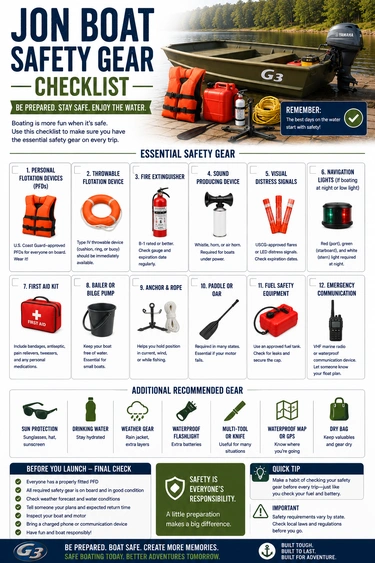
Jon Boat Safety Gear Checklist
A jon boat is simple, practical, and easy to love. Whether you use it for fishing, duck hunting, pond work, river exploring, or weekend trips with family, a jon boat gives you access to water that larger boats may not reach.
But simple boats still need serious safety planning.
A jon boat may be small, open, and easy to launch, but that also means weather, wakes, current, cold water, shallow hazards, low freeboard, and shifting weight can become problems quickly. The right safety gear helps you handle small issues before they become emergencies.
For boaters in Virginia, Pennsylvania, Maryland, West Virginia, and nearby areas, safety gear also depends on where and when you boat. A summer fishing trip on calm water is different from a cold-weather hunting trip, a shallow river run, or a dusk ride back to the ramp.
MotoMember helps customers compare jon boats, G3 aluminum boats, Yamaha outboards, trailers, accessories, financing, trade-ins, and ownership support. Current availability can vary, so check MotoMember or contact the team before choosing your next boat, motor, trailer, or safety setup.
Why Jon Boat Safety Gear Matters
Jon boats are popular because they are versatile. That versatility is also why safety gear matters.
A jon boat may be used in skinny water, around rocks and stumps, near shorelines, through backwaters, at low-light ramps, and in changing weather. Many jon boats also carry heavy gear such as batteries, trolling motors, coolers, decoys, anchors, fuel tanks, fishing tackle, firearms, dogs, and passengers.
The right safety checklist helps you prepare for:
Engine trouble
Dead batteries
Sudden weather
Cold water
Low-light operation
Minor injuries
Prop or lower-unit damage
Lost drain plugs
Trailer problems
Grounding or shallow-water impact
Communication issues
Navigation mistakes
The U.S. Coast Guard’s federal boating guide covers required and recommended equipment for recreational boats, including life jackets, fire extinguishers, sound devices, visual distress signals, navigation lights, and other safety topics.
Start With Required Safety Gear
Before adding optional gear, start with required equipment. Requirements can vary based on boat length, propulsion, fuel setup, state, waterway, time of day, and passenger age.
Virginia DWR states that its required-equipment guidance covers items such as life jackets, fire extinguishers, sound-producing devices, engine cut-off switches, visual distress signals, and navigation lights.
Pennsylvania Fish and Boat Commission says all boats must have a good, serviceable, U.S. Coast Guard-approved life jacket on board for each person, and boats 16 feet and over must also carry an immediately available throwable device.
Maryland DNR provides a required equipment checklist for recreational vessels and notes boating-safety-certificate requirements for certain operators born after July 1, 1972.
Because rules change and local waters can have additional restrictions, check the official agency guidance for the state where you boat before each season.
Life Jackets for Every Person
Life jackets are the most important safety item on any jon boat.
Every person on board should have a properly sized, U.S. Coast Guard-approved wearable life jacket. It should fit the person, match the activity, be in good condition, and be easy to reach.
A life jacket buried under tackle, decoys, or a cooler is not truly ready for use. For children, non-swimmers, cold-weather boaters, and anyone boating in current or low-light conditions, wearing the life jacket is far safer than simply having it onboard.
Check the Fit
A life jacket should not be too loose, too small, torn, waterlogged, or missing straps. Read the label for size, weight range, approval information, and intended use.
Virginia DWR advises boaters to check the life jacket label for size and approval information, then try it on before every trip to make sure it fits correctly.
Cold Weather Reminder
Cold water changes everything. Pennsylvania requires boaters to wear a U.S. Coast Guard-approved life jacket from November 1 through April 30 while underway or at anchor on boats less than 16 feet long, and on canoes, kayaks, and paddleboards.
Even where not required, wearing a life jacket during cold-weather jon boat use is smart. Cold shock can make swimming difficult within seconds.
Throwable Flotation Device
If your jon boat is 16 feet or longer, you may need a throwable flotation device, depending on where you boat and applicable regulations.
A throwable device should be immediately available, not sealed in a compartment. Keep it where the operator or passenger can grab it quickly.
For jon boat owners, a throwable cushion can also serve as backup flotation near the stern or center of the boat. Do not use it as a substitute for properly fitted wearable life jackets.
Sound-Producing Device
A whistle, horn, or other sound-producing device helps you signal other boaters, alert someone in low visibility, or call attention during an emergency.
BoatUS summarizes U.S. Coast Guard equipment guidance by noting that every vessel less than 39.4 feet must carry an efficient sound-producing device such as a whistle or horn.
For a jon boat, a simple whistle clipped to each life jacket is inexpensive and practical. A handheld air horn can also be useful, especially on larger water or around boat traffic.
Navigation Lights
If you operate before sunrise, after sunset, or in restricted visibility, your jon boat needs proper navigation lighting.
Small jon boats often run early in the morning for fishing or hunting. That makes lighting especially important. You need to be able to see and be seen.
Check:
Bow lights
Stern or all-around white light
Battery connection
Switch operation
Wiring condition
Spare batteries if portable
Mount security
Do not assume clip-on lights are ready because they worked last season. Test them before leaving home.
Fire Extinguisher
Some jon boats are required to carry a fire extinguisher depending on motor type, fuel storage, compartments, and construction.
Even when not required, a small marine-rated extinguisher can be a smart addition for motorized jon boats. Fuel, batteries, wiring, chargers, and portable tanks all deserve respect.
Check the extinguisher gauge, condition, mounting location, expiration or service status, and accessibility. Do not store it where you cannot reach it quickly.
Engine Cut-Off Switch
If your outboard uses an engine cut-off switch lanyard or wireless cut-off system, use it correctly.
A jon boat operator can fall or be thrown off balance by a wake, stump strike, sudden turn, or shifting load. An engine cut-off switch can stop the motor if the operator leaves the control position.
Before each trip, inspect the lanyard, clip, switch, and function. Make it part of your launch routine.
Anchor and Anchor Line
An anchor is more than a fishing tool. It is safety gear.
If the outboard fails, wind or current can push a jon boat toward rocks, bridges, docks, shallow hazards, or open water. An anchor helps you hold position while troubleshooting or waiting for help.
Choose an anchor appropriate for your boat size and bottom conditions. Carry enough line for the depth where you boat. Keep the line coiled and ready, not tangled under gear.
Do Not Anchor From the Stern in Current
Anchoring from the stern in current can be dangerous because it may allow water to come over the transom. Use safe anchoring practices and learn how your boat behaves before relying on it in moving water.
Paddle, Oar, or Push Pole
Every jon boat should have a backup way to move.
A paddle, oar, or push pole can help you get off a mud flat, move away from rocks, reach shore after engine trouble, or maneuver quietly in shallow water.
For duck hunters and river anglers, a push pole can be especially useful in stumps, grass, and shallow backwaters. Secure it so it does not slide out while trailering or running.
Communication Gear
A phone is useful, but it should not be your only plan in every situation.
At minimum, carry a charged phone in a waterproof case or dry bag. Tell someone where you are going and when you expect to return.
For larger waters, remote areas, or low-service locations, consider additional communication options. A waterproof VHF radio may be appropriate on some waterways, especially where marine radio use is common.
Also keep important numbers saved or written down:
Local emergency services
Marina or ramp contact
Tow vehicle contact
Family contact
Dealer or service contact
First-Aid Kit
A jon boat first-aid kit should be compact, waterproof, and easy to reach.
Include basics such as bandages, gauze, antiseptic wipes, medical tape, gloves, tweezers, pain reliever, insect sting treatment, motion sickness supplies if needed, and any personal medications.
Fishing and hunting create specific injury risks. Hooks, knives, fins, tools, sharp aluminum edges, dog gear, decoy lines, and slippery ramps can all lead to cuts or punctures.
Check the kit at the start of each season and after every use.
Bilge Pump, Sponge, or Bailer
Many jon boats are open and simple, but they still need a way to remove water.
If your boat has a bilge pump, test it before each trip. Check wiring, hose routing, discharge flow, and battery connection.
If your jon boat does not have a bilge pump, carry a manual bailer, hand pump, or large sponge. Rain, spray, wake, wet dogs, livewell overflow, and small leaks can add water faster than expected.
Do not forget the drain plug. Keep a spare plug onboard.
Basic Tool Kit
A small marine tool kit can save the day.
Useful items may include:
Screwdrivers
Adjustable wrench
Pliers
Prop wrench
Spare cotter pins
Electrical tape
Zip ties
Spare fuses
Flashlight or headlamp
Knife or line cutter
Work gloves
Small roll of duct tape
For Yamaha outboard owners, follow the owner’s manual for correct tools, service points, and emergency procedures. Do not attempt repairs you are not comfortable performing safely.
Prop and Outboard Emergency Items
Jon boats often run shallow. That means rocks, stumps, gravel, weeds, fishing line, and sand can affect the propeller and lower unit.
Carry gear that matches your outboard setup. A spare prop may be useful for longer trips or remote water. At minimum, inspect the prop after any hard strike and watch for vibration, gear oil leakage, or poor performance.
Yamaha’s maintenance guidance emphasizes regular outboard care, including lower-unit oil changes, corrosion prevention, fuel treatment, and maintenance routines that help protect reliability.
Battery Safety Gear
Many jon boats carry one or more batteries for starting, trolling motors, lights, fish finders, bilge pumps, or accessories.
Make sure batteries are secured in trays or boxes and protected from shifting. Loose batteries are dangerous during towing, rough water, or sudden stops.
Check:
Terminal covers
Clean connections
Proper fuse or breaker protection
Battery hold-downs
Charging condition
Wire chafing
Correct charger use
Do not let loose tools, anchors, or metal gear contact battery terminals.
Dry Bag With Essentials
A dry bag is one of the easiest upgrades for jon boat safety.
Pack it with:
Phone protection
Wallet and ID
Boating documents
Small towel
Emergency blanket
Extra socks or gloves
Spare flashlight
Lighter or waterproof matches where appropriate
Basic snacks
Medication if needed
For cold-weather hunting or fishing, dry backup layers can be more than comfort. They can help prevent a dangerous situation after a fall, spray, or rain.
Weather and Sun Protection
Safety gear is not only for emergencies. It also helps prevent common problems.
Carry sunscreen, sunglasses, hat, rain jacket, insect repellent, drinking water, and weather-appropriate clothing. Heat, sun exposure, dehydration, and sudden storms can make a short trip uncomfortable or unsafe.
Check the forecast before leaving. Watch wind direction, thunderstorm chances, temperature swings, and small-craft advisories where relevant.
Jon boats are open boats. You feel weather changes quickly.
Lighting for the Boat and Ramp
Navigation lights help other boaters see you. Utility lighting helps you work safely.
Carry a waterproof flashlight or headlamp even if you do not plan to be out after dark. Launch delays, engine trouble, fishing success, or retrieval problems can keep you out later than expected.
For hunters, early-morning ramp lighting is especially useful. Keep your hands free with a headlamp while loading gear, checking straps, or handling decoys.
Safety Gear for Fishing
Fishing jon boats often carry sharp tools and loose gear. Organize it.
Useful safety items include:
Line cutter
Hook remover
Pliers
Fish gripper
Small net
Gloves
Sunscreen
Eye protection
Tackle storage
Trash bag for fishing line
Loose fishing line can wrap around the prop shaft or tangle passengers. Dispose of it properly.
Safety Gear for Duck Hunting
Duck hunting from a jon boat adds cold weather, low light, heavy gear, dogs, decoys, and often shallow water.
Consider:
Life jackets worn over or integrated with hunting clothing
Waterproof dry bag
Spare gloves and socks
Push pole
Dog platform or safe dog area
Decoy line management
Headlamp
Emergency blanket
Thermos or water
Careful firearm transport plan
Extra caution with weight distribution
Do not overload the boat with decoys, blind material, dogs, and passengers. The boat’s capacity plate matters.
Safety Gear for River Use
Rivers add current, rocks, changing water levels, strainers, bridges, shoals, and debris.
Carry:
Anchor and adequate line
Paddle or push pole
Communication device
Spare prop hardware
First-aid kit
Knife or line cutter
Map or navigation app
Weather gear
Life jackets worn, not stored
Ask local boaters about hazards before running unfamiliar water. Slow down when water levels change or visibility is poor.
Trailer Safety Gear
Jon boat safety starts before the ramp.
Your trailer should have working lights, correct tire pressure, secure safety chains, a locked coupler, a good winch strap, stern tie-downs, and a properly supported boat.
Trailer Safety Week highlights properly inflated and rated tires, adequate brakes where required, crossed safety chains, and working lights as part of safe towing.
Before every trip, check:
Trailer lights
Tire pressure
Lug nuts
Spare tire
Winch strap
Bow eye connection
Transom straps
Coupler lock
Safety chains
Bunks or rollers
Wheel bearing condition
A safe boat with an unsafe trailer is still a problem.
Jon Boat Safety Gear Checklist
Use this checklist before your next trip.
Required and core safety gear:
Wearable life jacket for every person
Throwable flotation device when required
Sound-producing device
Navigation lights when required
Fire extinguisher when required
Engine cut-off switch lanyard if equipped
Registration and required documents
Boating safety certificate if required
Drain plug and spare drain plug
Emergency gear:
Anchor and line
Paddle, oar, or push pole
First-aid kit
Waterproof flashlight or headlamp
Communication device
Dry bag
Emergency blanket
Knife or line cutter
Manual bailer, sponge, or pump
Basic tools
Spare fuses
Prop wrench and hardware if applicable
Comfort and prevention gear:
Drinking water
Sunscreen
Sunglasses
Rain jacket
Bug spray
Weather-appropriate clothing
Gloves
Towel
Trash bag
Trailer gear:
Spare tire
Jack and lug wrench
Tie-down straps
Wheel chocks
Bearing grease if applicable
Extra light adapter or fuses
Common Safety Gear Mistakes
The biggest mistake is owning safety gear but not being able to reach it. A life jacket under a storage box, a fire extinguisher buried in a compartment, or a paddle strapped under decoys is not ready for an emergency.
Another mistake is using old or damaged gear. Life jackets, straps, lights, batteries, fire extinguishers, and first-aid supplies all need inspection.
Many jon boat owners also overload the boat. Gear adds up fast. Batteries, fuel, anchors, coolers, hunting gear, dogs, and extra passengers all count toward the boat’s safe load.
Finally, do not assume last year’s rules are still current. Check official boating-safety resources before each season.
MotoMember Expert Tip
Before buying safety gear, think about your most demanding day on the water.
For an angler, that may mean early morning, two people, a trolling motor battery, tackle, electronics, and a long ride back in wind. For a duck hunter, it may mean cold water, darkness, decoys, a dog, wet clothing, and shallow stumps. For a pond owner, it may mean simple gear but limited help nearby.
Our team can help you compare jon boats, G3 models, Yamaha outboards, trailers, storage, accessories, batteries, and service needs so your safety setup fits how you actually boat.
Call to Action
Your jon boat headquarters starts at MotoMember.
For boaters across Virginia, Pennsylvania, Maryland, West Virginia, and nearby areas, MotoMember can help you compare G3 jon boats, Yamaha outboards, trailers, accessories, financing, trade-ins, and ownership support.
Visit MotoMember, explore financing options, or contact the team to compare current jon boat and accessory options.
Large selection. Straightforward shopping. Real powersports expertise.
Conclusion
A good jon boat safety gear checklist helps you prepare for real-world boating, not just minimum requirements.
Start with life jackets, sound signaling, lights, fire protection where required, flotation, and documents. Then add practical gear for your use case: anchor, paddle, first-aid kit, flashlight, dry bag, tools, communication, weather protection, and trailer equipment.
The best safety gear is easy to reach, properly maintained, and matched to where you boat. Before your next fishing trip, hunting run, river ride, or weekend outing, take a few minutes to check your gear. It can make all the difference.
FAQ
What safety gear is required on a jon boat?
Required gear depends on boat length, motor, fuel setup, state, waterway, time of day, and passenger age. Common requirements may include life jackets, sound device, navigation lights, fire extinguisher, throwable flotation, and registration documents. Check your state’s official boating agency before each season.
Do I need life jackets on a jon boat?
Yes. You should have a properly sized, U.S. Coast Guard-approved wearable life jacket for every person onboard. In many conditions, especially cold water or moving water, wearing it is the safest choice.
Does a jon boat need navigation lights?
Yes, if you operate between sunset and sunrise or during restricted visibility. Test lights before leaving the ramp, especially for early-morning fishing or hunting trips.
Should I carry an anchor on a jon boat?
Yes. An anchor can help you hold position if the motor fails, wind picks up, or current pushes you toward hazards. Use an anchor and line appropriate for your boat and water conditions.
Can MotoMember help with jon boat safety accessories?
Yes. MotoMember can help customers compare jon boats, G3 aluminum boats, Yamaha outboards, trailers, safety accessories, batteries, financing, trade-ins, and service needs across VA, PA, MD, WV, and nearby areas.