
Fishing Boat Livewells Explained

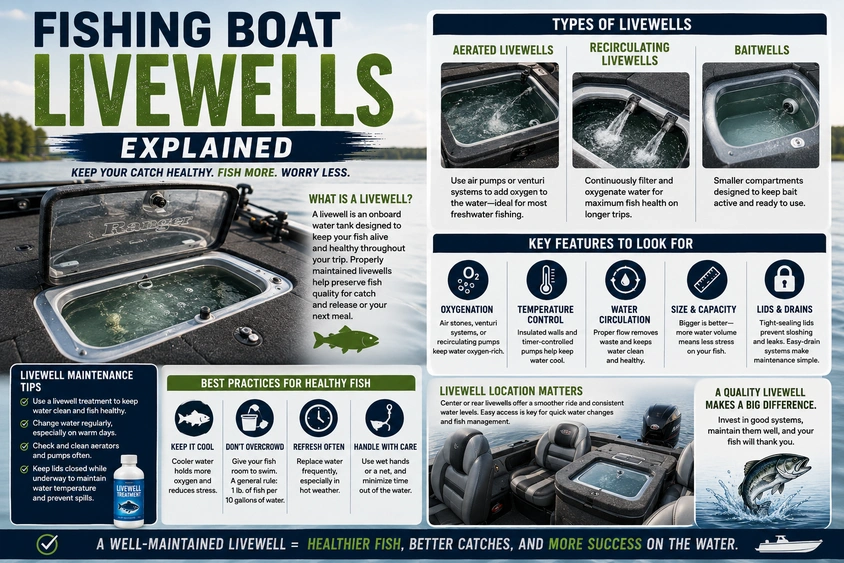
Fishing Boat Livewells Explained: What Anglers Should Look For
A fishing boat livewell may look like a simple storage compartment, but for many anglers, it is one of the most important systems on the boat.
Whether you fish for bass, crappie, catfish, panfish, or multi-species freshwater trips, a livewell can help keep fish or bait alive while you are on the water. For tournament anglers, it can be essential. For family anglers, it can make the difference between a clean, organized fishing day and a cluttered cockpit full of buckets and coolers.
The key is knowing what to look for before you buy.
A livewell is not just about size. Placement, aeration, recirculation, pump access, drainage, shape, lid design, plumbing, controls, and maintenance all matter. Some boats may have one livewell. Others may have multiple livewells or separate baitwell-style compartments. Exact features vary by model, package, and year, so shoppers should compare the actual boat in front of them.
MotoMember helps anglers across Virginia, Pennsylvania, Maryland, West Virginia, and nearby areas compare fishing boats, G3 Boats, SunCatcher pontoons, marine inventory, trailers, outboard packages, accessories, financing, trade-ins, parts, and service support. MotoMember’s new inventory page includes marine vehicles, outboard motors, and trailers, and the dealership serves shoppers through Purcellville, Manassas, and Chambersburg locations.
What Is a Fishing Boat Livewell?
A fishing boat livewell is an onboard water-filled compartment designed to hold fish or bait alive for a period of time.
In a fishing boat, the livewell system may include a fill pump, recirculation pump, drain, overflow, spray head, aeration system, timer, switch panel, plumbing, and access points for service. The exact design depends on the boat.
For bass anglers, a livewell may be used to hold fish during a tournament until weigh-in. For crappie and panfish anglers, it may be used to keep legal fish fresh until the end of the trip. For bait anglers, a separate baitwell or livewell-style compartment may be useful for minnows or other live bait.
G3’s Sportsman 1810 PFX page is one example of why shoppers should check model-level details. G3 describes that specific PFX Sportsman model as a multi-species boat with two livewells and bass-boat-style fishing features.
Why Livewells Matter to Anglers
Livewells matter because fish care matters.
Texas Parks and Wildlife says dissolved oxygen is the most important factor for reducing stress and mortality in livewell-held bass, and it notes that warmer water holds less oxygen than cooler water.
That is why livewell design, water movement, aeration, temperature awareness, and proper use are important. A large livewell that is poorly maintained may not perform well. A smaller livewell that is clean, functional, and properly used may be more effective for the way you fish.
A livewell also affects convenience. It gives you a designated place for fish or bait, helps keep the deck clearer, and reduces the need for loose buckets or improvised containers.
Livewell Capacity: Bigger Is Helpful, But Not Everything
Many shoppers start by asking, “How big is the livewell?”
Capacity matters, especially if you fish tournaments, target larger fish, or carry multiple fish during the day. A larger livewell gives fish more room, helps reduce crowding, and can provide more water volume.
But bigger alone does not solve everything.
The system also needs proper oxygen, circulation, clean plumbing, good drainage, and a shape that protects fish from sharp edges or hard impacts. A livewell that is large but difficult to access, poorly placed, or hard to clean may become frustrating.
Before choosing a boat, ask how you will actually use the livewell. Will you hold bass during tournaments? Keep crappie for dinner? Carry live bait? Use the boat for catfish trips? Fish mostly catch-and-release?
That answer should guide how much livewell space you need.
Placement: Where the Livewell Sits Matters
Livewell placement affects how easy the boat is to fish.
A rear livewell may work well for anglers who fish from the stern, troll, catfish, or want the livewell near the cockpit. A front livewell may be convenient for anglers who fish from the bow. A center or split layout may help balance access for multiple anglers.
Placement also affects movement. If a livewell lid opens into a walkway, blocks a seat, or interferes with rods on the deck, it may be inconvenient during a good bite.
When comparing boats at MotoMember, stand where you would fish and open the livewell lid. Ask yourself whether you can reach it safely while holding a rod, net, or fish. The best location is the one that fits your routine.
Aeration and Recirculation
Aeration adds oxygen to the livewell water. Recirculation moves water within the livewell. Some systems may also bring in fresh lake or river water depending on settings and design.
Texas Parks and Wildlife explains that oxygen and temperature are closely connected because warm water naturally holds less oxygen, while fish consume more oxygen at warmer temperatures.
For shoppers, the important question is not just whether the boat has a livewell. It is how the livewell system works.
Ask about fill, recirculate, drain, timer settings, pump access, and whether the system is easy to operate from the helm or fishing position. If you are new to livewells, ask the MotoMember team to walk you through the controls on the exact boat you are considering.
Livewell Shape and Interior Design
A good livewell should be fish-friendly and easy to use.
Smooth interiors help reduce contact points that can injure fish. Rounded corners are often preferred because fish are less likely to nose into hard square corners. Lids should close securely, and the compartment should be easy to inspect and clean.
Interior color can also matter. A darker or calmer interior may help reduce stress, depending on the design. Good insulation and lid fit can help limit heat transfer on sunny days.
When shopping, look inside the livewell. Do not just read the spec sheet. Check whether the interior feels smooth, clean, accessible, and practical.
Pump Access and Serviceability
Livewell pumps are mechanical components. Over time, pumps, hoses, fittings, switches, and drains may need attention.
That makes access important.
Ask where the livewell pump is located and how easily it can be reached for inspection or service. A system that is buried behind panels or difficult to access may be more frustrating later.
MotoMember’s service page lists maintenance and repair support, parts and accessories, accessory installation, battery service, and seasonal prep among its service resources. That support can be useful if you need help with livewell troubleshooting, pump replacement, accessory installation, or seasonal maintenance.
Drainage and Overflow
A livewell should be easy to fill, operate, and drain.
Drainage matters because old water, scales, bait residue, and debris can create odor and maintenance issues. Overflow matters because livewell systems need a way to manage water level while the pump is running.
Ask how the livewell drains, where the water exits, and whether the system has an overflow. Also ask how to winterize or prepare the system for storage if you boat in colder Mid-Atlantic seasons.
A livewell that drains cleanly and is easy to rinse will be easier to live with over time.
Livewell Controls and Timers
Some livewell systems include manual switches. Others may include timer settings or separate controls for fill and recirculation.
For anglers, simple controls are valuable. During a fishing day, you may be driving, casting, managing rods, handling fish, watching weather, and helping passengers. The livewell controls should be easy to understand.
Ask the dealership team to explain each switch. Know which setting fills the livewell, which setting recirculates, which setting drains, and whether the pump can be run continuously or on a timer.
Do not wait until your first trip to learn the system.
Species-Specific Livewell Considerations
Different anglers use livewells differently.
Bass Fishing
Bass anglers often care about tournament readiness, livewell capacity, aeration, recirculation, and fish-friendly design. A bass-focused boat should make it easy to place fish in the livewell quickly and check them during the day.
If you fish tournaments, review the event rules and fish-care requirements before choosing a boat. Some tournaments may have specific livewell expectations.
Crappie and Panfish
Crappie and panfish anglers may care about livewell access, bait storage, and convenience. If you fish with minnows, ask whether the boat has a separate baitwell or whether the livewell layout can support your bait plan.
Seat placement also matters. Crappie anglers often sit for long periods, so the livewell should not block the fishing position.
Catfishing
Catfish anglers often need room for larger fish, bait, coolers, and bulky gear. Some catfish anglers may rely more on coolers than livewells, depending on their style and local rules.
For catfish-focused shoppers, livewell placement near the stern or cockpit may be especially useful. Open space and stability are just as important as the livewell itself.
Family Fishing
Family anglers may use a livewell less aggressively than tournament anglers, but it can still be helpful. It keeps fish or bait contained and reduces clutter.
For families, ease of use matters. The livewell should be simple to open, close, rinse, and explain to newer anglers.
Livewell vs. Baitwell
A livewell and baitwell may sound similar, but they are not always used the same way.
A livewell is usually designed to hold caught fish. A baitwell is often designed to keep bait alive and accessible. Some boats may use one compartment for both purposes, while others may have separate systems.
If you fish with live minnows, shad, or other bait, ask whether the livewell system is appropriate for that use. Bait may need different water movement, space, and handling than caught fish.
Do not assume every livewell is also an ideal baitwell. Ask before you buy.
New vs. Used Boats: Livewell Inspection Tips
Livewell inspection is especially important on used fishing boats.
Open the livewell and check for stains, odors, cracks, damage, loose fittings, missing screens, worn lids, and signs of poor drainage. Ask whether the pumps work, whether the switches function, and whether the system has been inspected.
Also check batteries and wiring. Livewell pumps depend on electrical power, and weak batteries or aging wiring can cause problems.
If possible, ask for a demonstration. A livewell system should fill, recirculate, and drain as designed. If something is not working, ask what repair is needed and whether parts or service are available.
Maintenance: Keep the System Clean
A livewell should be cleaned and inspected regularly.
After fishing, remove debris, rinse the compartment, drain it fully, and allow it to dry when appropriate. Check screens, drains, and pump intakes for blockage. Avoid leaving bait residue, fish slime, or standing water in the compartment.
Before the season, test the pump and switches. Before winter storage, ask about proper seasonal prep for the exact boat and system.
G3 provides owner resources, including owner manuals, warranty information, boating safety and laws, and boating tips. G3’s owner manual page also notes that boats are supplied with component manufacturer information and that owners should read those materials carefully.
Do You Need a Livewell?
Not every angler needs the same livewell setup.
A tournament bass angler may consider a strong livewell system essential. A crappie angler may want livewell and baitwell convenience. A catch-and-release weekend angler may use the livewell only occasionally. A pontoon buyer may care more about seating and family comfort.
The right answer depends on how you fish.
Before choosing a boat, tell the MotoMember team whether you keep fish, fish tournaments, use live bait, target larger species, or mostly catch and release. That information helps narrow the boat layouts that actually fit.
MotoMember Expert Tip
Do not judge a livewell only by the number listed in the brochure.
Stand in the boat, open the livewell, and imagine using it during a real fishing day.
Can you reach it safely? Does the lid open the right direction? Is it close to where you fish? Can you access it with rods on the deck? Do you understand the pump controls? Is it easy to clean? Can the service team access the pump if something needs attention?
Many shoppers compare livewell size first. Our team recommends comparing livewell usability first.
Why Compare Fishing Boats at MotoMember
MotoMember gives anglers in VA, PA, MD, WV, and nearby areas a regional dealership resource for comparing boat layouts, G3 models, SunCatcher pontoons, trailers, outboard packages, accessories, financing, trade-ins, service, and parts support.
MotoMember also offers financing resources for new and used powersports vehicles and boats, with an online application process and dealership team support.
That matters because the livewell is only one part of the boat. The full setup includes the hull, motor, trailer, batteries, charger, trolling motor, electronics, rod storage, seating, safety gear, cover, and long-term service plan.
Large selection. Straightforward shopping. Real powersports and marine expertise.
Your fishing boat search starts at MotoMember.
Call to Action
Ready to compare fishing boat livewells in person?
Contact MotoMember or visit the team in Purcellville, Manassas, or Chambersburg to compare current fishing boat inventory, G3 Boats, Sportsman models, Gator Tough Jon boats, Angler V options, SunCatcher pontoons, trailers, outboard packages, accessories, financing, trade-ins, parts, and service support.
Tell the team how you fish: bass tournaments, crappie trips, catfishing, panfish weekends, live bait, catch-and-release, family fishing, or multi-species freshwater days.
MotoMember can help you compare livewell placement, storage, seating, electronics, trailer fit, and ownership needs before you choose.
Stop dreaming. Start riding — and boating — with MotoMember.
Conclusion
A fishing boat livewell is more than a box of water.
The best livewell for your boat should match your fishing style, target species, passenger count, storage needs, and maintenance expectations. Capacity matters, but so do aeration, recirculation, drainage, pump access, controls, placement, lid design, and cleanability.
Bass anglers may need tournament-ready livewell performance. Crappie and panfish anglers may want bait and fish storage convenience. Catfish anglers may prioritize cockpit space and cooler planning along with livewell access. Family anglers may want a simple system that keeps the boat clean and organized.
Before buying, compare the actual livewell in the boat, not just the spec sheet.
For anglers across Virginia, Pennsylvania, Maryland, West Virginia, and surrounding areas, MotoMember can help make the buying process clearer with practical dealership guidance and current inventory support.
FAQ
What does a livewell do on a fishing boat?
A livewell is an onboard water-filled compartment designed to hold fish or bait alive while you are on the water. Depending on the boat, it may include fill, recirculation, aeration, drain, overflow, and timer functions.
How big should a fishing boat livewell be?
The right size depends on how you fish. Tournament bass anglers, crappie anglers, catfish anglers, and casual weekend anglers may all need different livewell capacity. Size matters, but aeration, water quality, access, and usability matter too.
What is the difference between aeration and recirculation?
Aeration helps add oxygen to the water. Recirculation moves water within the livewell. Some systems also bring in fresh water from outside the boat, depending on the design and control settings.
Should I check the livewell before buying a used fishing boat?
Yes. Check for odors, stains, cracks, damaged lids, loose fittings, pump issues, wiring problems, clogged drains, and poor drainage. Ask whether the livewell fills, recirculates, and drains properly.
Can MotoMember help with livewell service or accessories?
Yes. MotoMember can help shoppers compare current fishing boat inventory, accessories, parts, service, financing, trade-ins, and ownership support. Ask the team about livewell operation, pump access, seasonal prep, and accessory fitment for the exact boat you are considering.