
Can You Troll from a Pontoon Boat?

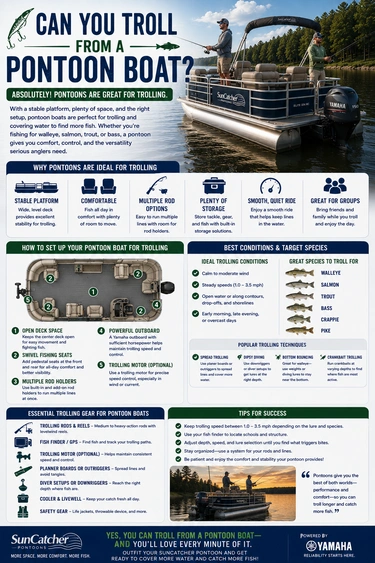
Can You Troll from a Pontoon Boat?
Yes, you can troll from a pontoon boat. In fact, for many lake and reservoir anglers, a pontoon can be a comfortable and practical trolling platform.
Trolling is all about controlled movement, organized rods, steady boat positioning, and enough space to manage lines safely. A pontoon can support that style well because it offers open deck space, seating, storage, stability, shade, and room for passengers. That makes it especially appealing for anglers who want to fish and keep family or guests comfortable at the same time.
A pontoon may not be the perfect trolling boat for every situation. Wind, current, tight structure, narrow rivers, and highly technical fishing can make a traditional aluminum fishing boat or deep-V fishing boat more efficient. But for relaxed lake and reservoir trolling, a fishing pontoon can make a lot of sense.
For shoppers in Virginia, Pennsylvania, Maryland, West Virginia, and nearby areas, MotoMember can help compare SunCatcher pontoon models, Yamaha-powered packages, trailers, rod holders, electronics, trolling motor planning, accessories, financing, trade-ins, and service support. MotoMember inventory pages have included new SunCatcher pontoon listings, including fishing-focused Select models, though availability, model year, equipment, pricing, and location can change.
Quick Answer: Is a Pontoon Good for Trolling?
A pontoon can be good for trolling when you fish lakes, reservoirs, coves, points, open-water structure, deeper banks, or calmer freshwater areas where comfort and space matter.
A pontoon may be a strong trolling choice if you:
Fish with family, kids, or guests
Want comfortable seating during slower presentations
Need room for multiple rods and rod holders
Troll for crappie, panfish, walleye-style patterns, catfish, or mixed freshwater species
Want one boat for fishing, cruising, relaxing, and entertaining
Prefer lake and reservoir fishing over tight rivers
Value shade, storage, and open deck space
A traditional fishing boat may be better if you:
Need very precise boat control
Fish narrow rivers or shallow creeks
Troll in heavy current or windy conditions often
Fish solo and want the simplest setup possible
Need a more fishing-first layout with dedicated rod lockers
Want a boat designed primarily around angling performance
The real answer depends on how and where you troll. A pontoon can absolutely troll, but the layout, motor setup, rod-holder placement, electronics, and safety plan matter.
Why Pontoon Boats Can Work Well for Trolling
Pontoon boats are naturally useful for slower, relaxed fishing because they give anglers room to spread out. That matters when you have multiple rods deployed, passengers on board, coolers under seats, tackle bags near the fishing area, and safety gear that still needs to stay accessible.
SunCatcher describes its pontoon lineup as built for cruising, fishing, entertaining, family comfort, Yamaha power, and different layouts for different days on the water. That mix of comfort and fishing utility is exactly why many anglers compare pontoons when shopping for a trolling-friendly boat.
Trolling often involves waiting, watching rod tips, adjusting speed, turning gradually, checking electronics, and keeping lines separated. A pontoon’s seating and deck space can make that process more comfortable than standing or sitting in a tighter fishing boat all day.
For family anglers, this is a major advantage. One person can manage rods while others relax, snack, watch the water, or enjoy the ride.
Best Types of Trolling for Pontoon Boats
Pontoon boats can support several freshwater trolling styles, depending on the layout and setup.
Crappie and Panfish Trolling
Crappie and panfish anglers often appreciate a pontoon’s space and seating. These trips may involve slower presentations, multiple rods, light tackle, live bait, jigs, small crankbaits, or working brush piles, channel edges, and lake structure.
A pontoon layout with fishing seats, rod holders, electronics, and livewell access can make crappie trolling more comfortable. It also gives kids and newer anglers room to participate without crowding the deck.
Catfish and Slow Drifting
Some catfish anglers use slow movement, controlled drifting, or trolling-style presentations to cover water. A pontoon can work well for this because it gives you space for heavier rods, bait, coolers, anchors, nets, and passengers.
For catfish, rod-holder strength and placement are important. Rods should be secure, easy to monitor, and positioned so lines stay separated.
Walleye-Style and Multi-Species Trolling
Some multi-species anglers troll crankbaits, crawler harnesses, jigs, or other presentations depending on the fishery. A pontoon can support this style on lakes and reservoirs when the boat can maintain controlled movement and the layout keeps rods organized.
Electronics become especially important here. A helm display can help with depth, structure, navigation, and route planning.
Casual Bass Trolling and Searching
Bass anglers do not always think of pontoons as bass boats, but pontoons can still be useful for relaxed trolling or searching on lakes and reservoirs. They may work well around points, deeper banks, weed edges, and open-water areas.
For technical bass fishing around tight docks, grass, laydowns, and shallow cover, a traditional aluminum fishing boat may still be more precise.
Trolling Motor vs Outboard: Which Should You Use?
Pontoon trolling can be done with different setups depending on the boat, water, and technique.
Trolling With an Outboard
An outboard can work well when you need to cover more water, make longer passes, or maintain movement across larger lake and reservoir areas. Yamaha’s official outboard resources note that its outboards are matched with compatible controls, gauges, props, and rigging options, and shoppers are encouraged to work with a dealer for rigging expertise.
For pontoon buyers, the key is not simply horsepower. It is how the full package works for your boat, your passengers, your normal gear load, and your fishing style. MotoMember can help shoppers compare Yamaha-powered pontoon packages without guessing at a one-size-fits-all setup.
Trolling With an Electric Trolling Motor
An electric trolling motor can be useful for slower presentations, quiet movement, shoreline control, brush piles, coves, and situations where fine adjustment matters.
The layout must support it. You need to think about mounting location, battery storage, charging access, wiring, deck space, and how the operator will control the boat while watching rods and electronics.
A pontoon can use a trolling motor, but it may not feel as nimble as a smaller aluminum fishing boat in wind, current, or tight cover. That does not make it a poor choice. It just means planning matters.
Rod Holders Are Critical for Pontoon Trolling
Rod holders are one of the most important features on a trolling pontoon.
When trolling, rods need to be secure, visible, and spaced well enough to reduce tangles. Poor rod-holder placement can make the boat frustrating even if everything else feels comfortable.
Good rod holders should not block gates, ladders, lounge seating, walkways, livewell lids, storage compartments, or boarding areas. They should also match the kind of fishing you do. Crappie anglers may want multiple holders near fishing seats. Catfish anglers may want heavier-duty holders positioned for stronger fish. Multi-species anglers may want flexible placement that works for different setups.
MotoMember’s SunCatcher Select 18F listing describes fishing-focused features such as bow fishing stations with upright rod holders, an aerated livewell, and a stern fishing center with livewell and rod holders. Exact equipment can vary by unit, so buyers should confirm details on any specific pontoon before choosing.
Electronics Help You Troll More Effectively
Electronics can make pontoon trolling easier by helping you track depth, structure, channels, points, ledges, brush piles, bait, and safe routes.
For trolling, visibility matters. A screen mounted only at the helm may be useful for the captain, but anglers sitting near the stern or bow may not see it clearly. Depending on how you fish, you may want electronics positioned where the person managing rods can use them.
SunCatcher Select listings and feature pages have included Garmin electronics and Yamaha gauges on certain Select models, but buyers should always verify exact equipment by model year, trim, and listing before making a decision.
When comparing pontoons, ask about future electronics upgrades too. Mounting space, transducer placement, wiring access, battery capacity, and charger location can all matter.
Layout Matters More Than Length
A longer pontoon is not automatically better for trolling. Usable layout matters more.
A strong trolling layout should give you:
Clear rod-holder locations
Comfortable seating near the fishing area
Easy livewell or baitwell access
Open walkways
Storage for tackle and safety gear
A helm with good visibility
Battery and charger access
Room to land fish safely
Space for passengers who are not fishing
A compact fishing pontoon may work beautifully for a small family or two anglers on protected water. A larger pontoon may be better for bigger crews, longer reservoir days, more storage, and mixed fishing-and-cruising use.
MotoMember inventory pages have included compact SunCatcher Select fishing pontoons as well as larger pontoon listings, but current availability and equipment can change.
Why Families Like Trolling from a Pontoon
Trolling can be one of the most family-friendly fishing techniques. Instead of asking everyone to stand and cast all day, trolling allows passengers to sit, watch rods, enjoy the scenery, and take turns helping when fish strike.
That is where pontoons shine.
Kids can participate without needing perfect casting skills. Guests can relax. Older passengers can sit comfortably. Anglers can keep fishing without making the trip feel too intense for everyone else.
A pontoon turns trolling into a shared activity. That is a big reason families consider them over more specialized fishing boats.
Storage Keeps the Deck Safe and Organized
Trolling gear can create clutter fast. Rods, tackle boxes, planer boards, nets, bait, coolers, life jackets, towels, bags, dock lines, anchors, and electronics accessories all need a place to go.
A pontoon gives you more space, but storage still matters. A large deck can become unsafe if rods, hooks, bags, and lines are scattered across walkways.
BoatUS explains that recreational boats must carry Coast Guard-approved personal flotation devices in good, serviceable condition and properly sized for the intended users, and wearable PFDs must be readily accessible.
That means life jackets should not be buried under tackle, coolers, or seat cushions. A good trolling layout keeps safety gear easy to reach while still keeping fishing gear organized.
Livewell and Baitwell Access
A livewell or baitwell can be useful when trolling, especially for crappie, panfish, live-bait fishing, and multi-species trips.
Placement matters. The livewell should be easy to reach from the fishing area without forcing passengers to move, stepping over rods, or blocking a walkway.
Before choosing a pontoon, open the livewell and picture the boat fully loaded. Add rods, tackle, coolers, bags, towels, life jackets, and passengers. If the livewell still feels easy to use, the layout may work well.
Shade Makes Long Trolling Days Easier
Trolling often means long, steady time on the water. Shade can make those days more enjoyable.
A bimini or shade system can help kids, guests, and older passengers stay comfortable. It also gives anglers a place to take a break when the bite slows.
When comparing pontoons, ask how shade works with fishing. Does it block rod holders? Does it interfere with casting or landing fish? Can it be used while trolling? Is it easy to deploy and stow?
Comfort is one of the main reasons anglers choose pontoons, so shade should be part of the buying conversation.
When a Pontoon May Not Be the Best Trolling Boat
A pontoon is not ideal for every trolling situation.
If you often troll in heavy wind, strong current, narrow channels, tight rivers, or areas where sharp boat control is required, a traditional aluminum fishing boat or deep-V fishing boat may feel easier to manage.
A pontoon can also be more affected by wind than smaller, lower-profile fishing boats. That can matter when you are trying to maintain a specific path, depth, or speed.
Storage and trailering should also be considered. Pontoons can require more storage room and more trailer planning than smaller fishing boats.
The best choice depends on your normal water, not one perfect day.
Pontoon vs Traditional Fishing Boat for Trolling
A pontoon is usually better for comfort, seating, family use, deck space, relaxed trolling, and social fishing.
A traditional fishing boat is usually better for precision, wind control, river use, solo fishing, tighter turns, and fishing-first efficiency.
Choose the pontoon if your trolling trips usually include family, guests, coolers, shade, and relaxed lake or reservoir use. Choose the traditional fishing boat if trolling performance, technical control, and angler-focused layout matter most.
Many MotoMember shoppers compare both because they want to understand the tradeoff before buying.
Safety Tips for Trolling from a Pontoon
Trolling from a pontoon requires a clear deck and good passenger awareness.
Rod tips, hooks, lines, tackle bags, nets, and coolers can create trip hazards. Keep walkways open and make sure passengers know where fishing gear is located.
The U.S. Coast Guard states that recreational vessels must have a U.S. Coast Guard-approved wearable PFD for each person onboard, and the best life jacket is the one people will actually wear.
If kids, guests, or newer boaters are on board, make safety part of the routine. Keep life jackets accessible, check local requirements, watch weather, and avoid letting fishing gear block gates or boarding areas.
New vs Used Pontoons for Trolling
New and used pontoons can both work for trolling.
A new pontoon may appeal to buyers who want current layouts, clean ownership history, dealer guidance, and accessory planning from the start. MotoMember’s pontoon inventory and blog resources show SunCatcher pontoon availability can include multiple layouts, but current inventory should always be verified directly.
A used pontoon may help manage upfront cost or include rod holders, electronics, a cover, trailer, trolling motor, or upgraded seating. Used buyers should inspect the pontoon tubes, deck, flooring, seats, fencing, motor, trailer, batteries, wiring, livewell, electronics, title paperwork, and service history.
Whether buying new or used, focus on the trolling setup. A pontoon that is comfortable but poorly arranged for rods, electronics, and gear may not satisfy anglers long term.
MotoMember Expert Tip
Shop for a trolling pontoon by imagining the boat in motion with lines out.
Picture your rods in holders, tackle nearby, a net ready, passengers seated, kids moving around, life jackets accessible, and the captain watching depth, direction, and boat traffic. Then ask whether the layout still feels safe and organized.
If rods block walkways, the livewell is hard to reach, or passengers have nowhere comfortable to sit, keep comparing. If the boat lets you manage lines while the family relaxes, you may be looking at the right pontoon.
Our team can help you compare SunCatcher pontoon layouts, Yamaha-powered packages, rod holders, livewell access, electronics planning, trolling motor compatibility, trailers, accessories, financing, trade-ins, and service needs based on how you actually fish.
Call to Action
Your trolling pontoon headquarters starts at MotoMember.
Explore current MotoMember marine inventory, compare SunCatcher pontoon models, ask about Yamaha-powered packages, and talk with the team about rod holders, electronics, livewell access, trolling motor planning, trailers, accessories, financing, trade-ins, and service support.
Current availability, pricing, model year, equipment, and promotions can vary, so check MotoMember inventory or contact the team before planning around a specific pontoon.
Large selection. Straightforward shopping. Real powersports and marine expertise.
Stop dreaming. Start riding—and fishing—with MotoMember.
Conclusion
So, can you troll from a pontoon boat?
Yes. A pontoon can be a comfortable, spacious, and family-friendly trolling platform for lakes and reservoirs. It can work well for crappie, panfish, catfish, multi-species fishing, and relaxed freshwater trolling when the layout supports rod holders, electronics, livewell access, storage, safe walkways, and controlled movement.
A pontoon is not the best choice for every trolling situation. Heavy wind, current, narrow rivers, and highly technical fishing may favor a traditional aluminum fishing boat or deep-V fishing boat.
But for anglers who want to troll while keeping family and guests comfortable, a fishing pontoon deserves a serious look.
For shoppers in VA, PA, MD, WV, and nearby areas, MotoMember can help compare pontoons and traditional fishing boats side by side so you choose a boat that fits your water, your fishing style, and your real ownership plan.
FAQ
Can you troll from a pontoon boat?
Yes. You can troll from a pontoon boat, especially on lakes and reservoirs. A pontoon can work well when it has good rod-holder placement, electronics, open deck space, livewell access, and a setup that supports controlled movement.
Is a pontoon good for crappie trolling?
Yes. A pontoon can be very good for crappie trolling because it offers seating, deck space, rod-holder options, storage, and room for multiple anglers or family members.
Do you need a trolling motor on a pontoon?
Not always. Some anglers troll with an outboard, while others use an electric trolling motor for slower, quieter control. The right setup depends on your boat, water, fishing style, batteries, wiring, and accessory plan.
What features help a pontoon troll better?
Helpful features include well-placed rod holders, electronics, livewell or baitwell access, open walkways, comfortable fishing seats, battery access, shade, storage, and a motor setup that supports your preferred trolling style.
Can MotoMember help me set up a pontoon for trolling?
Yes. MotoMember can help shoppers compare SunCatcher pontoons, Yamaha-powered packages, rod holders, electronics, trolling motor planning, trailers, accessories, financing, trade-ins, and service support across VA, PA, MD, WV, and nearby areas.