
Bass Fishing Boat Setup Guide

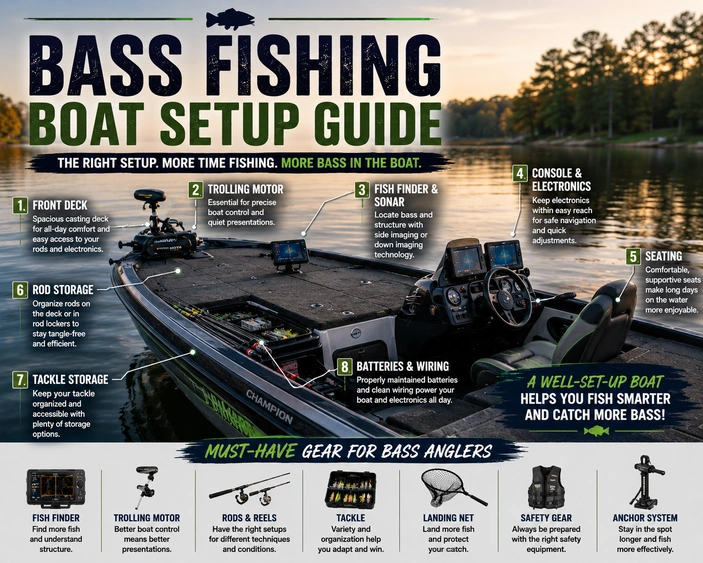
Bass Fishing Boat Setup Guide
A strong bass fishing boat setup is not just about having a boat, motor, and a few rods on board. It is about creating a layout that helps you fish cleaner, move safer, stay organized, and make better decisions from the first cast to the final run back to the ramp.
The right setup helps you control the boat around docks, grass, laydowns, points, shallow flats, and deeper structure. It also helps you store tackle, power electronics, manage batteries, land fish, and keep passengers comfortable without cluttering the deck.
For anglers in Virginia, Pennsylvania, Maryland, West Virginia, and nearby areas, MotoMember helps shoppers compare fishing boats, G3 boats, marine accessories, service support, financing, trade-ins, and long-term ownership needs. MotoMember’s G3 boat guidance notes that shoppers can compare inventory, jon boats, aluminum fishing boats, SunCatcher pontoons, trolling motor options, accessories, financing, trade-ins, and service support through the dealership team.
Start With How You Bass Fish
Before choosing accessories, electronics, or storage upgrades, think about how you actually fish.
Some bass anglers fish shallow cover almost all day. Others spend more time offshore, following contour lines, brush piles, ledges, and points. Some fish tournaments, while others fish weekends with family or friends.
That matters because every setup decision should support your normal fishing style. A shallow-water angler may prioritize a quiet trolling motor, open front deck, and quick-access tackle. An offshore angler may care more about mapping, sonar, waypoints, and battery capacity. A family angler may need a balance of casting space, seating, storage, and comfort.
Many shoppers start by asking, “What is the best bass boat setup?” A better question is, “What setup helps me fish the way I actually fish most often?”
Choose the Right Boat Layout
A bass fishing boat setup begins with the hull and layout. You can add accessories later, but the wrong floor plan can be hard to fix.
Front Casting Deck
The front casting deck is the main work area for many bass anglers. It should give you enough room to stand comfortably, operate the trolling motor, watch electronics, cast from different angles, and move without stepping over rods and tackle.
Look for a bow layout that supports:
- A trolling motor mount
- A bow fish finder
- Rods laid down safely
- Easy storage access
- Stable footing
- Room for a landing net
- Clear movement around the foot pedal
If the front deck feels cramped before you load gear, it will feel even tighter on the water.
Rear Casting Deck
A rear deck gives your fishing partner a better place to cast and manage gear. It also helps when two anglers are fishing opposite targets, working a bank together, or landing fish near the stern.
Rear casting space matters for comfort and safety. A passenger should not have to balance on seats, coolers, or cluttered flooring to make a cast.
Console Layout
Side console, center console, and tiller-style layouts all have different advantages. A side console can feel familiar and comfortable for many boaters. A center console may improve movement around the boat. A tiller layout may free up interior space for some fishing styles.
Before choosing a boat, sit at the helm, stand on the bow, and walk through a normal fishing day. Our team can help you compare how different layouts affect casting, storage, passenger comfort, and control.
Set Up the Trolling Motor Correctly
For bass fishing, the trolling motor is one of the most important tools on the boat. It helps you control position, work cover, fish slowly, and make quiet adjustments without using the outboard.
A bow-mounted trolling motor is usually the preferred setup for bass anglers because it pulls the boat from the front and gives better control while casting. The setup should be matched to the boat’s size, weight, bow height, battery space, and typical fishing conditions.
Minn Kota’s motor selection guidance explains that shaft length should be measured from the bow mounting surface to the waterline and that the propeller tip should generally stay at least 12 inches below the waterline to avoid surface agitation. It also recommends adding extra length for rough water or certain bow-mount hand-control setups.
When comparing trolling motors, consider:
- Mount type
- Shaft length
- Thrust
- Voltage
- Battery requirements
- Foot pedal or remote control
- GPS anchoring features
- Compatibility with electronics
- Service and installation support
Do not choose a trolling motor by thrust alone. A motor that is powerful but poorly mounted, underpowered by batteries, or too short for the bow will not perform the way you want.
Plan the Battery System
A bass fishing boat often uses multiple electrical systems at once. You may have a trolling motor, fish finders, livewell pumps, navigation lights, shallow-water accessories, chargers, and other electronics.
That makes battery planning a major part of the setup.
A simple boat may use one starting battery and one trolling motor battery. A more advanced boat may use a 24V or 36V trolling motor system, dedicated electronics power, and an onboard charger. The exact setup depends on the boat, motor, electronics, battery type, and manufacturer recommendations.
Think about battery placement before adding gear. Batteries affect balance, storage, service access, and total weight. Keep wiring clean, secure, and protected from rubbing, sharp edges, and loose gear.
A proper setup should include:
- Batteries matched to the motor and electronics
- Correct voltage configuration
- Proper circuit protection
- Clean terminal connections
- Secure battery trays
- Charger compatibility
- Safe cable routing
- Easy inspection access
If you are upgrading an existing boat, do not assume the original wiring is ready for modern electronics and higher electrical loads.
Add Fish Finders and Electronics
Fish finders and mapping systems help bass anglers understand depth, structure, bottom changes, vegetation, bait, and boat position. But electronics only work well when the display, transducer, and wiring are set up correctly.
A common bass fishing setup includes one display at the console and one at the bow. The console unit helps while running, idling, mapping, and locating structure. The bow unit helps while casting, operating the trolling motor, and fishing specific targets.
Humminbird’s installation guidance explains that a transducer must be in direct contact with water and mounted in an area with smooth water flow to function properly. Lowrance also notes that transducer mounting options may include transom, trolling motor, shoot-through hull, and thru-hull setups depending on the boat and equipment.
For bass fishing, think through:
- Where you stand while fishing
- Whether you need bow and console screens
- Where the transducer will mount
- Whether electronics integrate with the trolling motor
- How cables will be routed
- Whether the screen blocks storage or movement
- Whether the battery system can support the electronics
Advanced electronics can be powerful, but a clean, reliable installation matters more than having the most complicated setup.
Organize Rod and Tackle Storage
Bass anglers carry a lot of gear. Crankbaits, jigs, soft plastics, spinnerbaits, chatter-style baits, topwater lures, terminal tackle, line, tools, rain gear, and spare equipment can quickly take over a boat.
A good bass fishing boat setup keeps gear accessible without making the deck messy.
Prioritize storage for:
- Rods
- Tackle trays
- Soft plastics
- Tools and pliers
- Scale and cull tags
- Rain gear
- Spare line
- Life jackets
- Net
- Anchor or shallow-water accessories
- Cooler or drinks
The goal is simple: the gear you use most should be easiest to reach. The gear you rarely use should not block storage lids, walkways, or fishing positions.
Many experienced anglers set up tackle by technique. For example, one compartment may hold shallow crankbaits and topwater gear, while another holds jigs, worms, and terminal tackle. This saves time and reduces clutter during a fast bite.
Keep the Deck Clean and Safe
Bass fishing often involves standing, casting, setting the hook, turning quickly, and moving around rods. A cluttered deck can lead to broken gear, lost fish, or unsafe footing.
Before every trip, check that rods are secured, tackle trays are closed, loose hooks are put away, and tools are not rolling around the deck. Keep the landing net where it can be reached quickly but not stepped on constantly.
Deck organization is especially important when fishing with a partner. Both anglers need room to cast without crossing rods, stepping into open compartments, or tripping over bags.
A clean deck helps you fish better. It also protects your gear.
Set Up the Livewell and Fish Care Gear
For anglers who keep fish legally or participate in tournaments, the livewell system matters. Make sure you understand how your livewell, aerator, pump, drain, and controls work before you need them.
Do not wait until tournament morning to learn the livewell system. Test it, check the pump, and know how to operate the settings.
Fish care gear may include:
- Livewell treatment
- Measuring board
- Scale
- Cull tags
- Dip net
- Towels
- Pliers
- Hook removal tools
Follow local fishing regulations and tournament rules when handling, keeping, measuring, or releasing bass. Regulations can vary by state, waterway, season, and species, so check official state resources before fishing new water.
Prepare Safety Equipment
A bass fishing boat should be set up for safety, not just performance.
BoatUS explains that minimum Coast Guard equipment requirements vary by boat size, propulsion, nighttime operation, visibility conditions, and sometimes the body of water being used. Capacity information also matters because passengers, batteries, tackle, coolers, fuel, and accessories all add weight.
Safety equipment may include:
- Proper life jackets
- Throwable flotation device where required
- Fire extinguisher where required
- Sound-producing device
- Navigation lights
- First-aid kit
- Anchor and rope
- Paddle or backup propulsion
- Emergency tools
- Phone or marine communication device
- Registration and required documents
Do not bury safety gear under tackle. Keep it accessible and in good condition.
Match the Setup to Local Water
Bass fishing conditions vary across VA, PA, MD, WV, and nearby areas. Some anglers fish shallow rivers and smaller lakes. Others spend time on larger reservoirs, tidal water, or open lakes with wind and boat traffic.
Local conditions should influence your setup.
For shallow water, you may care more about hull durability, trolling motor control, and a simple layout. For larger water, you may prioritize electronics, battery capacity, wind control, storage, and passenger comfort. For mixed-use family fishing, you may want a boat that handles bass fishing while still offering seating and storage for non-fishing passengers.
This is where dealership-style guidance matters. A setup that looks perfect online may not be ideal for the ramps, water, storage, towing, and fishing style you actually use.
Think About Trailer, Tow Vehicle, and Storage
A bass fishing setup does not end at the boat. You also need to think about how you will tow, launch, store, charge, and maintain it.
Before choosing a setup, consider:
- Trailer fit
- Garage or storage length
- Battery charging access
- Tow vehicle capability
- Ramp conditions
- Cover options
- Winter storage needs
- Service access
- Accessory installation plans
A boat that fishes well but is difficult to store or tow may become frustrating over time. The best setup fits your life on land as well as your fishing style on the water.
New vs. Used Bass Fishing Boat Setup
A new boat may give you more control over layout, accessories, electronics, and rigging from the beginning. A used boat may offer strong value, but it deserves a careful inspection.
When comparing a used bass fishing boat, look closely at:
- Hull condition
- Deck condition
- Transom condition
- Wiring quality
- Battery age and setup
- Trolling motor operation
- Fish finder condition
- Trailer condition
- Livewell operation
- Storage compartments
- Service history when available
MotoMember serves shoppers through locations in Purcellville, Manassas, and Chambersburg, and represents powersports and marine categories, giving regional buyers a resource for comparing inventory, trade-ins, service, financing, and ownership support.
MotoMember Expert Tip
Before setting up a boat for bass fishing, stand on the front deck and go through the motions.
Pretend you are casting to a dock, skipping a bait, turning with the trolling motor, reaching for pliers, grabbing the net, opening a tackle compartment, and landing a fish. If your rods, electronics, foot pedal, storage lids, and seating all fight for the same space, the setup needs adjustment.
Many shoppers focus on horsepower, screen size, or brand names first. In the showroom, our team often starts with layout, movement, storage, battery placement, and how the boat will be used on a real fishing day.
Large selection. Straightforward shopping. Real powersports and marine expertise.
Bass Fishing Boat Setup Checklist
Use this checklist before buying, rigging, or upgrading a boat:
- Open front casting deck
- Comfortable rear fishing position
- Proper trolling motor mount
- Correct trolling motor shaft length
- Battery system matched to the motor
- Onboard charger access
- Bow and console electronics plan
- Clean transducer placement
- Organized rod storage
- Technique-based tackle storage
- Working livewell
- Accessible safety gear
- Clear deck space
- Trailer and tow vehicle compatibility
- Service and accessory support
The best bass fishing boat setup should feel simple once you are on the water. Everything should have a place, and every major accessory should support the way you fish.
Call to Action
Ready to compare boats or build a better bass fishing setup?
Contact MotoMember or browse current inventory to compare fishing boats, G3 aluminum boats, marine accessories, service support, financing options, and trade-in opportunities. G3 Boats describes its lineup as aluminum fishing boats built for anglers, families, and outdoor adventures, with series that include Gator Tough Jon, Sportsman, Angler V, Bay, and SunCatcher pontoon options.
Current availability, equipment, pricing, and model details can change, so check MotoMember inventory or contact the team before planning around one exact boat or accessory package.
Your bass fishing boat setup starts at MotoMember.
Stop dreaming. Start fishing.
Conclusion
Setting up a boat for bass fishing is about building a complete system. The hull, deck layout, trolling motor, electronics, batteries, storage, livewell, trailer, and safety gear all need to work together.
Start with how you fish. Then choose a layout that gives you room to cast, control the boat, store tackle, power electronics, and move safely. Avoid building a setup around one accessory before thinking through the full day on the water.
For anglers across Virginia, Pennsylvania, Maryland, West Virginia, and nearby areas, MotoMember can help compare fishing boats, G3 options, accessories, financing, trade-ins, service needs, and long-term ownership support.
A better setup means fewer distractions, cleaner casts, smarter boat control, and more time focused on fishing.
FAQ
What is the most important part of a bass fishing boat setup?
The most important part is the layout. A good front casting deck, clean trolling motor position, accessible storage, and safe movement make every other accessory more useful.
Do I need two fish finders for bass fishing?
Not always. One fish finder may be enough for casual anglers or smaller boats. Many serious bass anglers prefer one unit at the console and one at the bow so they can use electronics while running and while fishing.
What size trolling motor do I need for bass fishing?
The right trolling motor depends on boat size, weight, bow height, wind, current, and battery setup. Shaft length, thrust, voltage, and mounting style all matter. Follow the trolling motor manufacturer’s current guidance and ask MotoMember for setup advice before choosing.
How should I organize tackle on a bass boat?
Organize tackle by technique and frequency of use. Keep everyday baits, tools, and terminal tackle easy to reach. Store less-used gear deeper in compartments so the deck stays clean and safe.
Can MotoMember help me set up a boat for bass fishing?
Yes. MotoMember can help shoppers compare fishing boats, G3 boats, trolling motor options, electronics-friendly layouts, accessories, financing, trade-ins, and service support. Current availability and equipment can vary, so contact the team for current guidance.