
How to Set Up a Jon Boat for Waterfowl Hunting

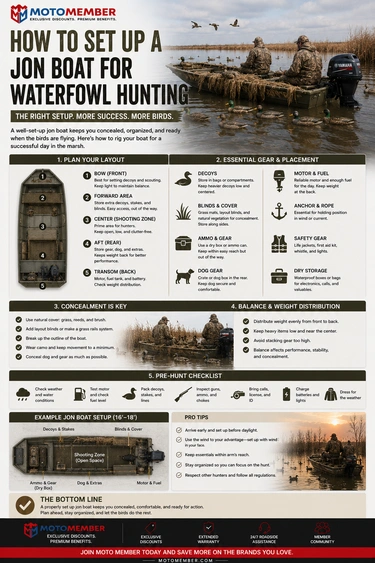
How to Set Up a Jon Boat for Waterfowl Hunting
Setting up a jon boat for waterfowl hunting is all about balance. You need a boat that can run shallow water, carry hunters and decoys, hide well in marsh grass, and still stay safe when the temperature drops and conditions change fast.
A good duck hunting jon boat does not need to be complicated. In fact, the best setups are usually simple, organized, stable, and built around how you actually hunt. A boat used for tight creek bends in Virginia may look different from one used on larger water in Maryland or river backwaters in Pennsylvania.
For hunters in VA, PA, MD, and nearby areas, the right jon boat setup can make early mornings smoother and safer. Before choosing a boat, motor, blind, or accessory package, think through your water depth, launch access, number of hunters, dog space, decoy load, storage needs, and local regulations.
MotoMember helps customers compare marine and powersports options, including boats, trailers, outboards, accessories, service support, financing, and trade-ins. Current availability can vary, so check MotoMember inventory or contact the team before planning your build. MotoMember lists new and used powersports and marine inventory online, including marine, trailers, outboard motors, and related categories.
Start With the Right Jon Boat Platform
A jon boat is popular for waterfowl hunting because of its flat-bottom design, open layout, and ability to work in shallow water. It gives hunters a practical platform for decoys, dogs, gear, and a low-profile blind.
The right boat depends on how and where you hunt. Many shoppers start by asking, “What size jon boat do I need for duck hunting?” The better question is, “How much boat do I need for my hunting crew, water conditions, and gear load?”
Consider Boat Size and Stability
A smaller jon boat can be easier to hide, easier to tow, and easier to launch in tight areas. It can work well for solo hunters or two-person hunts in protected water.
A larger jon boat typically gives you more room for decoys, blind material, dogs, fuel, batteries, and extra safety gear. It may also feel more stable when hunters shift weight, stand to handle gear, or work a dog from the boat.
Before choosing a model, consider:
How many hunters will usually be onboard?
Will you hunt with a dog?
How many decoys do you carry?
Do you need room for layout seats or a full boat blind?
Will you cross open water or stay in protected backwaters?
Do you need a trailer that can handle muddy ramps and cold-weather launches?
A good dealership conversation should cover all of those details. Our team can help you compare boat size, trailer setup, engine needs, and accessory options based on how you actually plan to hunt.
Think About Weight Capacity
Waterfowl hunting gear adds up quickly. Hunters, waders, shotguns, blind bags, decoys, anchors, dog platforms, batteries, fuel, outboard weight, mud motors, and blind frames can all affect how the boat sits in the water.
Do not build your setup only around empty-boat performance. Build around real hunting weight.
A boat that feels roomy in the showroom can feel crowded once two hunters, a dog, three dozen decoys, and a blind frame are onboard. Check capacity plates, manufacturer guidance, and official owner materials before finalizing your setup.
Choose the Right Motor for Your Hunting Area
The motor is one of the biggest decisions in a waterfowl jon boat setup. The right choice depends on water depth, vegetation, mud, stumps, current, distance, and noise preferences.
Outboard Motors
Traditional outboard motors are common, proven, and practical for many duck hunters. They are often a strong fit when you run from a ramp to a blind location using creeks, rivers, reservoirs, or protected bays.
Outboards work best when there is enough water depth and fewer submerged obstacles. They can also be a good choice for hunters who use the boat outside duck season for fishing, crabbing, scouting, or general recreation.
If you plan to use your jon boat year-round, an outboard may offer more versatility than a specialized hunting-only setup.
Mud Motors
Mud motors are designed for shallow, muddy, weedy, or obstacle-filled areas where a standard outboard may struggle. They can be useful for marshes, flooded vegetation, and extremely skinny water.
However, they are not automatically the right answer for every hunter. Mud motors can change handling, noise, weight balance, maintenance needs, and cost. Before choosing one, think about whether your hunting area truly requires it.
Trolling Motors
A trolling motor can help with quiet final approaches, decoy pickup, repositioning, and scouting. It can also reduce noise when you are moving around a marsh before shooting light.
Battery placement matters. Keep weight balanced and secure the battery so it cannot slide when the boat turns, hits chop, or bumps a stump.
Build a Practical Boat Blind
The blind is the heart of a waterfowl jon boat setup. It should hide hunters, break up the boat outline, allow safe shooting lanes, and still let everyone move efficiently.
Permanent vs. Removable Blinds
A permanent blind can be convenient if the boat is dedicated to duck hunting. It saves setup time and can be built exactly around your hunting layout.
A removable blind is better if you use the boat for fishing, family time, or summer work. It also makes storage easier and may reduce wind resistance while towing.
Most hunters should choose the simplest blind that meets their needs. Complicated blind systems can become frustrating in the dark, in freezing rain, or when you need to move fast.
Blind Frame Design
The frame should be sturdy, quiet, and easy to operate with gloves on. Common options include scissor-style blinds, flip-up frames, and low-profile grass rail systems.
Make sure the frame does not interfere with:
Steering
Throttle operation
Fuel lines
Battery cables
Navigation lights
Decoy bags
Dog entry and exit
Emergency movement
A blind that hides well but blocks safe movement is not a good blind. Test the layout before the season starts.
Camouflage and Grass
Natural vegetation can help your boat blend into marsh grass, reeds, timber edges, or creek banks. Synthetic grass panels can also work well when matched to local cover.
For riders and hunters in VA, PA, MD, and nearby areas, seasonal cover can change quickly. Early-season green marsh grass may turn brown by late season. A blind that looked perfect in October may stand out in January.
Use layers. Start with a neutral base, then add local vegetation once you reach the hunting area where legal and appropriate.
Organize the Interior Layout
A jon boat for waterfowl hunting should feel organized even in the dark. Every item should have a place, and the most important gear should be reachable without digging.
Keep the Floor Clear
A cluttered floor creates trip hazards. It also makes it harder to move safely with waders, gloves, a dog, and low light.
Keep loose rope, decoy lines, shell boxes, and bags under control. Use storage bins, mesh bags, clips, and simple tie-down points.
A clear floor also helps with weight distribution. When gear piles up in one corner, the boat may list or handle poorly.
Create Dedicated Zones
Think of the boat in zones:
Driver zone
Hunter seating zone
Dog zone
Decoy storage zone
Firearm-safe storage zone
Fuel and battery zone
Emergency gear zone
This makes the boat easier to load, easier to hunt from, and easier to troubleshoot. It also helps new guests understand where to sit and where not to step.
Add Non-Slip Flooring
Cold, wet aluminum can be slick. Non-slip mats, marine flooring, or textured surfaces can improve footing.
Choose materials that drain well and are easy to clean. Duck boats deal with mud, feathers, water, dog hair, marsh grass, and ice. Anything added to the floor should be practical, secure, and durable.
Plan Seating for Hunters and Dogs
Comfort matters more than many hunters admit. If you are sitting for hours in cold weather, poor seating can turn a good hunt into a long morning.
Low-Profile Seats
Low-profile seating helps keep hunters concealed and lowers the center of gravity. Swivel seats, removable benches, and padded layout-style seating can all work depending on your blind design.
Avoid tall seating that makes the boat harder to hide or less stable. The goal is comfort without adding unnecessary height.
Dog Platform or Dog Ladder
If you hunt with a retriever, plan for safe dog movement. A dog platform, dog ladder, or low-entry area can make retrieves safer and easier.
The dog should have a defined place to sit that does not block shooting lanes, steering, or emergency access. Add traction where the dog enters and exits the boat.
Set Up Decoy Storage and Deployment
Decoys take up more room than expected. A good system helps you deploy faster, pack up cleaner, and avoid tangled lines when the morning is cold.
Use Decoy Bags That Fit the Boat
Oversized bags can be awkward in a narrow jon boat. Smaller bags may be easier to stack, move, and distribute.
Many hunters prefer dividing decoys by type or rig:
Mallards
Divers
Goose floaters
Motion decoys
Long lines
Jerk rigs
Separating rigs helps you adapt the spread to the spot instead of dumping everything into one pile.
Keep Anchors and Lines Controlled
Loose decoy line is one of the most annoying problems in a duck boat. It wraps around boots, dogs, guns, blind frames, and motors.
Use slotted bags, line wraps, Texas rigs, or dedicated bins to keep things clean. The best system is the one you will actually use at 4:30 in the morning.
Add Lighting Without Overdoing It
Lighting helps with loading, launching, setup, and pickup, but too much light can hurt concealment and night vision.
Interior Boat Lights
Small LED strip lights or low-output cockpit lights can help you see gear without flooding the marsh with light. Choose waterproof, durable components designed for marine use.
Install lights where they do not shine into the operator’s eyes. Make sure wiring is protected from boots, dogs, decoy bags, and water.
Navigation Lights
Do not overlook required navigation lighting. Boats operating before daylight or after sunset may need proper lights depending on boat type, size, and conditions.
Boating requirements vary by jurisdiction and vessel setup, so check official resources for your state and boat. Virginia DWR notes that boats must carry wearable U.S. Coast Guard-approved life jackets for each person onboard, and its boating safety resources cover equipment requirements and education rules.
Do Not Skip Safety Gear
Duck hunters often operate in the worst boating conditions of the year: cold water, low light, wind, fog, ice, and heavy clothing. Safety gear should be treated as part of the hunting setup, not an afterthought.
Life Jackets and Cold-Water Risk
Every hunter should have a properly fitting, serviceable life jacket. Cold water changes the stakes fast, especially when hunters are wearing waders and heavy layers.
The U.S. Coast Guard’s federal boating guide recommends that everyone onboard wear a U.S. Coast Guard-approved personal flotation device while on the water and take a boating safety course.
Emergency Gear Checklist
A practical jon boat safety kit may include:
Life jackets for every person
Throwable flotation device when required
Sound-producing device
Navigation lights
Waterproof flashlight or headlamp
First aid kit
Fire extinguisher when required
Paddle or push pole
Anchor and rope
Bilge pump or hand pump
Basic tool kit
Spare drain plug
Tow rope
Phone in waterproof case
Dry bag with emergency clothes
Do not assume one checklist covers every boat or state. Equipment requirements can depend on boat length, motor type, fuel system, time of operation, and local rules.
Know Your Local Regulations
Waterfowl rules, boating requirements, licenses, stamps, zones, and season dates change. Always verify regulations before hunting.
Virginia DWR manages boating and wildlife resources in Virginia, Pennsylvania’s Game Commission publishes hunting and waterfowl resources, and Maryland DNR provides waterfowl and hunting guidance for Maryland hunters.
For Pennsylvania hunters, the Game Commission’s hunting and trapping resources include license and season information, with 2026–2027 licenses valid from July 1, 2026, through June 30, 2027.
For Maryland hunters, the Department of Natural Resources provides hunting license information and waterfowl resources, including state-specific waterfowl guidance.
Balance Weight Before Opening Day
A loaded duck boat handles differently than an empty boat. That is why preseason testing matters.
Load the boat like you are going hunting. Add hunters, dog, blind bags, decoys, fuel, batteries, and the blind. Then test how the boat floats, turns, accelerates, and stops in safe conditions.
Look for problems like:
Bow riding too high
Stern sitting too low
Water coming close to the transom
Gear shifting during turns
Blind blocking visibility
Dog platform affecting balance
Battery weight causing a list
The time to fix those issues is before season, not at the ramp in the dark.
Trailer Setup Matters Too
A duck hunting jon boat is only useful if you can launch and retrieve it reliably. The trailer should match the boat, load, ramp conditions, and towing vehicle.
Bunks, Guides, and Winch
Proper bunks and side guides can make cold-weather loading much easier. They also help when ramps are slick, shallow, or crowded.
Inspect the winch strap, safety chain, lights, tires, bearings, and coupler before the season starts. A trailer failure can ruin a hunt before the boat ever touches water.
Storage and Transport
Think about how your blind rides down the road. Loose grass panels, blind doors, and frame sections can create wind drag or damage.
Secure everything before towing. If your setup is removable, consider whether it is better to trailer with the blind down and finish brushing in at the hunting area.
Accessories That Make a Jon Boat Hunt Better
Not every accessory is necessary. The right add-ons solve real problems without making the boat crowded or complicated.
Useful Accessories
Good waterfowl jon boat accessories can include:
Push pole
Decoy racks
Gun box or secure firearm storage
Dry storage box
Bilge pump
Marine battery box
Dog ladder
Anchor system
Brush clips
Blind grass straps
Interior LED lighting
Floor traction
Rod holders if the boat doubles for fishing
Small heater only when safe, legal, ventilated, and appropriate
Choose accessories based on your hunting style. A timber hunter, marsh hunter, river hunter, and big-water diver hunter may all build very different boats.
Avoid Overbuilding
It is easy to add too much. Every accessory adds cost, weight, complexity, or something else to maintain.
Before buying an accessory, ask one question: “Will this make the boat safer, more organized, more concealed, or easier to hunt from?” If not, it may not belong on the boat.
MotoMember Expert Tip
Before building a jon boat for waterfowl hunting, lay painter’s tape on the floor to mark where hunters, decoys, dog space, batteries, fuel, and blind supports will go. Then physically move through the layout like you are hunting.
Sit down. Stand up. Reach for your blind bag. Pretend to deploy decoys. Move the dog in and out. Check whether the driver can operate the motor safely with the blind in place.
This simple showroom-style layout test helps reveal problems before you drill holes, mount hardware, or buy accessories. Many shoppers start by asking about boat size, but the layout usually determines whether the setup actually works.
Maintenance Before and During Duck Season
Duck boats live a hard life. Mud, sand, ice, salt or brackish water, decoy weights, wet dogs, and cold starts all take a toll.
Preseason Checklist
Before the season, inspect:
Hull and rivets or welds
Drain plug
Transom
Motor mount
Fuel lines
Battery condition
Trailer lights
Tire pressure
Wheel bearings
Blind frame hardware
Navigation lights
Bilge pump
Safety gear
Decoy storage
Motor service needs
MotoMember offers dealership support across powersports and marine categories, with inventory, service, parts, financing, and trade-in resources available through its website and locations in Virginia and Pennsylvania.
After-Hunt Cleanup
After each hunt, remove wet gear, drain water, clean mud from the floor, and let the boat dry when possible. Check for new dents, loose bolts, cracked brackets, and damaged wiring.
If you hunt brackish or salt-influenced water, follow manufacturer guidance for cleaning and flushing. Do not wait until the end of the season to deal with corrosion or electrical issues.
Financing, Trade-Ins, and Building Over Time
A waterfowl jon boat setup can be built in stages. You do not have to buy every accessory at once.
Start with the essentials:
Safe boat
Proper motor
Reliable trailer
Required safety gear
Basic storage
Functional concealment
Then add upgrades as you learn what you really need.
MotoMember can help shoppers compare new and used inventory, financing options, trade-in opportunities, accessories, and service support. That is especially helpful if you are deciding between a simple jon boat, a larger marine setup, a side-by-side for hunting property access, or a trailer package that supports multiple uses.
Large selection. Straightforward shopping. Real powersports expertise.
Call to Action
Ready to set up a jon boat for waterfowl hunting? Contact MotoMember or browse current marine and powersports inventory to compare boats, trailers, outboards, accessories, financing options, and trade-in support.
For hunters in Virginia, Pennsylvania, Maryland, West Virginia, and nearby areas, MotoMember can help you think through how you hunt, where you launch, what you tow with, and what setup makes the most sense before the season starts.
Stop dreaming. Start riding — and get your hunting setup ready before opening morning.
Conclusion
The best jon boat for waterfowl hunting is not always the biggest, most expensive, or most heavily modified boat. It is the boat that fits your water, your hunting crew, your dog, your decoy spread, and your safety needs.
Start with a stable platform. Choose the right motor. Keep the layout clean. Build a blind that hides well without blocking movement. Plan storage before you add accessories. Test the boat fully loaded before the season.
Most importantly, treat safety as part of the setup. Cold-weather duck hunting demands preparation, reliable equipment, and smart decisions on the water.
For shoppers across VA, PA, MD, and surrounding areas, MotoMember is a helpful place to compare marine options, powersports inventory, accessories, service, financing, and long-term ownership support.
FAQ
What size jon boat is best for waterfowl hunting?
The best size depends on your hunting crew, gear load, dog space, water conditions, and towing needs. A smaller boat may work for one or two hunters in protected water, while a larger boat may be better for more decoys, dogs, and open-water conditions. Always check the boat’s capacity information and manufacturer guidance.
Do I need a mud motor for duck hunting?
Not always. A mud motor can be useful in shallow, muddy, weedy areas, but a standard outboard may be better for deeper water, longer runs, and year-round use. Our team can help you compare motor options based on where you hunt.
How do I make a jon boat safer for duck hunting?
Keep the boat organized, balance the load, use proper life jackets, maintain navigation lights, carry required safety equipment, and test the boat fully loaded before the season. Check official state boating requirements and hunting regulations before heading out.
Should I build a permanent or removable duck boat blind?
Choose a permanent blind if the boat is mainly used for waterfowl hunting. Choose a removable blind if you also fish, scout, or use the boat recreationally. Either way, make sure the blind does not block steering, visibility, dog movement, or emergency access.
Can MotoMember help with boat, trailer, and accessory choices?
Yes. MotoMember supports powersports and marine shoppers with inventory, service, parts, financing, and trade-in resources. Current availability can vary, so check MotoMember inventory or contact the team to compare options for your hunting setup.