
Best Pontoon Boat Features for Fishing

Best Pontoon Boat Features for Fishing
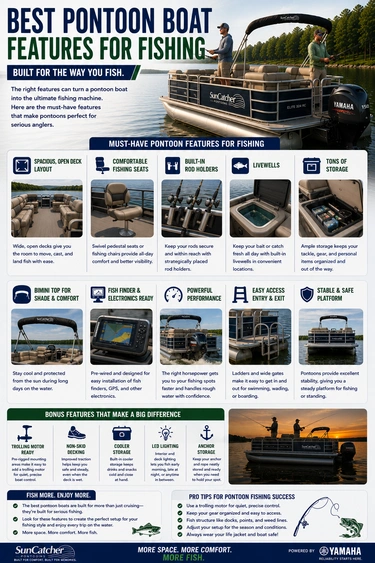
The best pontoon boat features for fishing are the ones that make the boat easy to fish from, comfortable to spend time on, and practical to own season after season.
A good fishing pontoon should not feel like a lounge boat with a rod holder added as an afterthought. It should give anglers usable fishing space, smart storage, comfortable seating, safe movement, rod management, livewell or baitwell access, electronics readiness, and enough room for family or guests to enjoy the day.
That balance is why fishing pontoons are so popular with lake and reservoir buyers. They can support crappie, panfish, catfish, casual bass fishing, trolling, anchored fishing, and family-friendly cruising in one platform.
For shoppers in Virginia, Pennsylvania, Maryland, West Virginia, and nearby areas, MotoMember can help compare fishing pontoons, SunCatcher pontoon models, Yamaha-powered packages, trailers, accessories, financing, trade-ins, and service support. MotoMember inventory pages have included SunCatcher pontoon listings, though availability, pricing, model year, and equipment can change, so shoppers should always check current inventory or contact the team before planning around a specific unit.
Quick Answer: What Features Matter Most on a Fishing Pontoon?
The best pontoon boat features for fishing usually include:
Fishing seats
Rod holders
Livewell or baitwell access
Open deck space
Smart storage
Comfortable passenger seating
Shade
Electronics space
Trolling motor compatibility
Battery access
Safe flooring and clear walkways
A trailer that fits your tow and storage plan
Dealer service and accessory support
The right features depend on your fishing style. A crappie angler may care most about seating, rod holders, and electronics. A catfish angler may want open space, heavy-duty rod placement, anchors, and easy cleanup. A family may value seating, shade, storage, boarding ease, and a layout that keeps kids and guests comfortable.
SunCatcher describes its pontoon lineup as built for cruising, fishing, entertaining, and family comfort with Yamaha power and layouts for different days on the water. That is the sweet spot many pontoon buyers are looking for: fishing utility without giving up comfort.
Fishing Seats in the Right Places
Fishing seats are one of the most important pontoon fishing features. They give anglers a dedicated place to cast, watch rods, handle bait, or work a shoreline without standing in the middle of the lounge area.
Placement matters more than the number of seats. A fishing seat should be positioned where it actually helps you fish. Bow fishing seats can work well for casting toward banks, docks, coves, or brush. Rear fishing seats may be useful for trolling, panfish, catfish, or social fishing with multiple anglers.
Before choosing a pontoon, sit in the fishing seats and picture a real day on the water. Where are your rods? Where is the tackle? Can you reach the livewell? Can another passenger walk past you safely? Can kids or guests sit without getting in the way?
A good fishing pontoon lets anglers fish without taking over the entire boat.
Rod Holders and Rod Storage
Rod holders are essential for many pontoon anglers. They are especially helpful for crappie, catfish, trolling, panfish, and live-bait fishing.
But rod holder placement can make or break the layout. A rod holder should be useful without blocking gates, seats, storage lids, walkways, or boarding areas. Poor placement can turn a spacious pontoon into a cluttered deck.
Serious anglers should also think about rod storage. A fishing pontoon may have plenty of seating but still feel frustrating if there is no clean way to protect rods while trailering, cruising, or carrying passengers.
Ask yourself how many rods you bring on a normal day. Then ask where they will go when they are not being used. A pontoon that keeps rods organized will be easier to enjoy, especially when family or guests are on board.
Livewell and Baitwell Access
A livewell or baitwell can be a valuable fishing pontoon feature, depending on how you fish.
Crappie and panfish anglers may want livewell access throughout the day. Catfish anglers may need practical bait storage. Casual anglers may simply want a convenient place to manage fish or bait without creating a mess on the deck.
The key is access. Open the livewell lid. Stand where you would stand while using it. Picture passengers sitting nearby, rods set up, tackle bags out, and coolers on board.
If the livewell is hard to reach, blocked by seating, or awkward to use while the boat is loaded, it may not be as helpful as it looks in a listing photo.
Open Deck Space
One of the biggest advantages of a pontoon is usable deck space. SunCatcher notes that spacious pontoon layouts allow room for guests and movement, with seating arranged around the outside and open space through the middle.
For fishing, that space matters. You need room for rods, tackle, bait, nets, coolers, life jackets, towels, snacks, dock lines, anchors, and passengers. A cramped layout can make a pontoon feel less useful than expected.
Open deck space is especially valuable for families. Kids and guests need clear places to sit and move. Anglers need room to land fish without tripping over bags or loose gear.
The best fishing pontoon layouts keep the deck open enough for people and gear to coexist.
Smart Storage for Gear and Safety Equipment
Storage is one of the most underrated pontoon boat features for fishing.
Fishing gear adds up quickly. Rods, tackle trays, bait containers, pliers, nets, rain jackets, towels, batteries, dock lines, anchors, cleaning supplies, coolers, snacks, and life jackets all need a place to go.
Good storage keeps the deck clear and helps prevent trip hazards. It also makes fishing more efficient because you are not digging through bags every time you need a hook, lure, tool, or towel.
Safety gear storage matters too. BoatUS explains that recreational boats must carry Coast Guard-approved personal flotation devices in good, serviceable condition and in the appropriate size for the intended user, and wearable PFDs must be readily accessible. A fishing pontoon should make it easy to reach life jackets, not bury them under tackle, coolers, or seat cushions.
Comfortable Passenger Seating
Fishing pontoons are popular because they do more than fish. They give families and guests a comfortable way to enjoy the water.
Passenger seating matters if your boat will be used by kids, spouses, grandparents, friends, or guests who may not cast all day. A traditional aluminum fishing boat may offer better technical fishing performance, but a pontoon often wins for comfort and social use.
Think about your least serious passenger. Will that person have a comfortable place to sit? Will they have shade? Can they move safely? Can they enjoy the trip even if the fish are not biting?
A boat that makes everyone comfortable usually gets used more often. For many families, that makes a fishing pontoon a better long-term fit than a more specialized fishing boat.
Shade for Longer Fishing Days
Shade is not just a comfort feature. It can make longer fishing days more realistic.
Summer lake and reservoir trips can mean long hours in direct sun. Kids, older passengers, and guests may get tired quickly without shade. Anglers may also appreciate a break between fishing spots.
A bimini or other shade solution can help turn a short fishing trip into an all-day outing. It can also make the boat more useful for mixed trips that include fishing, cruising, anchoring, swimming, and relaxing.
When comparing pontoons, ask how shade works with fishing. Does it interfere with casting? Can rods still be managed safely? Does the shade cover the main seating area? Can it be used easily by one person?
Electronics and Helm Features
Electronics can make a fishing pontoon much more useful. Fishfinders, GPS, sonar, mapping, and clear gauges can help anglers understand depth, structure, navigation, and boat operation.
SunCatcher’s Select Series features page states that Select models include a helm with Yamaha gauges and throttle, an electronics panel, rocker switches, and Garmin equipment, with the Garmin GPSMap 53cv listed as standard on the Select Series. Shoppers should still confirm the exact equipment on any specific unit, because model year, trim, inventory, and dealer-installed accessories can vary.
The best electronics setup depends on how you fish. A helm screen may be useful while running or navigating. A bow or fishing-station display may be more useful for anglers who cast, troll, or fish structure.
Before buying, ask where electronics are mounted, how visible they are while fishing, and what future upgrades may require.
Trolling Motor Compatibility
A trolling motor can be a major advantage on a fishing pontoon, especially for anglers who fish shorelines, docks, brush piles, coves, points, or slow presentations.
Trolling motor compatibility is not just about whether one can be installed. It is about whether the layout supports real use. You need to think about mounting location, battery placement, charging access, deck space, wiring, and how anglers will operate the motor while fishing.
A pontoon will not usually feel as precise as a dedicated bass boat or compact aluminum fishing boat in tight cover. But for many lake and reservoir anglers, a properly planned trolling motor setup can make the pontoon much more fishable.
Ask the MotoMember team about accessory planning before purchase. It is easier to plan batteries, chargers, wiring, and installation needs early than to work around a cluttered layout later.
Battery Access and Charging
Fishing pontoons often rely on multiple electrical systems. You may have the starting battery, livewell or baitwell systems, lights, electronics, audio, trolling motor batteries, and charging equipment.
Battery access should be practical. Batteries need inspection, charging, service, and eventual replacement. A pontoon with difficult battery access may be frustrating after the first season.
MotoMember’s service department lists battery service, accessory installation, routine maintenance, inspections, pickup and delivery, detailing, and seasonal prep among its services. That kind of support matters when you want to keep your fishing pontoon ready for spring, summer, and fall trips.
Easy-Clean Flooring
Fishing can be messy. Bait, fish slime, mud, sand, spilled drinks, leaves, sunscreen, and wet shoes all end up on the deck.
Easy-clean flooring is a practical pontoon fishing feature. It helps reduce cleanup time after catfish trips, family outings, rainy launches, and bait-fishing days.
When comparing flooring, think about traction and cleaning. Will the surface feel secure when wet? Will it hold fish smell? Can it be rinsed easily? Does it work for kids and older passengers?
A pontoon that is easy to clean is more likely to stay enjoyable over time.
Safe Boarding and Clear Walkways
A fishing pontoon should be easy to board, move around, and exit. This matters for families, older passengers, kids, and guests who are not used to boats.
Look at gates, boarding areas, seating flow, deck space, and places where fishing gear might create trip hazards. Rods, tackle bags, anchors, coolers, and loose lines should not block walkways.
The U.S. Coast Guard states that recreational vessels must have a U.S. Coast Guard-approved wearable PFD for each person onboard. For families, the layout should also make it easy to keep those life jackets accessible and sized for the people actually riding that day.
Safety is not only about required gear. It is also about how the boat layout helps people move confidently.
Gates, Ladders, and Family-Friendly Access
Many fishing pontoon buyers use the boat for more than fishing. They cruise, anchor, swim, relax, and spend time with family.
That makes gates, ladders, and access points important. A family-friendly layout should make it easy for people to step on and off the boat, access seating, move to fishing positions, and store gear without crowding the deck.
If kids or older passengers will ride often, pay close attention to boarding. A boat that is easy to board at the dock may feel very different at a ramp, beach, marina, or cove.
The right pontoon should feel manageable for your actual crew, not just for experienced boaters.
Trailer Fit and Storage Planning
A great fishing pontoon still needs to work on land.
Before choosing a pontoon, think about your tow vehicle, driveway, storage facility, marina slip, ramp access, and comfort backing a trailer. Pontoon boats can require more planning than smaller aluminum fishing boats because of overall length, width, trailer setup, and storage needs.
Ask about the full boat-and-trailer package, not just the pontoon length. Trailer tongue length, motor position, guide posts, spare tire, and storage clearance can all matter.
MotoMember can help shoppers compare current pontoon inventory, trailer fit, towing considerations, and ownership needs before choosing a specific package. MotoMember inventory pages have included new SunCatcher Select and Elite pontoon listings, though current availability and equipment can change.
Features for Crappie and Panfish Anglers
Crappie and panfish anglers often benefit from a pontoon layout with comfortable fishing seats, rod holders, electronics, livewell access, and room for multiple anglers.
A pontoon can be especially helpful when fishing with kids or newer anglers. The deck gives everyone more space, and the seating makes slower presentations more comfortable.
Look for rod holder placement that supports your style. If you fish brush piles, docks, bridge pilings, or open-water schools, make sure rods can be managed without tangling or blocking walkways.
Features for Catfish Anglers
Catfish anglers often need space, stability, rod holders, anchors, bait storage, lighting, coolers, and easy-clean surfaces.
A fishing pontoon can be an excellent catfish platform on lakes and reservoirs because it gives anglers room to spread out and stay comfortable for longer sessions. Evening and night trips are often more enjoyable when passengers have seating and deck space.
Pay attention to rod-holder strength and placement. Catfish rods, bait, nets, and coolers can take up more space than expected.
Features for Bass Anglers
Pontoons can work for bass fishing, especially for casual lake and reservoir anglers. They can fish shorelines, docks, coves, points, and weed edges when conditions fit.
However, serious bass anglers should compare carefully. If your fishing depends on precise trolling motor control, quick repositioning, large casting decks, and tight-cover presentations, a dedicated aluminum fishing boat may be more efficient.
For bass-focused pontoon buyers, prioritize bow fishing space, trolling motor planning, electronics visibility, rod storage, and a layout that keeps passengers clear of casting zones.
MotoMember Expert Tip
Shop for pontoon fishing features by picturing the boat fully loaded.
Imagine your rods, tackle, bait, cooler, life jackets, towels, dock lines, anchor, snacks, batteries, electronics, kids’ bags, and passengers all on board at once. Then ask whether the pontoon still feels organized.
The best fishing pontoon is not simply the one with the most features. It is the one where the features are placed correctly for how you fish.
Our team can help you compare SunCatcher pontoon layouts, Yamaha-powered packages, rod storage, livewell access, electronics planning, trolling motor compatibility, trailers, accessories, financing, trade-ins, and service needs based on your real use.
Call to Action
Your fishing pontoon headquarters starts at MotoMember.
Explore current MotoMember marine inventory, compare SunCatcher pontoon models, ask about Yamaha-powered packages, and talk with the team about fishing seats, rod holders, electronics, livewell access, trailers, accessories, financing, trade-ins, and service support.
Current availability, pricing, model year, equipment, and promotions can vary, so check MotoMember inventory or contact the team before planning around a specific unit.
Large selection. Straightforward shopping. Real powersports and marine expertise.
Stop dreaming. Start riding—and fishing—with MotoMember.
Conclusion
The best pontoon boat features for fishing combine angler utility with family comfort.
Fishing seats, rod holders, livewell or baitwell access, open deck space, smart storage, shade, electronics, trolling motor compatibility, battery access, easy-clean flooring, safe walkways, and a practical trailer all matter.
For crappie, panfish, catfish, casual bass, and multi-species lake or reservoir fishing, a well-equipped fishing pontoon can be a smart and enjoyable choice. It gives anglers room to fish and gives passengers a reason to love the boat too.
For shoppers in VA, PA, MD, WV, and nearby areas, MotoMember can help compare fishing pontoon features side by side so you choose a boat that fits your water, your family, your fishing style, and your ownership plan.
FAQ
What features should a fishing pontoon have?
A fishing pontoon should have practical fishing seats, rod holders, livewell or baitwell access, storage, open deck space, electronics space, safe flooring, shade, battery access, and a trailer setup that fits your towing and storage needs.
Are rod holders important on a pontoon boat?
Yes. Rod holders are very useful for crappie, catfish, panfish, trolling, and live-bait fishing. Placement matters because rod holders should not block gates, seating, walkways, or storage.
Do fishing pontoons need a livewell?
Not every fishing pontoon needs a livewell, but it can be very helpful for crappie, panfish, bait fishing, and anglers who want better fish or bait management. Check the livewell location before buying to make sure it is easy to use.
Can you put a trolling motor on a pontoon boat?
Many fishing pontoon buyers consider trolling motor setups, but compatibility depends on the boat, layout, mounting location, batteries, wiring, and intended use. Ask the MotoMember team about planning before choosing accessories.
Can MotoMember help compare fishing pontoon features?
Yes. MotoMember can help shoppers compare SunCatcher pontoons, fishing layouts, Yamaha-powered packages, trailers, rod holders, livewell access, electronics, trolling motor planning, accessories, service, financing, and trade-ins across VA, PA, MD, WV, and nearby areas.