
Yamaha Outboard Winterization Guide

Introduction
If your boat sits through winter or an extended off-season, winterization matters.
Many Yamaha outboard owners ask whether winterization is really necessary. The answer depends on climate, storage time, and use, but in cold-weather regions across Virginia, Pennsylvania, and Maryland, proper storage prep is a smart move.
This guide explains the basics of Yamaha outboard winterization in a practical, owner-friendly way.
Why Winterize a Yamaha Outboard?
Winterization helps protect the engine from storage-related problems.
Common risks include:
- Old fuel
- Moisture
- Corrosion
- Battery discharge
- Contaminated oil
- Lower-unit issues
- Freeze-related concerns
- Spring starting problems
A properly winterized outboard is easier to bring back into service when boating season returns.
Always Follow the Yamaha Owner’s Manual
Your exact Yamaha model matters. Always follow the owner’s manual and Yamaha service guidance.
Yamaha owner manuals: https://yamahaoutboards.com/owner-center/owners-manuals
Yamaha maintenance resource: https://yamahaoutboards.com/maintenance-matters
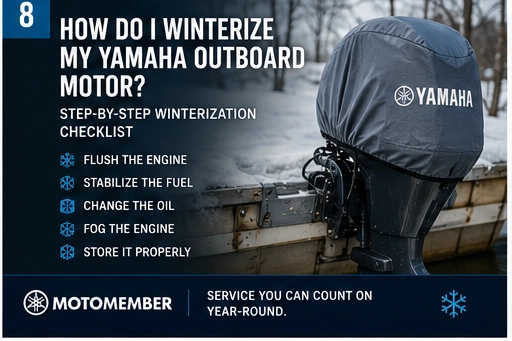
Step 1: Flush the Engine
Flushing with clean water helps remove salt, mud, sand, and debris from the cooling system.
Saltwater boaters should be especially careful. Freshwater boaters should also flush when operating in dirty or silty water.
Yamaha flushing resource: https://yamahaoutboards.com/owner-center/videos/care-maintenance/outboard-flushing-maintenance-matters
Step 2: Treat the Fuel
Fuel can degrade during storage. Treating the fuel with an approved stabilizer helps protect the fuel system.
After adding stabilizer, many procedures call for running the engine long enough to circulate treated fuel through the system. Follow Yamaha’s instructions.
Yamaha fuel resource: https://yamahaoutboards.com/maintenance-matters/fuel-fuel-system
Step 3: Change Engine Oil
Old oil can contain contaminants and acids. Changing oil before storage helps protect internal engine components.
Use the oil type and filter specified for your Yamaha model.
If you are not comfortable doing this yourself, schedule professional service before the seasonal rush.
Step 4: Service the Lower Unit
Lower-unit gear oil should be checked and changed as required.
This step is important because water intrusion may show up as milky oil. Discovering that problem before winter gives you time to fix seals or other issues before damage occurs.
Step 5: Inspect the Propeller
Remove and inspect the propeller area as recommended.
Look for fishing line around the prop shaft, blade damage, and hub issues. Fishing line can damage seals and allow water into the gearcase.
Step 6: Battery Care
Batteries can discharge during storage. Disconnect, clean, charge, and store according to recommended procedures.
Check terminals for corrosion and make sure cables are secure when reinstalling.
Step 7: Protect Against Corrosion
Clean the motor, inspect anodes, touch up exposed metal as appropriate, and use approved corrosion protection products.
Corrosion prevention is especially important for saltwater owners.
Step 8: Store the Boat Correctly
A good cover, proper ventilation, and secure storage location matter.
Avoid trapping moisture under the cover. Make sure the boat is positioned so water drains properly.
Should I Winterize If I Fish Year-Round?
If you truly use the boat regularly through winter and store it properly between trips, your needs may differ. But if there is any chance the boat will sit for weeks or months, storage prep is smart.
In cold climates, do not gamble with freeze protection or untreated fuel.
Professional Winterization vs. DIY
Some owners handle basic winterization themselves. Others prefer dealership service.
Professional service is a good idea if:
- You are new to outboards
- The motor is under warranty
- You suspect water intrusion
- You do not have tools
- You want documentation
- You prefer spring confidence
Why Winterize with MotoMember?
MotoMember serves powersports and marine customers across VA, PA, and MD with a strong customer experience and regional support.
Whether you need Yamaha outboard inventory, ownership help, or seasonal advice, MotoMember can help you get ready.
Visit: https://www.motomember.com
CTA: Prepare Your Yamaha Outboard for Storage
Do not wait for the first freeze. Contact MotoMember for Yamaha outboard support, current inventory, and seasonal guidance.
Stop dreaming. Start riding.
Conclusion
Winterization protects your Yamaha outboard during the months it is most likely to be ignored.
Flush the engine, treat fuel, change fluids, inspect the prop, care for the battery, and follow Yamaha’s storage procedures.
A little fall preparation can make spring boating much easier.
FAQ
Do I need to winterize a Yamaha four-stroke outboard?
Yes, if the boat will sit during cold weather or extended storage. Follow the owner’s manual for your model.
Should I change oil before or after winter?
Many owners change oil before storage to remove contaminants and protect internal parts.
What happens if I leave old fuel in my boat?
Old fuel can degrade, absorb moisture, clog filters, and cause hard starting or poor performance.
Can MotoMember help with seasonal Yamaha outboard questions?
Yes. Contact MotoMember for support with Yamaha outboard ownership and inventory.