
PWC Maintenance Guide for Sea-Doo & More

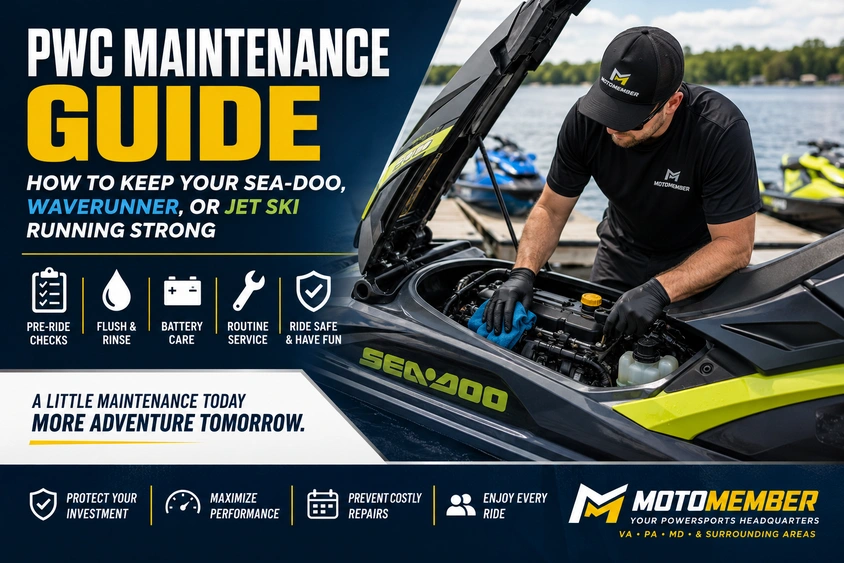
PWC Maintenance Guide for Sea-Doo & More
Personal watercraft are built for fun, speed, towing, exploring, fishing, and long summer days on the water. But whether you ride a Sea-Doo, Yamaha WaveRunner, or Kawasaki Jet Ski, one thing stays the same: consistent maintenance keeps your machine running stronger, safer, and longer.
This PWC maintenance guide covers the practical steps every owner should know, from pre-ride checks to flushing, battery care, storage, and seasonal service. It is written for real riders, not just mechanics. You do not need to know every technical detail to take better care of your watercraft.
You do, however, need a routine.
Your owner’s manual should always be the final source for model-specific intervals, fluids, procedures, and service requirements. Sea-Doo says its operator’s guide includes maintenance schedules, daily care tips, storage preparation, troubleshooting, and warranty details; Yamaha also directs WaveRunner owners to read the owner’s manual thoroughly after purchase.
At MotoMember, riders can shop new and pre-owned powersports inventory across Purcellville and Manassas, Virginia, plus Chambersburg, Pennsylvania, with brands including Sea-Doo, Yamaha, Kawasaki, Can-Am, Polaris, CFMOTO, Suzuki, KTM, Honda, and more. Large selection. Straightforward shopping. Real powersports expertise.
Why PWC Maintenance Matters
A PWC works hard. It runs at high rpm, pulls water through a jet pump, deals with vibration, heat, sun exposure, sand, weeds, dock bumps, and sometimes saltwater. Even a well-built machine needs attention.
Maintenance helps protect three things: performance, safety, and resale value. A watercraft that starts easily, idles cleanly, steers correctly, and accelerates smoothly gives you more confidence every time you launch.
Neglect usually shows up at the worst moment. A weak battery, clogged intake, loose drain plug, old fuel, or ignored warning light can turn a perfect lake day into a trailer ride home.
Good maintenance is not only about fixing problems. It is about preventing them.
Start With the Owner’s Manual
Before you follow any general checklist, find the manual for your exact model year and trim. A Sea-Doo GTI, Yamaha VX, Kawasaki STX, Sea-Doo FishPro, or Yamaha GP may have different maintenance needs.
Manufacturer resources are easy to access. Sea-Doo provides an Owner Zone with maintenance tips, videos, guides, safety information, and owner resources. Kawasaki provides an owner center where riders can access official owner’s manuals and service manuals. Yamaha offers an official WaveRunner owner’s manual library for U.S. models.
Your manual will tell you the correct oil type, spark plug specs, service intervals, break-in requirements, flushing instructions, winterization steps, battery recommendations, and inspection points.
Think of this guide as your practical road map. Think of the manual as the rulebook.
Pre-Ride PWC Maintenance Checklist
The easiest maintenance habit happens before the watercraft ever touches the water. A five-minute pre-ride check can prevent many common issues.
Check the Hull and Drain Plugs
Walk around the watercraft before launch. Look for hull cracks, deep scratches, loose trim, missing fasteners, or anything hanging under the machine.
Make sure the drain plugs are installed and tight. This sounds basic, but it is one of the most common mistakes new PWC owners make. Yamaha’s pre-operation guidance specifically includes checking bilge areas and making sure the drain plug is tightened before putting the water vehicle in the water.
Also check for water, fuel odor, or oil residue inside the engine compartment. Any unusual smell or fluid should be handled before riding.
Inspect the Jet Intake
Your PWC does not use a traditional propeller. It uses a jet pump that pulls water through an intake and pushes it out through a nozzle. That intake needs to stay clear.
Before launch, inspect the intake grate for weeds, rope, plastic bags, shells, rocks, or debris. Never reach into the intake while the engine is running. Remove the safety lanyard and follow the manufacturer’s recommended procedure.
A blocked intake can reduce acceleration, cause vibration, or lead to overheating.
Check Controls and Steering
Turn the handlebars left and right. Squeeze the throttle. Check reverse or braking systems if equipped. Everything should move smoothly without sticking.
If your PWC has electronic braking, trim, cruise, ride modes, or touchscreen controls, power the unit on and look for warning messages before launch.
A steering or throttle issue on land is an inconvenience. On the water, it can become dangerous.
Check Fuel and Oil
Use fresh fuel and the fuel type recommended by your manufacturer. Avoid letting old fuel sit for long periods, especially during off-season storage.
Check oil level according to the manual. Some models require the engine to be warm or the craft to sit level for an accurate reading. Do not guess. Too much oil can be as harmful as too little oil on some engines.
Confirm Safety Gear
Maintenance is not only mechanical. Before every ride, check that your life jackets, safety lanyard, whistle or sound device, registration, fire extinguisher where required, and tow line are in good condition.
A well-maintained PWC should be matched with well-prepared riders.
After-Ride PWC Maintenance
Post-ride care is where many owners either protect their investment or slowly damage it. The goal is simple: rinse, flush, inspect, dry, and store correctly.
Rinse the Exterior
After each ride, rinse the exterior with fresh water. Pay attention to the footwells, pump area, seat seams, storage compartments, trailer bunks, and hardware.
This is especially important after saltwater riding, but freshwater riders should not skip it. Lakes and rivers can leave minerals, mud, algae, and grime behind.
Use mild soap when needed. Avoid harsh cleaners that can damage plastics, graphics, vinyl, or painted surfaces.
Flush the Engine Correctly
Engine flushing helps remove salt, sand, and debris from the cooling system. Follow the exact sequence in your owner’s manual because the order matters.
On many watercraft, the engine must be running before water is turned on, and water must be turned off before the engine is shut down. But you should not assume that applies to every model. Your manual is the authority.
Yamaha lists regular flushing as one of the basic steps for keeping a WaveRunner ready to run. Sea-Doo also provides maintenance resources and model-specific operator guides for daily care and storage preparation.
Improper flushing can cause damage, so this is one area where “close enough” is not good enough.
Dry the Storage Compartments
Open the seat and compartments after riding to let moisture escape. Wipe down wet areas and remove damp gear.
Moisture trapped under a seat can lead to mildew, corrosion, odors, and electrical issues. A few minutes of drying time makes a difference.
Look for New Problems
After riding, inspect the hull, intake, steering nozzle, reverse bucket, seat, latches, and trailer tie-down points. Look for anything that changed during the ride.
Small issues are easier to fix when they are fresh. Waiting until the next launch can turn a minor repair into a missed weekend.
Engine Oil and Filter Service
Oil is one of the most important maintenance items on any four-stroke personal watercraft. It protects the engine under high load and high rpm.
Yamaha’s WaveRunner maintenance resource lists engine oil changes every 50 hours or once a year as a basic maintenance item, along with flushing, battery care, and corrosion prevention. Other brands and models may use different intervals, so always confirm your Sea-Doo, Yamaha, or Kawasaki schedule in the owner’s manual.
For many riders, annual service is the easiest rhythm. Even if you do not rack up big hours, oil still ages over time.
Why Professional Oil Service Helps
PWC oil changes are not always as simple as draining oil from the bottom of an engine. Many models require oil extraction, correct oil level procedure, specific filters, proper sealing, and careful checking.
A professional service visit can also include inspection of the pump, steering, battery, spark plugs, hull, cooling system, and diagnostic codes.
If you ride often, tow tubes, run in saltwater, or push a performance model hard, professional maintenance becomes even more important.
Battery Maintenance
A weak battery is one of the fastest ways to ruin a ride day. PWC batteries are compact, exposed to vibration, and often sit unused for weeks or months.
Check battery terminals for corrosion. Make sure connections are tight. Keep the battery charged with a quality maintainer when the watercraft is stored.
If your PWC hesitates when starting, clicks, resets the display, or cranks slowly, do not ignore it. A battery can seem “good enough” in the driveway and still fail at the ramp.
For winter storage, many owners remove the battery and store it in a cool, dry place on a maintainer. Follow your owner’s manual and battery manufacturer recommendations.
Spark Plugs and Ignition
Spark plugs play a major role in starting, idle quality, acceleration, and fuel efficiency. Worn plugs can cause misfires, rough running, poor throttle response, or hard starts.
Spark plug intervals vary by model. Some performance engines may need more frequent attention than recreational models.
Do not install random automotive plugs. Use the exact plug type and gap specified by the manufacturer. Marine environments are demanding, and the wrong plug can create performance or reliability problems.
If your PWC is running rough, fouling plugs repeatedly, or losing power, schedule service instead of guessing.
Jet Pump, Wear Ring, and Impeller Care
The jet pump is the heart of your PWC’s propulsion system. When it is healthy, acceleration feels strong and smooth. When something is wrong, you may notice vibration, cavitation, sluggish launch, or strange noises.
Watch for Cavitation
Cavitation often feels like the engine revs but the craft does not accelerate normally. It can be caused by damage or wear in the pump area, debris, impeller issues, seal problems, or wear ring concerns on models that use one.
Do not keep riding aggressively if something feels off. Continued use can make damage worse.
Avoid Shallow-Water Mistakes
Never start or idle the PWC in water that is too shallow. Sand, rocks, and shells can be sucked into the pump quickly.
Give yourself enough depth before starting. When beaching, shut the engine off before reaching shallow water and push or pull the craft carefully.
Check for Rope and Debris
Tow ropes, dock lines, and weeds can wrap around the driveshaft or impeller. Always keep ropes away from the rear of the watercraft when starting.
If the craft vibrates after towing or riding through weeds, stop and inspect safely.
Saltwater PWC Maintenance
Saltwater riding is incredible, but it raises the maintenance stakes. Salt accelerates corrosion, attacks hardware, dries on surfaces, and can build up in cooling passages if flushing is skipped.
After saltwater use, rinse the exterior thoroughly. Flush the engine according to the manual. Wash the trailer. Open compartments to dry. Use manufacturer-approved corrosion protection where recommended.
Pay attention to metal fittings, steering components, hose clamps, trailer wheels, winch hardware, and electrical connections.
Saltwater does not mean your PWC will not last. It means your routine needs to be consistent.
Trailer Maintenance Matters Too
Your PWC trailer is part of the ownership experience. If the trailer fails, your watercraft is stuck.
Check tire pressure, tread, wheel bearings, lights, winch strap, safety chains, bunks, rollers, and tie-downs. Rinse the trailer after use, especially after saltwater launches.
Look for cracked tires, loose lug nuts, frayed straps, rust, and weak lights before every trip. A perfect PWC on a neglected trailer still creates problems.
Seasonal PWC Maintenance
In Virginia, Pennsylvania, Maryland, and surrounding areas, many riders store their personal watercraft through colder months. Seasonal maintenance helps make sure the first warm day of the year does not become a troubleshooting session.
Spring Startup
Before your first ride, check the battery, oil, fuel, spark plugs, drain plugs, steering, throttle, safety lanyard, trailer, registration, and safety gear.
Inspect for rodent damage, cracked hoses, loose clamps, corrosion, old fuel, or warning lights. If the PWC was winterized, make sure all recommissioning steps are completed before riding.
Fall Winterization
Winterization protects the engine, exhaust, fuel system, battery, and cooling components from storage-related damage.
Exact steps vary by model and climate. In areas that see freezing temperatures, proper winterization is especially important. This may include fuel treatment, oil service, fogging or engine protection procedures where applicable, battery care, cooling system protection, cleaning, drying, and covered storage.
Do not assume every PWC winterizes the same way. A Sea-Doo, WaveRunner, and Jet Ski can have different requirements.
Common PWC Maintenance Mistakes
Even experienced riders can slip into bad habits. The most common mistakes are easy to avoid.
Skipping the Manual
Online advice can be useful, but your model’s manual matters most. Service intervals, flushing steps, fluids, and warning systems are not universal.
Forgetting the Drain Plugs
Always check them before launch. Make it part of your routine every time.
Running Too Shallow
Sand and rocks can damage the pump quickly. Start and stop in adequate depth.
Ignoring Warning Lights
A warning light is not a suggestion. Stop, check the manual, and get professional help when needed.
Letting Fuel Sit Too Long
Old fuel can cause starting and running issues. Use fresh fuel and follow storage recommendations.
Using the Wrong Parts or Fluids
Use manufacturer-approved fluids, filters, plugs, and parts. Saving a few dollars on the wrong item can cost more later.
DIY vs. Dealer Service
Some maintenance tasks are owner-friendly. Rinsing, cleaning, checking drain plugs, inspecting the intake, drying compartments, charging the battery, and checking safety gear are all habits most riders can handle.
Other tasks are better left to trained technicians, especially diagnostics, oil extraction procedures, pump repairs, electrical issues, winterization, supercharged engine service, brake or reverse system issues, and warranty-related repairs.
A dealer service team can also spot problems before they become expensive. That is valuable if you ride frequently, travel with your PWC, or use it for towing, fishing, or long-distance cruising.
Buying a PWC? Maintenance Should Shape Your Choice
When shopping for a Sea-Doo, Yamaha WaveRunner, or Kawasaki Jet Ski, think about how you ride and how you will maintain it.
Recreational models may be ideal for casual family riding. Touring models often add comfort and storage. Performance models deliver serious acceleration but may require more attention from owners who ride hard. Fishing-focused models add accessories and gear that need their own care.
At MotoMember, you can explore Sea-Doo watercraft, Yamaha Watercraft, and available personal watercraft inventory across multiple locations. MotoMember’s Sea-Doo page currently features the 2026 Sea-Doo lineup, while its Yamaha Watercraft page highlights Yamaha models available through the dealership.
Your Sea-Doo Headquarters starts at MotoMember. Stop dreaming. Start riding.
Simple PWC Maintenance Schedule
Use this as a general guide, then match it to your manual.
Before Every Ride
Check drain plugs, fuel level, oil level, battery condition, hull, safety gear, controls, steering, intake grate, and warning lights.
After Every Ride
Rinse the exterior, flush the engine if required, dry compartments, inspect the intake and pump area, remove wet gear, and check for damage.
Monthly During Riding Season
Check battery terminals, trailer lights, tire pressure, tie-downs, seat condition, latches, corrosion points, and general fasteners.
Every Season
Change oil and filter as required, inspect spark plugs, check pump condition, inspect hoses and clamps, review diagnostics, service the trailer, and update safety gear.
Before Storage
Clean thoroughly, stabilize fuel if recommended, service oil if recommended, protect the engine and cooling system according to the manual, charge or remove the battery, dry compartments, and cover the PWC properly.
Call to Action
Ready to ride with more confidence? Visit MotoMember to shop Sea-Doo, Yamaha WaveRunner, Kawasaki, and other powersports inventory, or connect with a helpful team member about choosing the right personal watercraft for your riding style.
With locations serving Virginia, Pennsylvania, Maryland, and surrounding areas, MotoMember makes it easier to compare models, explore available inventory, and keep your ownership experience simple.
Large selection. Straightforward shopping. Real powersports expertise.
Conclusion
A strong-running PWC does not happen by accident. It comes from simple habits done consistently: check before you launch, rinse and flush after you ride, keep the battery healthy, follow the owner’s manual, and schedule service before small issues become big ones.
Whether you ride a Sea-Doo, Yamaha WaveRunner, or Kawasaki Jet Ski, smart maintenance protects your investment and keeps your weekends focused on the water instead of the repair shop.
Stop dreaming. Start riding.
FAQ
How often should I service my PWC?
Follow the maintenance schedule in your owner’s manual. Many owners schedule service at least once per season, while higher-hour or harder-used machines may need more frequent attention. Yamaha lists oil changes every 50 hours or once a year as a basic WaveRunner maintenance item, but requirements vary by brand and model.
Do I need to flush my PWC after every ride?
It depends on your model and riding conditions, but flushing is especially important after saltwater use. Always follow the exact flushing sequence in your owner’s manual because incorrect flushing can damage the engine.
Can I maintain my Sea-Doo, WaveRunner, or Jet Ski myself?
You can handle basic care like rinsing, cleaning, drain plug checks, battery charging, intake inspections, and safety gear checks. More technical work, including diagnostics, pump repair, winterization, and warranty-related service, is usually best handled by trained technicians.
What is the most common PWC maintenance mistake?
Forgetting simple basics: drain plugs, fresh fuel, battery care, flushing, and intake inspections. These small steps prevent many common ride-day problems.
Where can I find the right maintenance information for my model?
Start with your manufacturer’s official owner resources. Sea-Doo, Yamaha, and Kawasaki all provide owner information, manuals, or maintenance resources online.