
How to Winterize a G3 Jon Boat

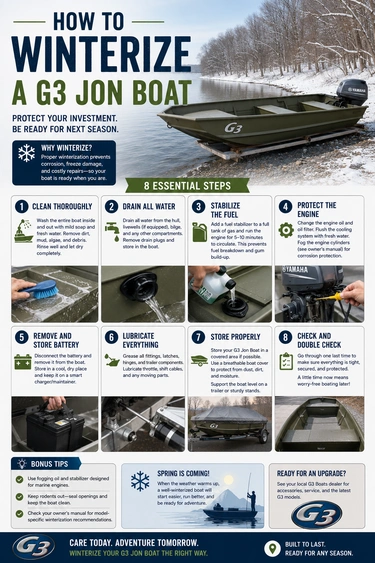
How to Winterize a G3 Jon Boat
Winterizing a G3 jon boat is one of the smartest things you can do to protect your boat, outboard, trailer, batteries, and accessories during the off-season. Whether you fish quiet lakes, run shallow rivers, hunt from a utility jon boat, or keep your boat ready for weekend use across VA, PA, MD, and surrounding areas, cold-weather prep matters.
A G3 jon boat is built for real use, but freezing temperatures, trapped water, stale fuel, weak batteries, corrosion, and poor storage habits can create expensive spring problems. G3 Boats specifically notes that proper winterization helps protect the engine during storage, especially in areas that go below freezing, and recommends fresh fuel, stabilizer, and draining water or using the proper antifreeze where needed.
At MotoMember, many boat owners ask the same question every fall: “What do I actually need to do before storing my jon boat?” This guide walks through the major winterization steps in a practical, dealership-style way.
Current inventory, service needs, and model details can vary, so check MotoMember or contact the team before planning service, accessories, or upgrades.
Why Winterizing a G3 Jon Boat Matters
Winterization protects your boat from damage while it sits unused. A jon boat may seem simple compared with a larger fiberglass boat, but it still has critical systems that need attention.
Your winter checklist may include:
- Aluminum hull cleaning and inspection
- Drain plug and bilge drying
- Fuel treatment
- Yamaha outboard winterization
- Battery care
- Trolling motor protection
- Trailer inspection
- Covering and storage setup
- Safety gear review
Discover Boating recommends winterizing by preparing the engine, removing water, protecting against corrosion, and consulting your owner’s manual for specific procedures.
For owners in Virginia, Pennsylvania, Maryland, West Virginia, and nearby areas, freezing temperatures are common enough that trapped water should never be ignored. A little water in the wrong place can expand when frozen and damage pumps, hoses, livewells, fittings, or engine components.
Start With the Owner’s Manual
Before doing any winterization work, review your G3 owner’s manual and the manual for your outboard, trolling motor, battery, charger, trailer, and electronics.
G3’s owner’s manual warns that when a boat is stored for extended periods, internal engine parts may corrode from lack of lubrication, and water inside the bilge, engine cooling system, or boat water systems may freeze and cause damage. It also reminds owners to keep up with annual maintenance during winterization.
That matters because not every G3 jon boat is set up the same way. Some are basic utility models. Others may have livewells, bilge pumps, trolling motors, electronics, storage compartments, flooring, lighting, or more advanced fishing layouts.
Clean the Boat Before Storage
Do not put a dirty boat away for the winter. Mud, leaves, fish residue, weeds, spilled fuel, wet carpet, and organic debris can hold moisture and create odor, staining, corrosion, or mildew.
Rinse the hull, interior floor, transom, trailer, bunks, winch area, and outboard exterior. Use mild soap and fresh water. Avoid harsh chemicals or abrasive pads that could damage painted aluminum, camo finishes, decals, flooring, or accessories.
Remove Debris From Hidden Areas
Check under seats, inside storage compartments, around the transom, near the drain plug, and around any bilge or livewell plumbing. Leaves and weeds often collect in corners where they stay wet for months.
This is also a good time to remove tackle, bait containers, decoys, life jackets, tools, electronics, and anything else that should not sit in a damp boat all winter.
Drain Every Area That Holds Water
Water is the biggest winter storage threat. Before freezing weather arrives, drain the boat completely.
Remove the drain plug and tilt the boat so water flows out. Open compartments so they can dry. Check the bilge, livewell, plumbing lines, pump housings, hoses, and any accessory system that may hold water.
If your G3 jon boat has a livewell or plumbing system, follow the manufacturer’s instructions for draining or protecting it. G3 advises draining water or using the right amount of antifreeze where needed to prevent freeze damage.
Do Not Forget the Drain Plug
Clean and inspect the drain plug. Replace it if the rubber is cracked, the threads are damaged, or the fit feels loose.
Store the plug somewhere easy to find in spring. Many experienced boat owners keep a spare plug in the boat or tow vehicle.
Inspect the Aluminum Hull
Once the boat is clean and dry, inspect the aluminum hull carefully.
Look for:
- Dents from rocks, stumps, or ramps
- Loose rivets if applicable
- Cracked welds
- Scratches through paint or coating
- Corrosion around hardware
- Wear near trailer bunks
- Damage around the transom
- Leaks or water stains inside the boat
Aluminum does not rust like steel, but it can corrode, especially where moisture, dissimilar metals, and hardware come together. Winter is a good time to find small issues before spring launch season.
Check Hardware and Accessories
Inspect trolling motor mounts, cleats, rod holders, seat bases, lights, wiring clips, battery trays, and accessory brackets. Loose hardware can get worse while trailering or after freeze-thaw cycles.
If you plan to add accessories before next season, talk with MotoMember before drilling into the boat. Mounting location, hardware type, wiring, weight balance, and long-term serviceability all matter.
Winterize the Yamaha Outboard
Many G3 boats are commonly paired with Yamaha outboards, but always follow the exact instructions for your engine model.
Yamaha’s Maintenance Matters guidance emphasizes core maintenance such as changing engine and lower-unit oils, flushing engines regularly, replacing fuel filters, preventing corrosion, and treating fuel.
Winterizing an outboard may include:
- Flushing the engine as recommended
- Treating fuel
- Changing engine oil where applicable
- Changing lower unit gear oil
- Inspecting for water in gear oil
- Fogging or internal corrosion protection where recommended
- Greasing fittings
- Checking propeller and shaft
- Inspecting fuel lines and filters
- Protecting the engine from moisture and corrosion
Yamaha notes that preparing for extended storage or winterization helps make the return to boating smoother when the off-season ends.
Check the Lower Unit
The lower unit deserves extra attention before winter. If water has entered the gearcase and freezes, it can cause damage.
When changing lower-unit oil, look for milky fluid, metal particles, or signs of contamination. These may indicate a seal issue or internal wear. A professional inspection is smart if anything looks unusual.
Inspect the Propeller
Remove or inspect the propeller according to your owner’s manual. Look for fishing line wrapped around the prop shaft, bent blades, chips, impact damage, or vibration-related wear.
Jon boats often run shallow water, which means props can take abuse from rocks, logs, sandbars, and stumps.
Treat the Fuel System
Fuel left untreated through winter can create spring starting problems. Use fresh fuel and a marine-specific stabilizer according to the product instructions and your engine manufacturer’s guidance.
Discover Boating advises adding marine-specific fuel stabilizer as the tank is filled and then running the boat to distribute treated fuel through the system.
G3’s seasonal-care guidance also recommends using fresh fuel and stabilizer for winter storage.
Portable Tanks Need Attention Too
If your jon boat uses a portable fuel tank, inspect the tank, cap, vent, fuel line, primer bulb, and fittings. Replace cracked, stiff, leaking, or questionable components.
Store fuel safely and follow all local fire-safety guidance. Do not leave fuel containers in enclosed areas where fumes can build up.
Protect Batteries and Electrical Systems
Batteries do not like neglect. A weak or discharged battery can freeze, fail, or lose capacity during winter storage.
Disconnect batteries according to manufacturer guidance. Clean the terminals, charge the batteries fully, and store them in a safe, dry location where they can be maintained properly. Use the correct charger or maintainer for your battery type.
Trolling Motor Batteries
Fishing-focused G3 jon boats may use one or more deep-cycle batteries for a trolling motor. These batteries should be cleaned, charged, secured, and maintained over the off-season.
Inspect the trolling motor plug, receptacle, breaker, wiring, and mounting hardware. Corrosion or loose connections can cause poor performance next spring.
Electronics and Accessories
Remove portable fish finders, GPS units, cameras, and other electronics if possible. Store them indoors in a dry place.
Check wiring for chafing, corrosion, cracked insulation, and loose connections. If wiring work is needed, use marine-grade components and proper circuit protection.
Service the Trailer Before Storage
A G3 jon boat is only as convenient as the trailer under it. Winter is a good time to inspect the trailer instead of waiting until the first warm weekend.
Check:
- Tire pressure and sidewalls
- Spare tire condition
- Wheel bearings
- Lug nuts
- Trailer lights
- Wiring harness
- Coupler
- Safety chains
- Winch strap
- Bow stop
- Bunks or rollers
- Frame corrosion
- License plate bracket
Rinse mud, salt, and ramp grime from the trailer before storage. If the trailer has been used around brackish or saltwater, be especially thorough.
Inspect Bunks Carefully
Worn bunk carpet, exposed staples, loose boards, or improper support can damage an aluminum hull over time.
If bunks need replacement, use materials and installation methods appropriate for aluminum boats. Avoid creating direct contact between aluminum and incompatible treated lumber or hardware.
Cover and Store the Boat Correctly
A good storage setup keeps water out while allowing airflow. A poor storage setup traps moisture and causes problems.
Use a properly fitted, breathable cover when possible. Support the cover so rain, ice, or snow cannot pool. A sagging tarp can collect water and place unnecessary weight on the boat.
Store the boat bow-up so water drains toward the transom. Leave the drain plug out when the boat is stored in a safe drainage position.
Outdoor Storage Tips
For outdoor winter storage:
- Park on stable ground
- Chock trailer wheels
- Raise the bow slightly
- Remove the drain plug
- Support the cover
- Allow ventilation
- Remove valuables
- Check the boat after storms
Do not seal wet compartments tightly for months. Ventilation helps prevent mildew and corrosion.
Indoor Storage Tips
Indoor storage is ideal when available. Even indoors, make sure the boat is dry, batteries are maintained, fuel is treated, and compartments are open enough for air circulation.
Avoid storing heavy items inside the boat that could stress flooring, seats, or the hull.
Review Safety Gear During Winterization
Winterization is also a good time to inspect safety gear.
The U.S. Coast Guard states that boat operators must have a Coast Guard-approved wearable personal flotation device for every person aboard, and boats over 16 feet must carry a throwable flotation device.
Use the off-season to check life jackets, throwable flotation, fire extinguishers, sound devices, navigation lights, anchor line, first-aid supplies, registration documents, and emergency tools.
Replace damaged or outdated items before spring. Do not wait until launch day.
G3 Jon Boat Winterization Checklist
Use this as a practical starting point:
- Wash the hull, interior, trailer, and outboard exterior.
- Remove gear, trash, tackle, weeds, leaves, and moisture-trapping items.
- Drain the bilge, livewell, plumbing, pumps, and compartments.
- Inspect the hull, transom, seams, rivets, welds, and hardware.
- Treat fuel with marine stabilizer.
- Winterize the Yamaha outboard according to the manual.
- Change fluids and filters where required.
- Inspect the propeller and lower unit.
- Disconnect, charge, and store batteries properly.
- Inspect trolling motor wiring and electronics.
- Service trailer tires, lights, bearings, bunks, winch, and coupler.
- Cover the boat with ventilation and drainage.
- Store bow-up with the drain plug removed.
- Review safety gear before next season.
Common Winterization Mistakes to Avoid
One of the most common mistakes is assuming a jon boat does not need winterization because it is aluminum and simple. The hull may be rugged, but the engine, fuel system, batteries, pumps, wiring, and trailer still need seasonal care.
Another mistake is leaving water trapped in the boat. Even a small amount of water can freeze and expand.
Do not store the boat dirty. Do not leave batteries discharged. Do not ignore old fuel. Do not cover the boat so tightly that moisture cannot escape. Do not wait until spring to discover trailer problems.
MotoMember Expert Tip
Before winterizing your G3 jon boat, make a list of how you actually used the boat this season.
Did the outboard start easily? Did the trolling motor battery last long enough? Did the trailer lights work every time? Did water collect in the bilge? Did the livewell drain properly? Did the boat feel balanced with your gear?
Those answers can help you decide whether you need service, accessories, battery upgrades, trailer work, storage improvements, or a different setup before next season. Our team can help you compare G3 jon boats, Yamaha outboard service needs, trailers, accessories, financing, and trade-in options.
Call to Action
Your G3 headquarters starts at MotoMember.
For boaters in Virginia, Pennsylvania, Maryland, West Virginia, and nearby areas, MotoMember can help with G3 jon boat shopping, Yamaha outboard questions, service planning, trailers, accessories, financing, and trade-ins.
Visit MotoMember, explore financing options, or contact the team to talk through your winterization needs before freezing weather arrives.
Large selection. Straightforward shopping. Real powersports and marine expertise.
Conclusion
Winterizing a G3 jon boat is not complicated, but it does require attention to detail. Clean it, drain it, inspect it, protect the fuel system, service the outboard, maintain the batteries, check the trailer, and store it so water can escape.
A little preparation in the fall can help prevent frustrating repairs in the spring. Whether your G3 jon boat is used for fishing, hunting, utility work, or weekend exploring, proper winterization helps keep it ready for the next season.
FAQ
Do aluminum G3 jon boats need winterization?
Yes. The aluminum hull is durable, but the outboard, fuel system, batteries, livewell, bilge, pumps, wiring, trailer, and accessories still need winter storage prep.
Should I remove the drain plug during winter storage?
In most storage situations, yes. Store the boat bow-up with the drain plug removed so water can drain. Make sure the boat is positioned safely and check it after storms.
Do I need to winterize a Yamaha outboard on a G3 jon boat?
Yes, if the boat will sit unused during cold weather. Follow the Yamaha owner’s manual for your specific motor or schedule service with a qualified dealer.
What happens if water freezes inside my jon boat?
Freezing water can expand and damage pumps, hoses, livewells, fittings, bilge areas, or engine components. Drain all water-holding areas before freezing temperatures arrive.
Can MotoMember help with G3 jon boat winterization?
Yes. MotoMember can help customers with G3 jon boat ownership questions, Yamaha outboard service planning, accessories, trailers, financing, and trade-ins. Contact the team for guidance based on your specific boat and setup.