
Fishing Boat Trailer Buying Guide

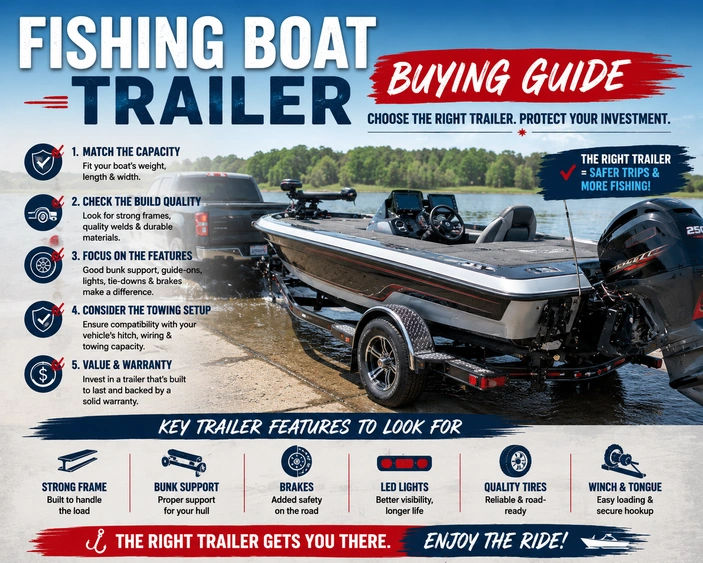
Fishing Boat Trailer Buying Guide
A fishing boat trailer is easy to overlook until it causes a problem. Most shoppers focus on the boat, motor, electronics, trolling motor, seating layout, and storage first. That makes sense, but the trailer is what gets your boat to the ramp, home safely, and back on the water next weekend.
The right fishing boat trailer should fit the hull, support the weight, launch easily, tow confidently, and hold up to the way you use your boat. The wrong trailer can create loading problems, tire issues, poor balance, extra wear, and stress every time you tow.
For anglers in Virginia, Pennsylvania, Maryland, West Virginia, and nearby areas, MotoMember helps shoppers compare fishing boats, G3 boats, marine trailers, accessories, service support, financing, trade-ins, and ownership needs. MotoMember’s new inventory pages include marine vehicles such as jet skis and fishing boats, while its used inventory includes powersports and marine categories such as boats and trailers.
Why the Trailer Matters as Much as the Boat
A fishing boat trailer is part of the full boating setup. It affects how easily you tow, launch, load, store, service, and protect your boat.
A good trailer helps keep the hull supported correctly. It also helps the boat sit level, track properly behind the tow vehicle, and launch without unnecessary strain. A poor trailer fit can make the boat difficult to center, put pressure in the wrong places, or create problems at steep, shallow, or uneven ramps.
Many shoppers start by asking, “Does the boat come with a trailer?” A better question is, “Is this the right trailer for this boat, motor, gear, and tow vehicle?”
Current availability can vary, so check MotoMember inventory or contact the team before planning around one exact boat, trailer, or package.
Start With Boat and Trailer Fit
Trailer fit is the first priority. The trailer should match the boat’s hull shape, length, width, weight, and launch style.
A jon boat, modified-V aluminum fishing boat, deep-V fishing boat, bass-style layout, and fishing pontoon may all need different trailer support. G3 Boats lists fishing and family-focused aluminum boat series such as Gator Tough Jon, Sportsman, Angler V, and SunCatcher pontoons, and G3 notes that some Gator Tough Jon models are offered as boat, motor, and trailer packages.
When comparing trailer fit, look at:
- Hull support
- Bunk or roller placement
- Transom support
- Bow stop position
- Winch stand alignment
- Axle placement
- Fender clearance
- Overall trailer length
- Launch and loading angle
A trailer that is too small may not support the boat properly. A trailer that is too large may make launching and loading harder than necessary.
Know the Real Loaded Weight
Trailer capacity should be based on the real loaded boat, not just the bare hull.
A fishing boat’s total trailered weight may include the boat, outboard, fuel, batteries, trolling motor, electronics, safety gear, anchors, cooler, fishing tackle, spare tire, and accessories. Those extras add up quickly.
BoatUS explains that trailer tire sidewalls include maximum load limits and that total tire capacity depends on the combined rating of the tires. That same idea applies to the whole trailer setup: capacity matters at every point.
When shopping, ask about:
- Trailer gross vehicle weight rating
- Boat weight
- Motor weight
- Gear and accessory weight
- Tire load rating
- Axle rating
- Coupler rating
- Tongue weight
- Tow vehicle capacity
Do not assume a trailer is right simply because the boat fits on it. The trailer must support the loaded boat safely.
Bunk Trailers vs. Roller Trailers
Most fishing boat buyers will compare bunk trailers and roller trailers.
Bunk Trailers
Bunk trailers use carpeted or covered support boards to cradle the hull. They are common, simple, and effective for many aluminum fishing boats and pontoons.
Bunk trailers can provide strong hull support and are often easy to maintain. They usually work well when the ramp has enough water depth to float the boat on and off.
Roller Trailers
Roller trailers use rolling supports that can help the boat move on and off the trailer more easily. They may be useful at shallow ramps or where floating the boat fully can be difficult.
The tradeoff is that roller setup and hull support need to be correct. If the rollers are poorly adjusted, they may concentrate pressure in the wrong places.
Which Is Better?
There is no universal winner. Bunk trailers are often a strong choice for straightforward fishing boat use. Roller trailers may help in certain launch conditions. The best choice depends on the hull, ramp conditions, budget, maintenance expectations, and how often you launch.
Our team can help you compare how each setup fits your boat and local water access.
Galvanized, Painted, or Aluminum Trailer?
Trailer material matters because fishing boats deal with water, road grime, weather, and seasonal storage.
Painted Steel Trailers
Painted steel trailers are common and may be a practical option for freshwater use. They can tow well and may keep costs reasonable.
The key is maintenance. Chips, scratches, and exposed metal should be addressed before corrosion spreads.
Galvanized Steel Trailers
Galvanized trailers are designed to resist corrosion better than standard painted steel. They are often considered when owners expect more water exposure, rougher conditions, or longer-term durability needs.
Aluminum Trailers
Aluminum trailers are lighter and corrosion-resistant, depending on construction and components. They can be appealing for buyers who want reduced weight and a cleaner long-term appearance.
The right material depends on your boating environment, tow vehicle, budget, storage location, and maintenance habits. For many inland anglers in VA, PA, MD, and nearby areas, freshwater use may influence the decision, but weather, road salt, and storage still matter.
Single-Axle vs. Tandem-Axle Trailers
Axle choice depends on boat size, weight, and towing expectations.
Single-Axle Trailers
Single-axle trailers are common for smaller fishing boats, jon boats, and many lightweight aluminum setups. They are simpler, often easier to maneuver by hand, and usually have fewer tires and bearings to maintain.
They can be a good fit when the boat is lighter and the tow vehicle is properly matched.
Tandem-Axle Trailers
Tandem-axle trailers use two axles and are common with larger, heavier boats. They may tow more smoothly and offer additional load support, depending on the setup.
The tradeoff is more components to maintain. More tires, more bearings, and a larger trailer footprint all need to be considered.
Before choosing, think about total loaded weight, storage space, ramp conditions, towing distance, and how often you travel.
Trailer Brakes: Do You Need Them?
Trailer brake needs depend on trailer weight, state requirements, tow vehicle setup, and the trailer’s design. Do not guess. Check the trailer manufacturer, tow vehicle manual, and current state rules before towing.
NHTSA advises trailer shoppers to check that a compliant trailer has an affixed label indicating it meets applicable Federal Motor Vehicle Safety Standards. That label is one part of confirming that the trailer was built for road use.
Common boat trailer brake types include surge brakes and electric-over-hydraulic systems, depending on trailer size and design. The important point is that the brake system should match the trailer, load, tow vehicle, and legal requirements.
Ask the MotoMember team:
- Does this trailer have brakes?
- What type of brake system is used?
- What maintenance does it need?
- Is my tow vehicle compatible?
- What should I check before towing?
- What are the requirements in my state?
Trailer Tires and Wheels
Trailer tires are not the place to cut corners. They carry the boat, motor, batteries, fuel, gear, and trailer weight at highway speeds.
BoatUS points out that trailer tire load information appears on the sidewall and that tires should be matched to the load they carry. NHTSA’s tire safety information also emphasizes checking tire pressure and tread as part of tire care.
When inspecting trailer tires, check:
- Load rating
- Tire pressure
- Tread condition
- Sidewall cracking
- Age
- Valve stems
- Lug nuts
- Spare tire condition
- Wheel corrosion
- Uneven wear
A spare tire is strongly recommended for most fishing boat owners. A flat trailer tire can turn a great fishing day into a roadside problem quickly.
Lights, Wiring, and Connectors
Trailer lights are essential for safe towing. Before every trip, check running lights, brake lights, turn signals, and hazard lights.
Boat trailers regularly get wet, so wiring should be routed, secured, and protected. Loose wires, corroded plugs, and broken grounds are common trailer issues.
A good trailer wiring setup should include:
- Working tail lights
- Working brake lights
- Working turn signals
- Secure wiring clips
- Protected wire routing
- Clean connector plug
- Good ground connection
- Submersible or marine-rated components where appropriate
Always unplug trailer lights before backing into the water if the trailer manufacturer recommends it for that setup. Then reconnect and test before driving home.
Winch, Strap, Safety Chains, and Coupler
The front of the trailer does a lot of work. The winch, strap, bow stop, coupler, jack, and safety chains all need to be in good condition.
Check the winch strap for fraying, cuts, and wear. Make sure the hook is secure and the winch operates smoothly. The bow eye should sit correctly against the bow stop when loaded.
The coupler should match the hitch ball size. Safety chains should cross under the tongue and attach securely to the tow vehicle. The trailer jack should raise and lower smoothly.
These parts may seem simple, but they are critical every time you tow.
How to Check Trailer Balance
A fishing boat trailer should have proper tongue weight. Too little tongue weight can contribute to sway. Too much tongue weight can overload the rear of the tow vehicle and affect handling.
The exact target depends on the trailer and tow vehicle guidance. Follow the trailer manufacturer and tow vehicle owner’s manual rather than guessing.
Signs that balance may need attention include:
- Trailer sway
- Tow vehicle rear sag
- Poor steering feel
- Boat sitting too far forward or back
- Uneven tire wear
- Difficulty loading consistently
- Coupler or jack strain
Battery placement, fuel load, gear storage, and cooler location can all change trailer balance.
Match the Trailer to Your Tow Vehicle
The trailer and tow vehicle must work together.
Before buying a boat and trailer, confirm your tow vehicle’s towing capacity, hitch rating, payload capacity, tongue weight limits, brake controller needs, and wiring connector. Do not rely only on engine size or vehicle appearance.
Ask yourself:
- Can my vehicle tow the loaded boat and trailer?
- Is my hitch rated correctly?
- Do I need trailer brakes?
- Do I have the right connector?
- Will the trailer fit in my driveway or garage?
- Can I launch and retrieve confidently?
A smaller fishing boat may tow easily behind many properly equipped vehicles. A larger pontoon or deep-V fishing boat may require more planning.
Launching and Loading Considerations
A trailer should make launching and loading easier, not harder.
Before choosing a trailer, think about the ramps you use most often. Some ramps are steep. Some are shallow. Some are narrow. Some have current, wind, or limited dock space.
Features that may help include:
- Proper bunk or roller setup
- Guide-ons
- Correct winch height
- Non-slip step pads
- Good jack position
- Easy-to-reach safety chain
- Clear rear visibility
- Trailer lights that are easy to inspect
For new boaters, guide-ons can be especially helpful because they make it easier to center the boat in wind or current.
Maintenance Before and After the Season
Trailer maintenance should be part of boat ownership.
Before the season, inspect tires, bearings, brakes, lights, wiring, bunks, rollers, winch strap, coupler, chains, jack, and hardware. During the season, do quick checks before each trip. After the season, clean the trailer, address rust or corrosion, and store it properly.
Pay close attention to wheel bearings. Boat trailers are repeatedly backed into water, then pulled at road speeds. That combination can be hard on hubs and bearings.
MotoMember’s Chambersburg contact page lists marine, outboard motors, trailers, service, parts, and maintenance categories, giving regional boaters a dealership resource for trailer and marine ownership support.
Buying a Used Fishing Boat Trailer
A used trailer can be a good value, but it needs careful inspection.
Look closely at:
- Frame condition
- Rust or corrosion
- Cracks or repairs
- Axle condition
- Tire age and load rating
- Wheel bearings
- Brake function
- Lights and wiring
- Coupler condition
- Winch strap
- Safety chains
- Bunks, carpet, rollers, and brackets
- Title, registration, and paperwork
Do not buy a used trailer based on appearance alone. A trailer can look acceptable from a distance but still have worn bearings, old tires, weak wiring, or incorrect hull support.
MotoMember’s used inventory page includes pre-owned powersports and marine vehicles, including boats and trailers, with service and parts support also noted. Current availability can change, so always verify live inventory before visiting.
MotoMember Expert Tip
Before choosing a fishing boat trailer, think through your full ownership routine.
Where will you store the boat? How far will you tow? What ramps do you use? Do you fish alone or with a partner? Can you load the boat without help? Can your tow vehicle handle the real loaded weight? Can you access the batteries, plug, winch, jack, and tie-downs easily?
Many shoppers look at the boat first and treat the trailer as an accessory. In the showroom, our team often helps buyers compare the full boat-motor-trailer setup because trailering affects every fishing trip before and after the water.
Large selection. Straightforward shopping. Real powersports and marine expertise.
Fishing Boat Trailer Buying Checklist
Use this checklist when comparing trailers:
- Correct hull fit
- Correct length and width
- Adequate load capacity
- Proper bunk or roller support
- Transom support
- Axle rating
- Tire load rating
- Brakes if needed
- Working lights
- Safe wiring
- Good winch and strap
- Correct coupler size
- Strong safety chains
- Jack in good condition
- Spare tire
- Guide-ons if helpful
- Tow vehicle compatibility
- Storage fit
- Service and parts support
The best trailer should make ownership easier, not more complicated.
Call to Action
Ready to compare fishing boats, trailers, and full boat-motor-trailer setups?
Contact MotoMember or browse current inventory to compare fishing boats, G3 boats, marine trailers, accessories, financing options, trade-ins, service, parts, and maintenance support. Current availability, equipment, pricing, and model details can change, so contact the MotoMember team before planning around one exact boat or trailer package.
Your fishing boat setup starts at MotoMember.
Stop dreaming. Start fishing.
Conclusion
A fishing boat trailer is more than a way to move the boat. It is part of your safety, convenience, maintenance plan, and ownership experience.
Start with fit, capacity, material, axle setup, brakes, tires, lights, wiring, and tow vehicle compatibility. Then think about the real-world details: where you store the boat, how often you tow, what ramps you use, and how confidently you can launch and load.
For anglers across Virginia, Pennsylvania, Maryland, West Virginia, and nearby areas, MotoMember can help compare fishing boats, G3 options, marine trailers, accessories, financing, trade-ins, and service support before and after the sale.
A better trailer means easier launches, safer towing, less stress, and more time focused on fishing.
FAQ
What size trailer do I need for my fishing boat?
You need a trailer that matches the boat’s hull length, width, loaded weight, and support requirements. Do not choose by boat length alone. Include the motor, fuel, batteries, trolling motor, electronics, gear, and accessories when thinking about trailer capacity.
Are bunk trailers or roller trailers better for fishing boats?
Bunk trailers are simple, common, and supportive for many fishing boats. Roller trailers can help with some shallow or difficult ramps. The better choice depends on your hull, launch conditions, maintenance expectations, and budget.
Do fishing boat trailers need brakes?
Brake requirements depend on trailer weight, state rules, tow vehicle setup, and trailer design. Check the trailer manufacturer, tow vehicle manual, and current state requirements before towing. Ask MotoMember for help comparing trailer brake systems.
How often should I inspect my boat trailer tires?
Check trailer tires before every trip. Look at pressure, tread, sidewalls, valve stems, lug nuts, and spare tire condition. Trailer tires carry heavy loads and can fail if neglected.
Can MotoMember help me choose a fishing boat trailer?
Yes. MotoMember can help shoppers compare fishing boats, G3 boats, marine trailers, accessories, financing, trade-ins, service, parts, and maintenance support. Current availability and trailer options can vary, so contact the team for current guidance.