
How to Choose the Right Fishing Boat

Published on: Jun 30, 2026
How to Choose the Right Fishing Boat alt

How to Choose the Right Fishing Boat

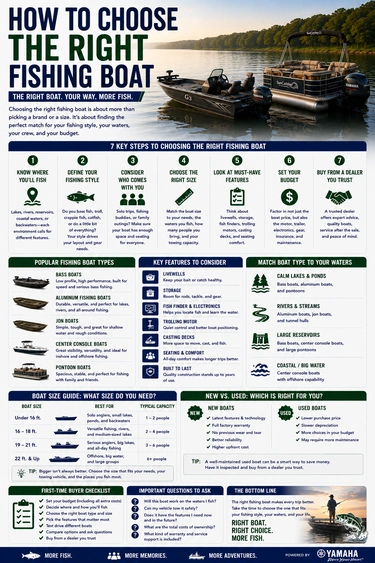
Choosing the right fishing boat is not about finding one “perfect” boat for every angler. It is about matching the boat to your fishing style, your favorite water, your passengers, your tow vehicle, and the kind of ownership experience you want.

A bass angler who spends sunrise on shallow coves needs a different setup than a family that wants to fish, cruise, and relax on a lake. A river angler may care more about shallow-water control and simple durability, while a reservoir angler may prioritize storage, comfort, electronics, and confidence in changing wind.

For shoppers in VA, PA, MD, and nearby areas, MotoMember can help compare new and pre-loved marine options, trailers, accessories, financing, trade-ins, and service support. MotoMember’s site lists new marine inventory, pre-loved inventory, service and parts, and finance resources across its dealership network.

Start With Your Fishing Style

Many shoppers start by asking, “What size fishing boat should I buy?” A better first question is, “How do I fish most often?”

Your fishing style affects the best hull type, deck layout, seating, motor setup, storage, electronics, livewell placement, rod holders, and trailer needs. A boat that looks great in photos may feel frustrating if it does not match how you actually fish.

Here is a practical way to think about it:

Fishing StyleBoat Traits to Prioritize
Bass fishingCasting decks, trolling motor setup, storage, maneuverability
Crappie and panfishRod holders, seating comfort, livewell access, electronics space
CatfishOpen deck space, stability, anchor control, easy cleanup
Walleye or trollingDeeper cockpit, storage, windshield options, electronics layout
River fishingManageable size, shallow-water practicality, durable aluminum build
Family fishingSeating, shade, storage, comfort, easy boarding, versatile layout

The goal is not to buy the most boat possible. The goal is to buy the boat you will use confidently and often.

Choosing a Fishing Boat for Bass Fishing

Bass anglers usually care about boat control. You may spend the day working shorelines, docks, grass, points, laydowns, or shallow structure. That means the boat needs to support casting, quick repositioning, tackle organization, and efficient movement around the deck.

A bass-focused boat should give you enough casting room to fish comfortably from the bow and stern. Storage also matters because bass anglers often carry multiple rods, tackle trays, soft plastics, tools, rain gear, and electronics accessories.

Aluminum modified-V fishing boats can make sense for many freshwater bass anglers because they are practical, durable, and versatile. G3 describes its Sportsman models as all-aluminum, all-welded fishing boats with modified-V hulls and versatile layouts.

What Bass Anglers Should Ask

Before choosing a bass fishing boat, ask where you launch, how shallow you fish, and whether you usually fish alone or with a partner. Also think about whether you need a large casting deck or a more flexible layout for mixed fishing.

Do not overlook storage access. A boat with poor rod storage or awkward tackle compartments can slow you down all day. The best bass boat for your needs should make fishing feel smoother, not more complicated.

Choosing a Fishing Boat for Crappie and Panfish

Crappie, bluegill, perch, and other panfish anglers often fish differently than bass anglers. You may spend more time sitting, working brush piles, fishing bridge pilings, spider-rigging, using live bait, or moving slowly over structure.

For this style, comfort and layout can matter as much as casting space. Look for seating that supports long days, rod-holder compatibility, a practical livewell location, and enough room for electronics.

A boat that allows anglers to fish from multiple positions can be helpful. Some buyers prefer a simple aluminum fishing boat, while others want a more comfortable layout that can also handle family use.

If you bring kids or newer anglers, stability and easy movement around the boat become especially important. A layout that keeps tackle, bait, and rods organized can make the trip more enjoyable for everyone.

Choosing a Fishing Boat for Catfish

Catfish anglers often need space. You may carry bait, a net, a cooler, heavy rods, rod holders, anchors, lights, and gear for longer evening or nighttime trips.

A catfish-friendly boat should feel stable and uncluttered. Open deck space helps when setting multiple rods, landing bigger fish, and moving around without stepping over gear.

Cleanup is another practical factor. Catfish bait and muddy banks can make a boat messy fast. Durable flooring, simple surfaces, and washable layouts can make ownership easier.

Many catfish anglers also fish rivers and reservoirs, so hull choice matters. If you fish current and shallow areas, a rugged aluminum boat may be the right direction. If you fish larger reservoirs, comfort, seating, and storage may become more important.

Choosing a Fishing Boat for Walleye, Trolling, and Multi-Species Fishing

Multi-species anglers often need the most balanced fishing boat. One weekend may involve trolling for walleye, the next may include casting for bass, then a family lake day with snacks, extra passengers, and a cooler.

This is where a deeper, more protective layout can make sense. A deeper cockpit, comfortable seating, electronics space, storage, and wind protection can all matter when you spend longer days on bigger lakes or reservoirs.

G3 describes its Angler V Series as rugged deep-V models built with features for fishing and family use. That type of direction may appeal to shoppers who want more confidence on open freshwater than a smaller shallow-water boat provides.

Think Beyond One Technique

Multi-species buyers should avoid choosing a boat based on one perfect fishing day. Instead, think about your most common mix of trips.

Will you troll? Cast? Carry family? Fish in wind? Launch alone? Store the boat at home? The right fishing boat should handle your normal routine, not just your dream trip.

Choosing a Fishing Boat for Rivers and Creeks

River fishing rewards simplicity. Current, shallow water, tight turns, gravel bars, changing water levels, and smaller ramps can make a large boat feel like a hassle.

Jon boats and smaller aluminum fishing boats are popular because they are straightforward and practical. They can be easier to launch, easier to maneuver, and easier to manage in skinny water.

G3’s official lineup includes aluminum fishing boat categories such as Gator Tough Jon, Sportsman, Angler V, Bay, and SunCatcher pontoons, giving freshwater buyers several directions to compare based on how and where they fish.

For river use, consider size carefully. A boat that is easy to tow, launch, control, and retrieve may be more valuable than a larger boat with extra features you rarely use.

Choosing a Fishing Boat for Family Fishing

Family fishing changes the decision. You are not only choosing a fishing platform; you are choosing a place for people to sit, move, snack, relax, and enjoy the water.

Fishing pontoons can be a strong fit for families who want comfort and fishability. They are especially appealing for lake and reservoir use where stability, seating, deck space, and shade can matter as much as pure fishing performance.

G3’s site lists SunCatcher pontoons as part of its lineup and describes them as pontoon models for relaxing on the water. For shoppers who want fishing plus cruising, a fishing pontoon can be worth comparing against a traditional aluminum fishing boat.

When a Pontoon Makes Sense

A fishing pontoon may be right if you regularly bring kids, grandparents, friends, or guests who do not fish all day. It can also work well if your ideal day includes fishing in the morning, lunch on the water, and a relaxed cruise later.

A pontoon may not be the best fit for tight rivers, very shallow launches, or anglers who want maximum precision boat control. But for comfort-focused lake fishing, it can be hard to ignore.

Match the Boat to the Water

Your favorite water should shape your buying decision.

Small lakes often reward manageable aluminum boats, compact fishing pontoons, and simple layouts. You may not need a large boat if your launches are easy, runs are short, and fishing happens close to shore.

Rivers favor control, durability, and shallow-water practicality. Before choosing a river boat, consider current, depth, ramp condition, debris, and whether you often fish alone.

Reservoirs can require more planning. Wind, boat traffic, longer runs, and open water may make storage, seating, freeboard, electronics, and comfort more important.

For riders and boaters in Virginia, Pennsylvania, Maryland, and surrounding areas, local use can vary from quiet lakes to bigger reservoirs and river systems. Our team can help you compare options based on your real fishing locations rather than a generic boat category.

Think About Towing, Storage, and Launching

A fishing boat has to fit your life on land before it can work on the water.

Think about your tow vehicle, driveway, garage, storage facility, ramp access, and comfort backing a trailer. A boat that feels manageable will usually get used more often.

Also consider total boating length with the trailer, not just the boat itself. Trailer fit, tongue length, motor position, and storage height can all affect whether the package works at home.

If you plan to launch alone, keep that in the conversation. Some boats are easier to handle solo than others. A slightly smaller, simpler setup can be the better choice if it makes every trip less stressful.

Compare New and Pre-Loved Fishing Boats

A new fishing boat may be the right fit if you want a current model, clean ownership history, dealer guidance, and the ability to compare packages before choosing. New inventory can also help you shop by category, brand, location, and use case.

A pre-loved fishing boat may be attractive if you want to manage upfront cost or find a package that already includes accessories. Condition matters, so ask about the hull, motor, trailer, batteries, wiring, electronics, flooring, seats, livewell, title paperwork, and service history.

MotoMember lists both new and pre-loved inventory resources, including marine categories. Current availability, pricing, model years, equipment, and trade-in options can change, so check inventory or contact the team for current details.

Do Not Forget Service, Parts, and Accessories

Fishing boat ownership does not end when you leave the showroom. You will eventually need maintenance, batteries, trailer attention, seasonal prep, accessories, and help keeping your setup ready.

MotoMember’s service page lists support such as routine maintenance and inspections, fluid and filter changes, battery service, accessory installation, pickup and delivery services, and seasonal prep.

Accessories can also shape your fishing experience. Trolling motors, fishfinders, rod holders, anchors, covers, safety gear, storage solutions, and trailer accessories can make the difference between a boat that works and a boat that works well.

Before choosing a model, ask what you may want to add over time. A boat with room for future upgrades can be a smarter long-term purchase.

Put Safety Into the Buying Decision

Safety should be part of boat selection, not an afterthought. A boat should match your passenger count, intended water, experience level, and ability to operate confidently.

The U.S. Coast Guard’s recreational boating guide advises operators to understand their boat’s handling characteristics, know load capacity and passenger locations, check weather, keep the boat in top operating condition, and make sure required safety equipment is on board.

BoatUS notes that recreational boats must carry Coast Guard-approved personal flotation devices in good condition and in the appropriate size for intended users.

Before your first trip, review federal, state, and local requirements for the water where you will operate. Requirements can vary by boat size, equipment, state, and use.

MotoMember Expert Tip

Many shoppers come in focused on brand, length, or price. Our team often starts with use case: “What species do you fish for, where do you launch, and who rides with you?”

If you bass fish most weekends, prioritize casting room, storage, and boat control. If you fish crappie or panfish, focus on seating, rod management, electronics, and livewell access. If your family comes along, comfort and movement around the boat may matter more than maximum fishing specialization.

Bring your tow vehicle details, storage plan, normal passenger count, preferred fishing waters, and must-have accessories when you visit. That gives the MotoMember team a better way to help you compare fishing boats, pontoons, trailers, financing options, trade-ins, and service needs.

Call to Action

Your fishing boat headquarters starts at MotoMember.

Explore MotoMember’s new and pre-loved marine inventory, compare fishing boats and pontoons, ask about trailer options, and talk with the team about accessories, service, financing, and trade-ins. Current availability can vary, so check inventory or contact MotoMember before planning around a specific model.

Large selection. Straightforward shopping. Real powersports expertise.

Stop dreaming. Start riding—and boating—with MotoMember.

Conclusion

The right fishing boat is the one that fits your fishing style.

Bass anglers often need casting room, storage, and precise boat control. Crappie and panfish anglers may want comfort, rod holders, and practical livewell access. Catfish anglers often benefit from space, stability, and easy cleanup. Multi-species anglers need versatility. Families may find that a fishing pontoon gives them the best balance of comfort and fishability.

For shoppers in VA, PA, MD, and nearby areas, MotoMember can help turn those choices into a practical short list. Before choosing a model, think through how you fish, where you fish, who comes with you, how you will tow and store the boat, and what support you will need after purchase.

FAQ

What is the best fishing boat for beginners?

For many beginners, a manageable aluminum fishing boat or compact fishing pontoon is easier to tow, launch, store, and operate than a larger specialized boat. The best choice depends on your water, passenger count, and fishing style.

What fishing boat is best for bass fishing?

Bass anglers often look for casting decks, storage, trolling motor compatibility, and strong boat control. Aluminum modified-V fishing boats can be a practical option for many freshwater bass anglers.

Are pontoons good fishing boats?

Yes, fishing pontoons can be excellent for relaxed lake and reservoir fishing, especially when comfort, seating, stability, and family use matter. They may not replace a specialized bass boat for every technique, but they are strong all-around recreational fishing platforms.

Should I buy a new or used fishing boat?

Buy new if you want a clean ownership history, current model options, and dealer guidance from the start. Consider pre-loved if you want to manage upfront cost, but inspect the motor, trailer, electronics, batteries, flooring, seats, and service history carefully.

Can MotoMember help me choose a fishing boat?

Yes. MotoMember can help shoppers compare fishing boats, pontoons, new and pre-loved inventory, trailers, accessories, service needs, financing options, and trade-ins across VA, PA, MD, and surrounding areas.

Text us!
X
Image
Hi there, have a question?
Send us a text!
Value Your Trade in 30 Seconds