
Fishing Boat Seating Layouts That Work Best

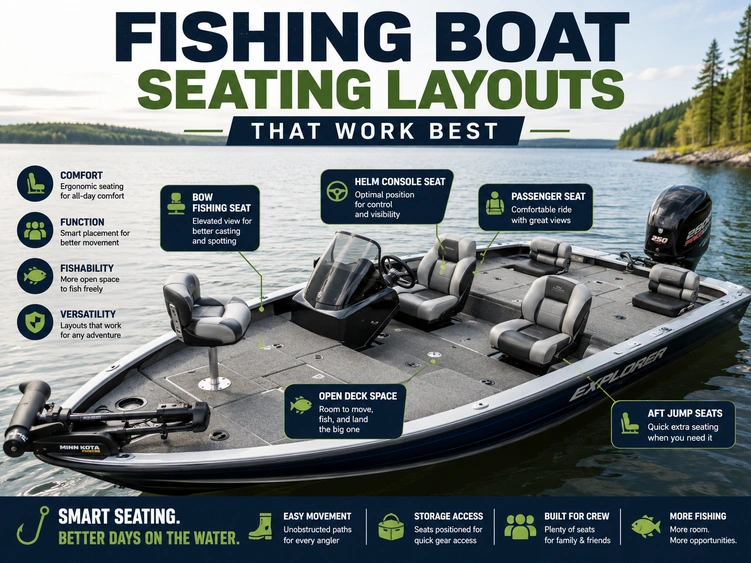
Fishing Boat Seating Layouts That Work Best
Choosing the right fishing boat is not only about length, horsepower, hull style, or electronics. One of the biggest day-to-day differences comes from the seating layout.
The right fishing boat seating layout helps you cast comfortably, move safely, store gear efficiently, and enjoy longer days on the water. The wrong layout can make a good boat feel cramped, awkward, or poorly matched to the way you actually fish.
Many shoppers start by asking, “How many seats do I need?” A better question is, “Where should the seats be, and how will people move around them?”
For anglers in Virginia, Pennsylvania, Maryland, and nearby areas, MotoMember helps shoppers compare fishing boats, aluminum boats, pontoons, accessories, trailers, service support, and ownership needs. Current availability can vary by location, model year, and season, so check MotoMember inventory or contact the team before planning around one exact setup. MotoMember serves customers through locations in Virginia and Pennsylvania and carries powersports and marine brands including Yamaha, G3, SunCatcher, Sea-Doo, Can-Am, Polaris, Kawasaki, Slingshot, and others.
Why Seating Layout Matters on a Fishing Boat
Fishing boat seating affects comfort, balance, casting space, storage access, and passenger safety. A boat can have a strong motor, a reliable trailer, and quality construction, but if the seats interfere with how you fish, you will notice it every time you launch.
A good seating layout should support your fishing style first. Bass anglers often want open casting decks and removable pedestal seats. Crappie anglers may prefer front seating positions for spider rigging or controlled trolling. Families may want more fixed seating, backrests, and a layout that works for cruising between fishing spots.
Before choosing a model, consider who will usually be on board. A solo angler has very different seating needs than a parent fishing with kids, a pair of tournament-style anglers, or a group that wants to fish in the morning and relax in the afternoon.
Common Fishing Boat Seating Layouts
There is no single “best” layout for every buyer. The right choice depends on how you fish, where you boat, and how much open deck space you need.
1. Bench Seating
Bench seating is common in jon boats, utility boats, and simple aluminum fishing boats. It is durable, straightforward, and useful for basic transportation, short fishing trips, and smaller water.
Bench seats often create a stable place to sit while running across the water. They may also provide flotation or storage, depending on the boat design. For many first-time boat buyers, a bench layout is easy to understand and easy to maintain.
The downside is that fixed benches can interrupt movement. If you like to walk freely from bow to stern, cast from different angles, or fish with multiple people, fixed bench seating can feel limiting.
Bench seating works well for:
-
Simple lake, pond, and river fishing
-
Utility use
-
Budget-conscious buyers
-
Hunters and anglers who want a rugged aluminum layout
-
Shoppers who value simplicity over premium comfort
2. Pedestal Seats
Pedestal seats are one of the most popular choices for fishing boats because they offer flexibility. These seats typically mount into bases installed in the deck, allowing anglers to sit higher and rotate while casting, watching lines, or operating a trolling motor.
Many fishing boats have more pedestal bases than actual seats. That lets you move seats around based on the trip. Discover Boating notes that a fishing boat may have several pedestal bases with fewer pedestal seats, leaving more open deck space when needed.
That flexibility is useful because not every fishing day looks the same. You may want one front pedestal seat for solo casting, two forward seats for crappie fishing, or fewer seats installed when you need open room to fight fish.
Pedestal seating works well for:
-
Bass fishing
-
Crappie fishing
-
Walleye fishing
-
Trolling motor use
-
Anglers who want flexible deck space
-
Boats with front and rear casting decks
3. Fold-Down Fishing Seats
Fold-down seats are common on aluminum fishing boats and multi-species boats. They give anglers back support while still remaining compact when not in use.
These seats are a practical middle ground between basic benches and premium bucket-style seating. They can be mounted on pedestals, placed at the helm, or used in passenger positions.
Fold-down seats are especially helpful when you want comfort without giving up too much room. They are also popular with buyers who fish longer days and want more support than a flat bench can offer.
Fold-down seating works well for:
-
All-day fishing trips
-
Older anglers who want more back support
-
Boats used by different family members
-
Multi-species fishing
-
Flexible fishing and cruising use
4. Casting Deck Seating
Casting deck seating places anglers near the bow, stern, or both. The goal is to give the person fishing a comfortable elevated position with room to cast.
This layout is common on bass-style boats, aluminum fishing boats, and many G3 fishing models. G3 Boats describes its lineup as aluminum fishing boats built for anglers, families, and outdoor adventures, with models such as Sportsman, Angler V, Gator Tough, Bay, and SunCatcher pontoons.
A front casting deck with a pedestal seat is especially useful when using a bow-mounted trolling motor. You can sit or lean while controlling boat position, working shorelines, or holding near structure.
Casting deck seating works well for:
-
Bass anglers
-
Artificial lure fishing
-
Shoreline casting
-
Trolling motor control
-
Two-angler setups
-
Buyers who prioritize fishing function over lounging space
5. Side Console Seating
Side console fishing boats usually place the driver at a console on one side, with passenger seating nearby or behind. This layout is popular because it balances fishing space with more comfortable operation.
Compared with a tiller boat, a side console can feel more familiar to new boaters. The steering wheel, controls, and windshield area may also offer a more comfortable driving experience, depending on the model.
The tradeoff is that the console takes up some deck space. For anglers who want the most open layout possible, that matters. For buyers who want a mix of comfort, control, and fishability, side console seating can be a strong choice.
Side console seating works well for:
-
Families
-
New boaters
-
Larger lakes
-
Mixed fishing and cruising
-
Buyers who prefer steering-wheel operation
-
Anglers who want a defined helm area
6. Center Console Seating
Center console layouts place the helm near the centerline of the boat. This can create good movement around both sides and a balanced fishing platform.
Center consoles are often appreciated by anglers who cast from multiple positions, fish with partners, or want easier access around the boat. The seating may include a helm leaning post, cooler seat, bench, or pedestal-style positions, depending on the boat.
The center console layout can be especially useful when fishing rivers, open water, or larger bodies of water where visibility and control matter. It is also helpful when two or more anglers need to move around without constantly crossing over gear.
Center console seating works well for:
-
Open deck movement
-
Catfish, striper, or multi-species fishing
-
Anglers who cast from different areas
-
Buyers who want balanced control
-
Fishing with multiple people
7. Tiller Layouts
Tiller boats place the operator at the rear, controlling the outboard directly instead of using a steering console. This layout is popular among anglers who want maximum interior space.
Without a console, the boat can feel more open. That can be useful for gear, coolers, tackle, batteries, and moving around while fishing.
Tiller layouts can require more hands-on operation and may not appeal to every new boater. However, experienced anglers often like them because they keep the floor plan simple and efficient.
Tiller seating works well for:
-
Maximum usable floor space
-
Experienced anglers
-
Walleye and multi-species fishing
-
Simple boat control
-
Buyers who do not want a console taking up room
8. Fishing Pontoon Seating
Fishing pontoons are a different category because they combine fishing features with comfort seating. A fishing pontoon may have swivel fishing seats at the bow or stern, lounge seating, a helm chair, livewell areas, rod holders, and open deck sections.
For families, this can be the most comfortable seating layout. You can fish from dedicated positions, then relax while cruising. SunCatcher pontoons are part of the G3/Yamaha family of marine products, and MotoMember inventory has included SunCatcher pontoon listings, with availability changing by location and season.
The tradeoff is that a fishing pontoon may not feel as nimble as a smaller aluminum fishing boat. It may also require more storage space, a suitable tow vehicle, and a launch area that fits your boating routine.
Fishing pontoon seating works well for:
-
Families
-
Relaxed lake fishing
-
Mixed fishing and cruising
-
Multiple passengers
-
Buyers who value comfort
-
Longer days on the water
What Layout Works Best for Different Types of Fishing?
The best fishing boat seating layout depends on the way you fish most often. A layout that works well for bass fishing may not be ideal for trolling, and a layout that feels perfect for two anglers may not work for a family of five.
Best Seating Layout for Bass Fishing
For bass fishing, open casting decks and pedestal seats usually work best. Bass anglers often stand while casting, work shorelines, and move quickly between spots.
A raised front deck with a pedestal base gives you flexibility. You can remove the seat when you want more room or add it when you need support during a long day.
Look for:
-
Large front casting deck
-
Rear casting deck
-
Removable pedestal seats
-
Easy tackle access
-
Clear trolling motor position
-
Minimal obstructions around the deck
Best Seating Layout for Crappie Fishing
Crappie anglers often benefit from multiple forward seating positions. If you fish with long rods, spider rigs, or controlled presentations, front seating can be extremely important.
Two pedestal bases near the bow can make it easier for two anglers to watch lines and stay comfortable. Storage access is also important because crappie anglers often carry rods, bait, tackle trays, coolers, and electronics.
Look for:
-
Forward pedestal seating
-
Room for multiple rods
-
Clear bow deck
-
Comfortable back support
-
Easy access to livewell and bait
-
Stable platform at low speeds
Best Seating Layout for Catfish Fishing
Catfish anglers often need open floor space, strong seating, and room for rod holders, coolers, bait, and larger fish. A center console, tiller, or open jon-style layout may work well.
Fixed seating can be helpful, but too much built-in seating can reduce usable deck space. The best layout usually gives anglers room to spread out and manage multiple rods safely.
Look for:
-
Open cockpit space
-
Strong seating positions
-
Easy stern access
-
Room for rod holders
-
Wide walkways
-
Balanced weight distribution
Best Seating Layout for Family Fishing
Family fishing usually requires more comfort and flexibility. Kids, guests, and occasional passengers may not want to sit on basic benches all day.
A side console aluminum fishing boat, fish-and-ski layout, or fishing pontoon may be a better match. These layouts can provide supportive seats, safer movement, more storage, and a better experience for non-anglers.
Look for:
-
Comfortable passenger seating
-
Backrests
-
Shade options when available
-
Easy boarding
-
Storage for snacks, gear, and safety equipment
-
Layout flexibility for fishing and cruising
Seating, Balance, and Boat Capacity
A fishing boat seating layout should always be considered alongside weight capacity and safe loading. More seats do not automatically mean a boat can carry more people or gear.
Capacity plates and manufacturer guidance matter. The U.S. Coast Guard Boating Safety Division focuses on reducing boating injuries, loss of life, and property damage through boater education and safety guidance. BoatUS also explains that boat capacity information helps identify maximum persons capacity and maximum weight capacity for people and gear.
This is important because anglers often bring more than passengers. Tackle, coolers, batteries, anchors, fuel, electronics, trolling motors, and safety equipment all add weight.
Before choosing a layout, ask:
-
Where will passengers sit while running?
-
Where will anglers stand while casting?
-
Where will heavy gear be stored?
-
Will the boat feel balanced with two or three people fishing?
-
Can everyone move safely without stepping over tackle?
A boat that feels roomy at the dealership can feel very different once it is loaded for a real fishing trip.
Comfort vs. Open Deck Space
One of the biggest seating layout decisions is comfort versus fishability.
More fixed seats usually mean more comfort for passengers. More open deck space usually means better fishing movement. The right answer depends on your priorities.
If you mostly fish alone or with one partner, prioritize open decks, pedestal bases, and storage. If you often bring family or friends, prioritize supportive seating, safe walkways, and a layout that works when not everyone is fishing.
The best layout often blends both. For many buyers, removable pedestal seats are valuable because they allow the same boat to feel different depending on the day.
Storage Access Around Seating
Seats should not block the storage you use most often. This is a common issue shoppers overlook.
A seat that looks comfortable in the showroom may become frustrating if it blocks a tackle compartment, battery hatch, livewell, cooler area, or rod locker. Before choosing a boat, picture your normal fishing routine.
Think about where you will keep:
-
Rods
-
Tackle bags
-
Life jackets
-
Anchor and rope
-
Cooler
-
Landing net
-
Tools
-
Rain gear
-
Batteries and chargers
Our team can help you compare layouts based on how you actually pack for the water, not just how the boat looks sitting on the trailer.
Seating Layouts for Smaller Fishing Boats
Smaller fishing boats need smart seating because every inch matters. A 14- to 16-foot boat with too much fixed seating can feel tight quickly.
For smaller boats, simple bench seating, removable swivel seats, or compact pedestal options may work best. The goal is to keep the boat usable without overloading it with accessories.
Smaller layouts should emphasize:
-
Clear walking paths
-
Balanced weight
-
Minimal clutter
-
Simple storage
-
Easy launching and loading
-
Practical seating for your usual crew size
If you normally fish alone or with one partner, do not overbuild the seating layout for rare occasions. Choose the layout that works for 80 percent of your trips.
Seating Layouts for Larger Fishing Boats
Larger fishing boats give you more room to balance comfort and fishing function. You may be able to have a defined helm area, multiple pedestal locations, larger casting decks, better storage, and more passenger-friendly seating.
This is where layout comparison becomes especially important. Two boats of similar length can feel completely different depending on console placement, deck height, seat location, and storage design.
For larger boats, pay attention to:
-
Driver visibility
-
Passenger comfort
-
Bow and stern fishing space
-
Storage access
-
Movement around consoles
-
Trailer and tow vehicle requirements
-
Service and accessory support after purchase
For riders and boaters in VA, PA, MD, and nearby areas, local dealership support matters because your boat is not just a purchase. It is something you will tow, launch, maintain, accessorize, and use season after season.
MotoMember Expert Tip
Before choosing a fishing boat seating layout, walk through a real fishing day from start to finish.
Where do you sit while running? Where does your fishing partner sit? Where do rods go before launch? Where does the cooler fit? Where will kids or guests sit if they come along? Where do you stand when landing a fish?
Many shoppers focus on how many seats a boat has. In the showroom, our team often helps customers think about how those seats affect movement, storage, casting angles, balance, and comfort.
Large selection. Straightforward shopping. Real powersports expertise.
How to Compare Fishing Boat Seating Layouts at the Dealership
When comparing boats in person, do more than look at the seats. Step into the boat when allowed, stand where you would cast, sit at the helm, and imagine the boat loaded with gear.
Ask the MotoMember team:
-
Can seats be removed or repositioned?
-
Are pedestal bases included or optional?
-
How much deck space remains with seats installed?
-
Does the layout support a trolling motor?
-
Is there room for electronics, rod holders, or other accessories?
-
How does this layout work for my usual fishing style?
-
What service and accessory support is available after purchase?
Current availability can vary, so check MotoMember inventory or contact the team for the latest fishing boat, pontoon, and marine options.
Internal and External Link Opportunities
For internal linking, direct readers to the MotoMember homepage, current marine inventory, related G3 boat buying guides, pontoon buying guides, service resources, financing information, and trade-in options when those pages are available. Start with MotoMember online for current dealership information and available product categories.
For external trust links, useful resources include the official G3 Boats website, Discover Boating seating and boating education resources, and U.S. Coast Guard boating safety information.
Call to Action
Ready to compare fishing boat seating layouts in person?
Visit MotoMember online or contact the team to explore current fishing boats, pontoons, marine inventory, trailers, accessories, financing options, trade-ins, and service support.
Our team can help you compare layouts based on how you fish, where you boat, who rides with you, and what you need after the sale.
Your fishing boat headquarters starts at MotoMember.
Stop dreaming. Start boating.
Conclusion
The best fishing boat seating layout is the one that matches your real use. Bench seats may be ideal for simple utility fishing. Pedestal seats can give serious anglers more flexibility. Side console and center console layouts can improve control and movement. Fishing pontoons can give families more comfort while still supporting time on the water.
Before choosing a model, think beyond the number of seats. Consider casting space, storage access, passenger comfort, weight balance, safe movement, and how the boat will feel after it is loaded with rods, tackle, coolers, batteries, and safety gear.
For shoppers in Virginia, Pennsylvania, Maryland, and surrounding areas, MotoMember can help you compare fishing boat layouts, marine inventory, accessories, service options, and ownership support. The right layout makes every fishing trip easier, safer, and more enjoyable.
FAQ
What is the best seating layout for a fishing boat?
The best seating layout depends on how you fish. Bass anglers often prefer open casting decks with removable pedestal seats. Families may prefer side console layouts or fishing pontoons with more supportive seating. Crappie anglers may want multiple forward pedestal positions.
Are pedestal seats better than bench seats?
Pedestal seats are usually better for anglers who want flexibility, rotation, and casting comfort. Bench seats are simpler and durable, making them useful for jon boats, utility boats, and basic fishing setups.
How many seats should a fishing boat have?
A fishing boat should have enough seating for your usual crew, but more seats are not always better. Too many fixed seats can reduce deck space and make it harder to fish. Always consider capacity, gear weight, and safe movement.
Is a fishing pontoon a good choice for anglers?
A fishing pontoon can be a great choice for families and relaxed lake fishing. It offers more comfort and passenger space than many smaller fishing boats, while still allowing dedicated fishing positions. Buyers who want maximum maneuverability may prefer an aluminum fishing boat instead.
Can MotoMember help me compare fishing boat layouts?
Yes. MotoMember can help shoppers compare fishing boats, pontoons, seating layouts, accessories, financing, trade-ins, and service support. Current availability can vary by location, season, model year, and configuration, so contact MotoMember or check current inventory before choosing a specific setup.