
Fishing Boat Buyer’s Guide for First-Time Buyers

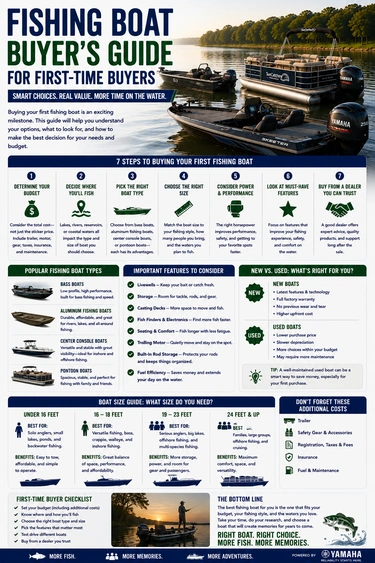
Fishing Boat Buyer’s Guide for First-Time Buyers
Buying your first fishing boat is exciting, but it can also feel overwhelming. There are aluminum fishing boats, jon boats, pontoons, deep-V boats, outboards, trailers, electronics, trolling motors, livewells, safety gear, storage questions, financing options, and plenty of opinions from friends who all fish a little differently.
The good news is that choosing the right first boat becomes much easier when you focus on how you will actually use it.
A first-time fishing boat buyer does not need to know every technical term before visiting a dealership. You just need a clear idea of where you plan to fish, who will ride with you, how you will tow and store the boat, and what kind of fishing experience you want.
For shoppers in Virginia, Pennsylvania, Maryland, West Virginia, and nearby areas, MotoMember can help compare fishing boats, pontoons, Yamaha-powered packages, trailers, accessories, financing, trade-ins, and long-term service needs. MotoMember lists new marine inventory alongside motorcycles, ATVs, side-by-sides, personal watercraft, and other powersports categories, giving customers a place to compare multiple ownership paths in one dealership group.
Start With the Kind of Fishing You Actually Do
Many first-time buyers start by asking, “What is the best fishing boat?” A better question is, “What kind of fishing will I do most often?”
A boat for bass fishing on lakes may need casting decks, tackle storage, and trolling motor compatibility. A boat for river fishing may need a simple aluminum hull, manageable size, and shallow-water practicality. A boat for family fishing may need comfortable seating, shade, storage, and easy movement around the deck.
Do not buy only for the biggest trip you imagine. Buy for the trips you will take most often.
If most of your fishing will happen on smaller lakes, rivers, and protected water, a practical aluminum fishing boat or jon boat may be a strong first choice. If you plan to take family and friends on relaxed lake days, a fishing pontoon may be easier to enjoy. If you fish larger reservoirs, you may want more storage, seating, electronics space, and weather protection.
Understand the Main Types of Fishing Boats
You do not have to become a marine expert to make a smart choice. But understanding the major fishing boat categories will help you ask better questions and avoid buying the wrong setup.
Jon Boats
Jon boats are simple, practical, and popular with anglers who fish rivers, creeks, small lakes, ponds, backwaters, and shallow areas. They are often chosen by buyers who want a durable fishing platform without unnecessary complexity.
G3 describes its Gator Tough jon boat lineup as all-welded models built around durability, dependability, and value for hunting, fishing, and other practical uses.
For first-time buyers, a jon boat can be appealing because it keeps the ownership experience straightforward. You can focus on essentials such as the outboard, trailer, trolling motor, life jackets, anchor, battery setup, and fishing gear.
A jon boat may not be the right fit if you regularly fish big, windy water or want a highly cushioned family layout. But for simple freshwater fishing, it can be a smart place to start.
Aluminum Fishing Boats
Aluminum fishing boats are a broad category that can include utility boats, modified-V boats, bass-style layouts, and multi-species fishing models. Many first-time buyers like aluminum because it balances durability, fishability, and manageable towing.
An aluminum fishing boat can be a strong option if you want one boat for several freshwater uses. You might bass fish one weekend, chase crappie the next, and take a friend out for catfish after work.
Look for layout details that match your routine. Casting room, rod storage, livewell access, passenger seating, electronics placement, and trolling motor compatibility all matter.
Deep-V and Multi-Species Boats
Deep-V and multi-species fishing boats are often considered by anglers who fish larger lakes or reservoirs. They may offer more protection, deeper interiors, better seating, and more comfort for longer days on open freshwater.
These boats can be useful if you troll, fish changing conditions, carry passengers, or want a more versatile boat for mixed fishing. They may also feel more confidence-inspiring when the wind picks up or when you travel farther from the ramp.
For a first-time buyer, the tradeoff is size and complexity. A deeper, more equipped boat may require more towing confidence, more storage space, and a larger ownership budget.
Fishing Pontoons
Fishing pontoons are a great fit for many first-time buyers because they blend comfort and utility. They are especially appealing for families who want to fish, cruise, relax, snack, and spend longer days on the water.
A fishing pontoon can offer seating, open deck space, fishing stations, rod holders, livewell options, storage, shade, and a stable feel. That makes it easier to bring kids, grandparents, guests, and newer anglers.
G3 lists SunCatcher pontoons as part of its broader boat lineup, and MotoMember has published content around SunCatcher pontoon availability and buying considerations. Current model availability, equipment, and pricing can change, so first-time buyers should check current MotoMember inventory or contact the team directly.
A pontoon may not be the best choice for tight rivers, shallow launches, or anglers who want maximum casting-deck specialization. But for lake and reservoir families, it can be one of the most enjoyable first fishing boats.
Match the Boat to Your Water
Where you fish should shape almost every buying decision.
Small Lakes and Ponds
For small lakes and ponds, you may not need a large or heavily equipped boat. A smaller aluminum fishing boat, jon boat, or compact fishing pontoon may be easier to tow, launch, store, and operate.
Think about launch conditions. Some smaller lakes have basic ramps, limited parking, electric-only rules, or tight maneuvering areas. Before choosing a model, consider where you will actually launch and how much room you will have.
Rivers and Creeks
River fishing often calls for a different mindset. Current, shallow water, changing levels, gravel bars, debris, and narrow ramps can make simplicity valuable.
A manageable aluminum boat or jon boat can be easier to control in these environments. You should also think about how often you may need to beach the boat, push off shallow areas, or navigate tight turns.
For first-time river buyers, bigger is not always better. A boat that is easy to handle may be more useful than a larger boat that creates stress every time you launch.
Reservoirs
Reservoirs can be calm one hour and windy the next. They may involve longer runs, open water, changing weather, boat traffic, and more time away from the ramp.
For reservoir fishing, first-time buyers should think about seating, storage, electronics, fuel range, hull confidence, safety gear, and passenger comfort. A smaller boat may work well in protected coves, but larger reservoirs often reward better planning and more comfort.
For shoppers in VA, PA, MD, and nearby areas, local use can vary widely. Some buyers want a simple fishing boat for quiet water. Others want a pontoon or larger fishing platform for bigger lakes and family weekends. MotoMember’s team can help compare those use cases before you choose.
Think Through Your Passenger Count
Your normal passenger count matters more than your dream passenger count.
If you usually fish alone or with one friend, you may not need a large layout. If you often bring kids, family members, or guests, comfort and space become more important.
Ask yourself:
Who will ride most often?
Will passengers fish or mostly relax?
Will kids need easier boarding and more secure seating?
Will older passengers need stable movement around the deck?
Will you carry coolers, snacks, extra bags, and safety gear?
A first boat should feel comfortable with your normal crew. Overcrowding a small boat can make the day less enjoyable and less safe. Buying more boat than you can tow, store, or launch can also create problems.
Do Not Forget Towing and Storage
A fishing boat does not only live on the water. It also needs to fit your driveway, garage, storage space, trailer setup, tow vehicle, and launch routine.
Before buying, think about the full boat-and-trailer package. The boat length is not the same as the total storage length. The trailer tongue, motor position, transom saver, spare tire, and accessories may all affect how much space you need.
Also think honestly about towing confidence. A first-time buyer may enjoy boating more with a setup that feels easy to pull, back up, launch, and retrieve.
Ask the MotoMember team to help you think through:
Tow vehicle capability
Trailer size and fit
Storage length and height
Ramp access
Solo launching
Battery charging access
Cover and winter storage needs
A boat that fits your life on land is much more likely to be used often.
Build a Realistic First-Time Buyer Budget
The boat itself is only part of the total cost. First-time buyers should also budget for the trailer, outboard, registration requirements, insurance, safety gear, batteries, maintenance, fuel, accessories, storage, and future upgrades.
Do not stretch your entire budget on the boat and leave nothing for the items that make boating easier and safer.
Common first-boat ownership costs may include:
Life jackets and throwable flotation device
Anchor and dock lines
Battery and charger
Trolling motor
Fishfinder or electronics
Rod holders
Boat cover
Trailer accessories
Routine service
Winterization or seasonal prep
Storage
Fuel and oil
Cleaning supplies
MotoMember offers financing resources and dealership support for powersports and marine shoppers, and current finance options can vary by location, approval, lender, unit, and program. First-time buyers should confirm current details with the MotoMember team rather than assuming a specific payment, rate, or promotion.
New vs. Used Fishing Boats
First-time buyers often wonder whether they should buy new or used. Both can make sense.
Why Buy New?
A new fishing boat may be the right choice if you want a clean ownership history, current model-year options, dealer guidance, and the ability to compare boat, motor, trailer, and accessory packages from the start.
New can also be appealing if you want support understanding features, break-in guidance, service intervals, and accessory planning. For a first-time buyer, that guidance can be valuable.
MotoMember’s new inventory page includes marine vehicles among its broader powersports categories, and shoppers can use current inventory to compare available options. Availability, pricing, model year, and equipment can change, so always verify the current listing before making a decision.
Why Buy Used?
A used fishing boat may be a smart option if you want to manage upfront cost or find a package that already includes accessories. Some used boats may already have electronics, rod holders, trolling motors, covers, or other upgrades.
The key is inspection. Ask about the hull, motor, trailer, tires, wiring, batteries, steering, flooring, seats, livewell, electronics, title paperwork, and service history.
MotoMember lists used powersports and marine inventory resources, giving shoppers a place to compare pre-owned options when available.
Look Closely at the Motor
For many first-time buyers, the motor can be one of the most confusing parts of the purchase. Horsepower, tiller vs. console control, fuel type, weight, maintenance, and intended use all matter.
Rather than chasing maximum horsepower, think about how the boat will be used. A river boat used for short trips has different needs than a fishing pontoon carrying family and gear. A reservoir boat may need more confidence for longer runs, while a small-lake boat may prioritize simplicity and efficiency.
Yamaha Outboards provides official outboard resources for shoppers comparing marine power options, and MotoMember has published Yamaha outboard buying guidance for customers comparing boats, use cases, and available inventory.
Before choosing a motor, ask how the boat will perform with your normal passenger load and gear. Also ask about maintenance, break-in guidance, fuel considerations, battery setup, propeller questions, and service support.
Choose Accessories That Match Your Fishing
Accessories can turn a basic boat into a much better fishing tool. But first-time buyers should avoid buying every accessory before they know what they actually need.
Start with safety and essentials. Then add fishing accessories based on your style.
Bass anglers may prioritize a trolling motor, fishfinder, casting deck space, and tackle storage. Crappie anglers may want rod holders, electronics, livewell access, and comfortable seating. Catfish anglers may want heavy-duty rod holders, anchors, open deck space, and lighting. Family anglers may want shade, extra seating, storage, boarding aids, and a cover.
Good accessories make your boat easier to use. Too many accessories can clutter the deck and complicate ownership.
Put Safety Into the Buying Decision
Safety should be part of your first boat purchase from the beginning.
The U.S. Coast Guard advises recreational boaters to wear a U.S. Coast Guard-approved life jacket or buoyancy aid when the vessel is underway because a life jacket only helps when it is worn.
BoatUS explains that recreational boats must carry properly fitting, Coast Guard-approved life jackets in serviceable condition for each person on board, and that life jackets must be readily accessible.
First-time buyers should also think about navigation lights, fire extinguisher requirements, sound-producing devices, throwable flotation, anchor, first-aid supplies, communication, weather awareness, and state-specific boating rules. Requirements can vary based on boat type, length, engine, state, and use, so check the official requirements for the waters where you will operate.
For buyers in Virginia, the Virginia Department of Wildlife Resources publishes required equipment information for boaters, including specific guidance for personal watercraft and other boating categories.
Think About Service Before You Buy
A fishing boat is not a one-time purchase. It is an ownership product.
You will eventually need maintenance, batteries, trailer attention, seasonal prep, accessory installation, inspections, and help keeping the boat ready. Buying from a dealership that can support you after the sale can make ownership much easier.
MotoMember’s service page lists support such as routine maintenance and inspections, fluid and filter changes, battery service, accessory installation, pickup and delivery, and seasonal prep.
For first-time buyers, this support is important. You may have questions after your first few trips. You may want to add accessories later. You may need seasonal service before spring. Having a real team nearby can help you spend more time fishing and less time guessing.
Common First-Time Fishing Boat Mistakes
First-time buyers usually do not make mistakes because they are careless. They make mistakes because they focus on the wrong details too early.
Buying Too Much Boat
A bigger boat can be comfortable, but it can also be harder to tow, launch, store, clean, and maintain. Make sure the boat fits your real use, not just your dream scenario.
Ignoring the Trailer
The trailer affects nearly every trip. Tire condition, lights, bunks, winch, tie-downs, spare tire, tongue weight, and storage length all matter.
Forgetting the Passenger Experience
A boat that works for one serious angler may not work for a family. If guests will come along, think about seating, shade, boarding, storage, and comfort.
Underestimating Accessories
Safety gear, batteries, covers, electronics, trolling motors, anchors, dock lines, and rod holders can add up. Plan for them before using your full budget on the boat itself.
Not Asking About Service
A low-stress ownership experience depends on maintenance support. Ask about service, seasonal prep, parts, and accessory installation before you buy.
What to Bring When You Visit MotoMember
A dealership visit is more productive when you come prepared. You do not need all the answers, but a few details help the team guide you better.
Bring your tow vehicle information. Know where you plan to store the boat. Think about your normal passenger count. List your favorite fishing waters. Decide whether you want to fish alone, bring family, or do both. Make a short list of must-have accessories.
Also think about budget in terms of total ownership, not just purchase price. That helps the MotoMember team compare boat, motor, trailer, accessories, financing, trade-in, and service needs in a realistic way.
MotoMember Expert Tip
First-time fishing boat buyers often focus on brand, size, or price first. Our team recommends starting with your normal day on the water.
Picture your most common fishing trip. Where are you launching? Who is with you? How many rods are on board? Are you casting, trolling, anchoring, or drifting? Do you need a livewell? Are kids or guests coming? How far is the ramp from home? Where will the boat sit after the trip?
Once you answer those questions, the right category becomes much clearer. A jon boat, aluminum fishing boat, deep-V fishing boat, or fishing pontoon may all be good choices—but only one will fit your real routine best.
Call to Action
Your fishing boat headquarters starts at MotoMember.
Explore current MotoMember marine inventory, compare new and used fishing boats, ask about SunCatcher pontoons and Yamaha-powered packages, and talk with the team about trailers, accessories, financing, trade-ins, service, towing, and storage.
Current availability can vary, so check MotoMember inventory or contact the team before planning around a specific model.
Large selection. Straightforward shopping. Real powersports and marine expertise.
Stop dreaming. Start riding—and boating—with MotoMember.
Conclusion
Buying your first fishing boat should feel exciting, not confusing.
Start with how you fish. Match the boat to your water. Think about passengers, towing, storage, safety, accessories, service, and total ownership cost. Compare new and used options carefully. Ask questions before you commit.
For first-time fishing boat buyers in VA, PA, MD, WV, and nearby areas, MotoMember can help turn a long list of possibilities into a practical short list. Whether you are comparing jon boats, aluminum fishing boats, fishing pontoons, trailers, Yamaha power, accessories, financing, or service support, the MotoMember team can help you choose with more confidence.
FAQ
What is the best first fishing boat?
The best first fishing boat depends on where and how you fish. Many beginners consider an aluminum fishing boat, jon boat, or compact fishing pontoon because these options can be easier to tow, launch, store, and use than larger specialized boats.
Should a first-time buyer choose a jon boat or pontoon?
Choose a jon boat if you want simplicity, shallow-water practicality, and a straightforward fishing platform. Consider a fishing pontoon if you want more comfort, seating, space, and family-friendly use on lakes or reservoirs.
Is it better to buy a new or used fishing boat?
New may be better if you want a clean ownership history, dealer guidance, and current package options. Used may be better if you want to manage upfront cost, but condition, service history, motor health, trailer condition, and paperwork are very important.
What safety gear does a first-time boat owner need?
At minimum, first-time buyers should plan for properly fitting Coast Guard-approved life jackets, throwable flotation when required, dock lines, anchor, sound-producing device, navigation lights when needed, fire extinguisher when required, and state-specific equipment. Always check current rules for your boat and location.
Can MotoMember help first-time fishing boat buyers?
Yes. MotoMember can help first-time buyers compare fishing boats, pontoons, Yamaha-powered packages, trailers, accessories, service, financing, trade-ins, towing needs, and storage considerations across Virginia, Pennsylvania, Maryland, West Virginia, and nearby areas.