Yamaha Outboard Motors for Boat Repowering

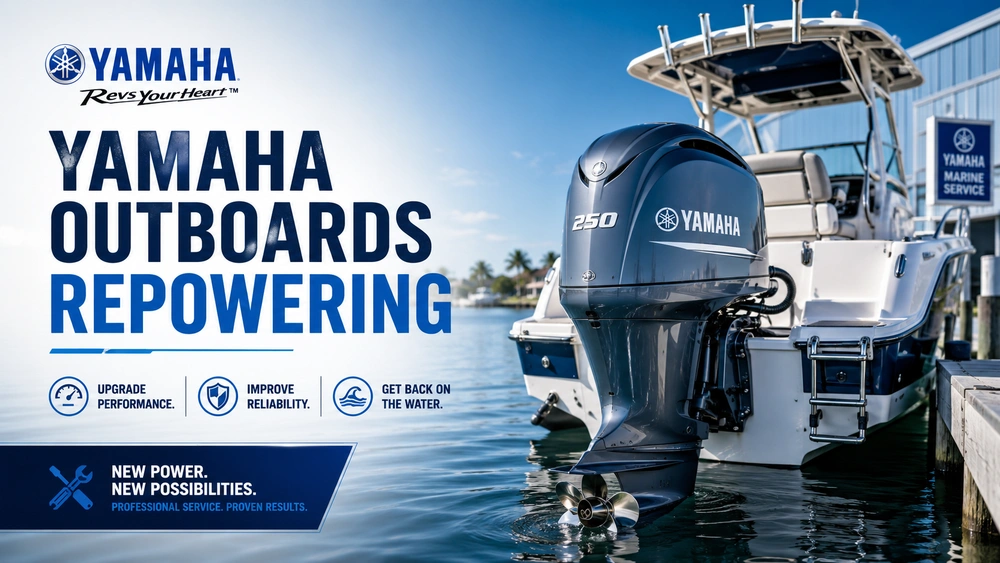
Yamaha Outboard Motors for Boat Repowering
Repowering your boat is one of the most practical ways to bring new life to a hull you already know and enjoy. Instead of replacing the entire boat, you upgrade the engine, rigging, controls, propeller, and supporting systems so the boat performs better, starts more confidently, and feels more current on the water.
That is why Yamaha outboard motors are such a strong choice for boat repowering. Yamaha offers a wide outboard lineup, strong dealer support, advanced control systems, propeller options, maintenance resources, and a long-standing reputation among boaters who care about dependability.
For boaters in VA, PA, MD, WV, and nearby areas, MotoMember can help compare your current boat, horsepower rating, use case, budget, Yamaha outboard options, rigging needs, financing, and service plan. Current availability can vary, so check MotoMember’s Yamaha outboard inventory or contact the team before making a final repower decision.
Why Repower Instead of Replacing the Boat?
Many boat owners love their hull. The layout works. The seating fits the family. The trailer is familiar. The boat fits the dock, lift, garage, marina slip, or favorite fishing routine.
The problem is often the motor.
An older outboard may be harder to start, less efficient, noisier, underpowered, or more expensive to maintain. It may also lack newer control options, updated instrumentation, and easier service support.
Yamaha’s own repowering guidance notes that a repower can make sense when an owner loves the existing boat and wants more reliability, especially when they plan to keep the boat long enough to enjoy the investment.
Advantage 1: Yamaha Offers a Broad Outboard Lineup
One reason Yamaha is ideal for repowering is range. Not every repower is the same.
A jon boat, pontoon, bay boat, center console, deck boat, aluminum fishing boat, and offshore-style hull all need different power. Yamaha’s engine comparison tool lists options across portable, midrange, inline-four, V6, V8 XTO Offshore, V MAX SHO, High Thrust, Jet Drive, and electric categories.
That gives repower shoppers more ways to match the engine to the boat instead of forcing the boat into a one-size-fits-all solution.
Matching the Motor to the Boat
Before choosing a Yamaha outboard, consider:
What is the boat’s maximum horsepower rating?
How many people do you usually carry?
Do you fish, cruise, tow, commute, guide, or run long distances?
Is low-speed control more important than top-end speed?
Do you boat on freshwater, brackish water, tidal water, rivers, or larger open water?
Our team can help you compare those answers against available Yamaha outboard options and your boat’s capacity plate.
Advantage 2: Yamaha Has Strong Midrange Repower Options
For many local boaters, the sweet spot is not the largest outboard available. It is the right midrange engine for the boat.
Yamaha’s 115, 90, and 75 hp Midrange outboards are positioned for mid-sized craft such as deck boats and multispecies boats, and Yamaha notes that select models offer a 25-inch shaft option for added versatility.
That makes Yamaha worth considering for family boats, fishing boats, older aluminum hulls, and many pontoons where dependable everyday power matters more than extreme horsepower.
Why Midrange Power Matters
A good midrange repower can improve the boating experience without overcomplicating it.
The goal is not always to chase maximum speed. Many shoppers want easier starting, smoother cruising, better control around the dock, improved confidence with passengers onboard, and a more predictable ownership experience.
That is where a dealership conversation matters. The right Yamaha outboard should fit the hull, not just the horsepower number you have in mind.
Advantage 3: Yamaha Inline-Four and V6 Options Fit Many Popular Boats
A large portion of repower conversations happen in the 150 to 300 horsepower range. These motors are popular because they can power many center consoles, pontoons, dual consoles, deck boats, bay boats, and larger fishing boats.
Yamaha’s 2.8L inline-four F150 and F200 models are compatible with Yamaha’s Helm Master EX boat control system, which can bring joystick maneuverability and automated functions to compatible setups.
Yamaha’s 4.2L V6 Offshore F300 and F250 models are also compatible with Helm Master EX, expanding those control options into larger repower applications.
Why That Matters During a Repower
Repowering is the perfect time to look beyond the engine itself.
Controls, steering, displays, propeller selection, battery condition, fuel system condition, and rigging layout all affect how the boat feels after the installation. A Yamaha repower can be planned as a full system upgrade instead of simply hanging a new motor on the transom.
That can make a major difference in docking confidence, throttle response, helm feel, and overall satisfaction.
Advantage 4: Yamaha Helm Master EX Adds Modern Control
Many boaters repower because they want the boat to feel newer. Yamaha’s Helm Master EX system is one of the clearest ways to modernize the helm when the boat and selected outboard are compatible.
Yamaha describes Helm Master EX features such as digital controls, Speed Control, Trim Assist, Neutral Hold, Autopilot functions, CL5 display integration, and compatibility with many digital Yamaha outboards from 2.8L to 5.6L, including F150 through XF450 applications.
Real-World Benefits
For family boaters, better control can make docking less stressful.
For anglers, integrated control features can make positioning and route management easier where equipped.
For pontoon owners, smooth digital control can make a larger boat feel more manageable around marinas, coves, and ramps.
Not every boat or budget needs every feature, but a repower gives you the chance to ask what your current helm is missing.
Advantage 5: Yamaha Propeller Support Helps Fine-Tune Performance
A repower is not finished until the propeller is right.
The wrong prop can make a new outboard feel sluggish, overworked, noisy, or inefficient. The right prop can help the motor reach its correct operating range, improve acceleration, support heavier loads, and make the boat feel more responsive.
Yamaha offers a wide propeller lineup, including Reliance stainless-steel propellers designed for high-horsepower inline-four outboards such as F150, F175, and F200, Talon SS for F70 through F115 applications, Talon Pontoon for pontoon control, aluminum options, painted stainless options, and Turbo propellers manufactured by Yamaha Marine Precision Propeller Industries.
MotoMember Repower Tip
Do not choose a propeller based only on what was on the old engine.
A new Yamaha outboard may have different gear ratio, torque characteristics, recommended RPM range, weight, and mounting needs. Our team can help you think through propeller selection as part of the complete repower package.
Advantage 6: Yamaha Maintenance Resources Support Long-Term Ownership
A repower should not end at delivery. Long-term ownership matters.
Yamaha says outboards operate in harsh environments and recommends staying on top of basic maintenance, including 100-hour engine and lower unit oil service, regular flushing, fuel filter replacement, corrosion prevention, and fuel treatment. Yamaha also lists 100-hour service kits for select models including F300, F200, F150, and F115.
That is a major advantage of choosing a well-supported brand. You are not just buying horsepower. You are buying into parts availability, service procedures, maintenance guidance, and dealer support.
Why Service Access Matters Locally
In Virginia, Pennsylvania, Maryland, West Virginia, and surrounding areas, boating seasons can feel short. Losing prime weekends to avoidable service issues is frustrating.
That is why MotoMember encourages repower shoppers to think about the service plan before the motor is installed. Oil changes, lower unit service, water pump service, fuel filters, battery condition, corrosion prevention, winterization, and seasonal prep should all be part of the ownership conversation.
MotoMember’s service page lists maintenance and repair support, routine inspections, fluid and filter changes, accessory installation, seasonal prep, and multiple store locations for customer support.
Advantage 7: Yamaha Warranty Support Adds Confidence
Warranty coverage is another reason Yamaha is attractive for repowering.
Yamaha’s FAQ explains that limited warranty length depends on model and type of use. It also states that the limited warranty for a new outboard starts at registration for the first owner after dealer inspection and online warranty registration.
That is important because a repower is a major investment. You want to know how warranty registration works, what coverage applies to the exact motor, and whether commercial or rental use changes coverage.
Ask Before You Buy
Before choosing a Yamaha outboard, ask:
What warranty applies to this exact model?
When does warranty coverage begin?
Is the motor being sold as new and unused?
What maintenance records should I keep?
Does my use count as pleasure, commercial, or rental?
Can Yamaha Extended Service options apply?
MotoMember can help you review the current Yamaha warranty details for the specific outboard you are considering.
Advantage 8: Repowering Can Improve Confidence and Resale Appeal
A clean, well-installed Yamaha repower can make a boat more appealing to own and easier to enjoy.
It may also help future buyers view the boat more positively, especially when the repower is documented with service records, proper rigging, correct propeller selection, and dealer support. That does not guarantee resale value, but it can make the ownership story stronger.
A boat with a tired engine can be hard to trust. A boat with a properly matched Yamaha outboard, clean controls, fresh rigging, and documented maintenance is easier to explain when the time comes to trade, sell, or upgrade.
Advantage 9: Yamaha Works Across Many Boating Styles
One of Yamaha’s strengths is versatility.
Pontoon owners may care about quiet cruising, passenger loads, low-speed control, and fuel range.
Anglers may care about reliability, trolling speed, electronics support, and hole shot.
Families may care about easy starting, towing capability, dock manners, and simple service.
Coastal boaters may care about range, corrosion prevention, charging output, and control in changing conditions.
Because Yamaha offers multiple outboard families, a repower can be tailored around how you actually boat instead of how a generic engine package was originally configured.
Do Not Skip the Capacity Plate
Repowering is exciting, but it has to be done correctly.
For many outboard-powered boats, the capacity plate includes maximum horsepower, maximum persons capacity, and maximum weight capacity. BoatUS explains that outboard boat capacity information includes maximum horsepower capacity along with person and weight limits.
That means you should not simply choose the biggest Yamaha outboard that fits physically. The boat’s rating, transom condition, steering system, weight capacity, insurance considerations, and safe operation all matter.
Before repowering, MotoMember recommends checking the capacity plate, boat manufacturer guidance, transom condition, steering compatibility, fuel system condition, and trailer setup.
New Yamaha Outboard vs. Repairing the Old Motor
Many shoppers ask whether they should repair their current outboard or repower with a new Yamaha.
The answer depends on the age of the motor, parts availability, repair cost, compression condition, corrosion, usage, hull value, and how long you plan to keep the boat.
Repair may make sense when the current motor is generally healthy and the issue is isolated. Repowering may make more sense when the old engine is unreliable, parts are difficult to source, repair estimates keep stacking up, or the boat deserves a more modern power package.
A good repower conversation should include both the emotional and financial side. If you love the boat and plan to keep it, a Yamaha outboard can make the boat feel renewed.
MotoMember Expert Tip
Before you shop Yamaha outboard motors for repowering, bring five things to the conversation: your boat make and model, current engine model, horsepower rating, transom height, and how you use the boat.
Photos help, too. Take pictures of the capacity plate, transom, steering, controls, gauges, battery area, fuel lines, and current propeller. Those details help the MotoMember team identify what may need to be reused, replaced, upgraded, or inspected.
A proper repower is not just “new motor, old boat.” It is a complete fitment and ownership decision.
Why Repower with MotoMember?
MotoMember helps boaters compare Yamaha outboard inventory, repower options, accessories, financing, trade-ins, and service needs with dealership-style guidance.
Our team can help you decide whether a Yamaha portable, High Thrust, Midrange, inline-four, V6, V MAX SHO, Jet Drive, or larger offshore-style outboard fits your boat and your use case. We can also help you think through propeller selection, controls, rigging, service intervals, and seasonal ownership support.
For boaters in VA, PA, MD, WV, and surrounding areas, that local support matters. You are not just buying an engine. You are choosing a team that can help before, during, and after the repower.
Large selection. Straightforward shopping. Real powersports and marine expertise.
Call to Action
Ready to repower your boat with Yamaha?
Contact MotoMember or visit the showroom to compare current Yamaha outboard motors, discuss your boat’s horsepower rating, explore financing, and plan the right repower package. Current availability, pricing, model year, and promotions can change, so check inventory or speak with the MotoMember team before visiting.
Stop dreaming. Start boating.
Conclusion
Yamaha outboard motors are an ideal choice for repowering because they combine broad model availability, strong midrange and high-horsepower options, modern control systems, propeller support, maintenance resources, warranty registration support, and dealer-backed ownership guidance.
The best repower is not always the biggest motor. It is the Yamaha outboard that fits your hull, your capacity plate, your boating style, your budget, and your long-term plans.
For boaters across Virginia, Pennsylvania, Maryland, West Virginia, and nearby areas, MotoMember can help you compare Yamaha outboard motors and build a repower plan that makes your boat more enjoyable for seasons to come.
FAQ
Is repowering with a Yamaha outboard worth it?
Yes, repowering with a Yamaha outboard can be worth it when you like your current boat but want improved reliability, easier starting, newer controls, better service support, or a more modern ownership experience. Yamaha notes that repowering often makes sense when the owner loves the boat and plans to keep it long enough to benefit from the upgrade.
How do I choose the right Yamaha outboard for my boat?
Start with the boat’s capacity plate, current horsepower, transom height, hull type, passenger load, and how you use the boat. Then compare Yamaha outboard families and rigging needs with a knowledgeable dealer. MotoMember can help match your boat to the right Yamaha repower option.
Can I put more horsepower on my boat when I repower?
Only if the boat is rated for it. Many outboard boats have capacity information that includes maximum horsepower, person capacity, and weight capacity. Do not exceed the boat’s rating without proper manufacturer guidance.
Does a Yamaha repower include controls and gauges?
It can, depending on the boat and package. A repower may involve the engine, propeller, controls, steering, gauges, wiring, fuel system updates, batteries, and related rigging. Yamaha’s Helm Master EX system can add modern control features on compatible digital outboard setups.
Can MotoMember help service my Yamaha outboard after repowering?
Yes. MotoMember offers maintenance and repair support, routine inspections, oil, fluid, and filter changes, accessory installation, and seasonal prep services. Contact the team to discuss Yamaha outboard service needs for your specific model.