
Jon Boat Blind Setup Ideas for Duck Season

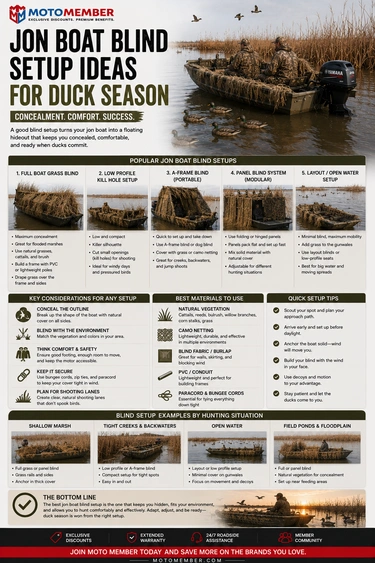
Jon Boat Blind Setup Ideas for Duck Season
A good jon boat blind can turn a simple aluminum boat into a practical, concealed, duck-season hunting platform. The right setup helps hide the boat, break up hunter movement, organize gear, protect your dog, and make early mornings in the marsh, creek, or backwater more efficient.
But the best jon boat blind setup is not always the tallest blind, the most expensive blind, or the one with the most accessories. It is the setup that fits your boat, your water, your hunting crew, your retriever, and the type of cover you hunt most often.
For hunters across Virginia, Pennsylvania, Maryland, West Virginia, and nearby areas, conditions can change from shallow marsh grass to wooded creek banks to open backwaters. A blind that works perfectly in tall reeds may stand out on a low mudflat. A blind that hides well in flooded timber may be too bulky for narrow creeks.
MotoMember helps hunters and outdoors-focused shoppers compare boats, trailers, motors, accessories, service needs, financing, and trade-ins. Current availability can vary, so start with MotoMember inventory or contact the team before planning your jon boat blind build.
Start With the Way You Actually Hunt
Before buying blind material or drilling into the boat, think about your normal hunting routine. A jon boat blind should be built around real use, not just photos of finished setups.
Many shoppers start by asking, “What is the best duck boat blind?” A better question is, “What blind lets me hunt safely, hide naturally, move efficiently, and still operate the boat?”
Key Questions Before Building
Ask yourself:
How many hunters usually ride in the boat?
Do you hunt with a retriever?
Do you sit, kneel, or stand to shoot?
Are you hunting marsh grass, creeks, timber, or open backwaters?
Do you need the boat for fishing after duck season?
How far do you run from the ramp?
Will the blind stay on year-round or come off after the season?
Where will decoys, batteries, fuel, blind bags, and safety gear go?
The answers shape the entire setup. A solo creek hunter may need a low, simple blind. A three-person duck crew with a dog and big decoy spread may need a stronger frame, more cover, and a more organized floor plan.
Choose the Right Blind Style
There are several practical ways to set up a jon boat blind. Each has advantages depending on your hunting area, budget, storage space, and how permanent you want the build to be.
Scissor-Style Boat Blind
A scissor-style blind is one of the most popular jon boat blind setups for duck season. It folds down for travel and flips up when you reach the hunting spot.
This design works well because it creates side cover along the length of the boat. It can also be dressed with grass mats, camo fabric, netting, or natural vegetation where allowed.
A scissor blind is a good fit for hunters who want:
Good side coverage
A familiar duck boat layout
Room for multiple hunters
A blind that can fold for transport
A setup that works in marshes and backwaters
The main thing to watch is height. A blind that is too tall can look boxy, especially in low cover. Keep the profile as low as practical while still giving hunters enough room to sit and move safely.
Flip-Open Blind
A flip-open blind uses panels or frames that fold inward or outward. Some hunters like this style because it can open quickly when birds commit.
This setup can be useful when the boat is used as the primary shooting platform. It also gives hunters a way to stay covered until the final moment.
Make sure any flip section opens smoothly with gloves on. It should not catch on shell bags, gun cases, grass mats, dog platforms, seats, throttle controls, or navigation lights.
Low-Profile Marsh Blind
A low-profile marsh blind is often the best choice when hunting low grass, mud edges, shallow flats, or open marsh pockets. Instead of building a tall wall around the boat, the goal is to keep the boat’s silhouette small.
This can be done with grass rails, camo netting, natural brush, low panels, and careful boat placement.
Low-profile blinds are especially useful when ducks are looking down into the spread. They help reduce the big rectangular outline that can make a jon boat obvious from above.
Removable Blind System
A removable jon boat blind is a strong option if the boat is also used for fishing, family recreation, scouting, or summer work. Removable systems can attach to rails, brackets, clamps, or receiver-style mounts.
The advantage is flexibility. You can hunt hard during duck season, then strip the boat back down when it is time to fish or travel light.
The downside is setup time. Removable blinds need to be easy enough that you will actually use them before daylight in cold weather.
Permanent Blind Build
A permanent blind can work well for a dedicated duck boat. It saves time and can be built around your exact hunting crew, seating, dog area, and decoy storage.
The tradeoff is versatility. A permanent blind adds weight, catches wind when trailering, and may make the boat less useful outside hunting season.
Before choosing a permanent setup, think about storage, garage clearance, towing height, and whether the blind will hold up to road vibration and winter weather.
Build Around Boat Layout First
A jon boat blind should not make the boat harder to use. The best setups hide the boat while keeping the interior simple and safe.
Keep the Driver Area Clear
The driver must be able to steer, shift, throttle, see forward, and respond quickly. Blind frames should not block motor controls, tiller movement, console access, fuel lines, or emergency movement.
This matters even more in cold, dark, windy conditions. Duck hunters often launch before sunrise and operate in low visibility, so the boat must remain easy to control.
Protect the Dog Zone
If you hunt with a retriever, plan the dog’s space before building the blind. The dog needs traction, visibility, and a clear path in and out of the boat.
Good dog-friendly blind ideas include:
A defined dog platform
A low entry point
Non-slip matting
A dog door or opening in the blind
Space away from fuel and battery areas
A cover panel that hides the dog without trapping it
A dog should not have to climb over decoy bags, blind frames, guns, or loose ropes to work.
Leave Room for Decoys
Decoys take up space fast. Your blind should not make loading, deploying, and retrieving decoys harder than necessary.
Keep decoy bags accessible. If the blind traps bags under seats or behind frame supports, the setup will become frustrating.
A simple interior plan may include one side for hunters, one side for decoys, and a defined space for the dog. The exact layout depends on the boat size, but the idea is the same: every item needs a place.
Concealment: Break Up Shape, Shine, and Movement
The goal of a jon boat blind is not just to cover the boat. It is to make the boat look like part of the landscape.
Ducks often pick up unnatural shapes, straight lines, glare, and movement. A good blind solves all four.
Break Up the Boat’s Outline
Straight edges are the enemy. Jon boats naturally have straight sides, square corners, and flat surfaces. Your blind should soften those lines.
Use irregular layers instead of one smooth wall. Grass mats, camo netting, brush straps, raffia, and local vegetation can help create depth.
Avoid building a perfect rectangle. Nature rarely looks that clean.
Match the Cover
For marshes, use grass tones, tan, brown, olive, and gray layers that match the season. For creeks and timber, darker brush, bark tones, and shadowed edges may work better.
For hunters in VA, PA, MD, and surrounding areas, cover may shift from green early-season vegetation to brown late-season grass and gray winter banks. A flexible base layer lets you adjust as the season changes.
Reduce Shine
Shiny hardware, bright aluminum, glossy paint, exposed brackets, and reflective decals can stand out in morning light. Use matte finishes where possible.
Look at the boat from a distance after setup. Walk around it at sunrise or sunset if possible. Low-angle light will reveal shine that is easy to miss in the garage.
Hide Movement
Even a well-brushed blind can fail if hunters move too much. Build enough interior cover to hide hands, faces, dogs, and gear movement.
Face masks, gloves, and darker interior surfaces can help. So can a blind height that lets hunters sit naturally without constantly adjusting.
Grassing and Brush Ideas
Grassing the blind is where many duck boats start to look finished. The trick is to make the boat match the area without adding too much weight or bulk.
Synthetic Grass Mats
Synthetic grass mats are convenient because they can be installed before the season and reused. They are useful for marsh hunters who want a consistent base layer.
Choose colors that match your local cover. Many hunters layer tan, brown, olive, and gray tones to avoid a flat, one-color look.
Raffia Grass
Raffia is popular because it is lightweight, flexible, and easy to blend. It can be zip-tied or clipped to netting, rails, or blind frames.
Mix colors instead of using one shade. Real marsh grass has variation, especially later in the season.
Camo Netting
Camo netting works well as a backing layer. It helps break up outlines and gives you a surface for adding grass or brush.
Avoid loose netting around the floor, dog area, or motor. It can snag boots, lines, dogs, or controls.
Natural Vegetation
Natural vegetation can be very effective when used legally and appropriately. Brush, grass, reeds, or branches from the area can help the boat blend into the exact spot.
Always verify property rules, hunting-area rules, and state regulations before cutting or collecting vegetation. Maryland DNR maintains waterfowl hunting resources for hunters in Maryland, and state agencies are the right place to verify current season and access details before hunting.
Frame Material and Mounting Ideas
The blind frame needs to be strong enough for the job without making the boat heavy, noisy, or hard to use.
Aluminum Tubing
Aluminum tubing is popular because it is lightweight and corrosion resistant. It can be a good choice for a clean, durable blind frame.
The challenge is fabrication. Depending on the design, aluminum may require more careful planning, hardware, or welding.
Conduit or Steel Tubing
Some DIY builders use conduit or steel tubing. It can be affordable and easy to source, but it may add weight and require extra corrosion protection.
Any metal frame should be painted or coated in a dull, non-glare finish.
PVC Frames
PVC is lightweight and easy to work with, but it may not be as durable in cold weather, heavy wind, or repeated trailering. It may work for a temporary or budget build, but serious hunters often prefer stronger frame materials.
Clamps, Brackets, and Rails
Mounts should be secure, quiet, and positioned where they do not interfere with normal use. Before drilling, test the blind position with seats, bags, guns, decoys, dog platform, and motor controls in place.
A common mistake is mounting the frame first and discovering later that it blocks storage, movement, or steering.
Seating and Shooting Lanes
Your jon boat blind must let hunters sit comfortably and shoot safely. Concealment matters, but it should not create awkward or unsafe movement.
Low Seating
Low seating helps keep the boat profile down. It also improves stability because hunters are not sitting high above the floor.
Options may include low swivel seats, bench cushions, folding seats, or layout-style seating depending on the boat and blind design.
Safe Shooting Zones
Plan where each hunter will sit and what direction each person can safely shoot. The blind should support clear shooting lanes without forcing hunters to swing across each other.
Do not let blind poles, doors, or grass panels block safe firearm handling.
Practice the Motion
Before opening day, sit in the blind with unloaded firearms and practice the movement. Check whether hunters can shoulder a gun smoothly, stand if needed, and avoid hitting the frame.
This test often reveals problems that are not obvious during the build.
Lighting for Early Morning Setup
Duck hunters often load, launch, and brush in before daylight. Interior lighting can help, but it should be subtle.
Interior LED Lights
Low-output waterproof LED lights can make it easier to find gear without flooding the area with light. Red, green, or dim white lighting may be useful depending on preference and setup.
Keep wiring protected from boots, dogs, decoy bags, and standing water.
Navigation Lights
Do not block navigation lights with blind frames or grass. Boats operating before daylight or after sunset may need proper lights depending on vessel type and conditions.
The U.S. Coast Guard notes that wearable personal flotation devices must be readily accessible and recommends wearing a USCG-approved life jacket or buoyancy aid while a vessel is underway. Virginia DWR also states that boats must carry one wearable U.S. Coast Guard-approved life jacket for each person onboard, in good condition and properly fitted.
Weather Protection vs. Visibility
A taller blind may feel warmer and more protected, but it can also reduce visibility and make the boat harder to hide. A lower blind may conceal better but expose hunters to more wind.
The right choice depends on where you hunt.
Windy Open Marshes
In windy marshes, a slightly higher wind-blocking side can improve comfort. Keep the top irregular and brushed well so it does not look like a wall.
Wooded Creeks
In creeks or timber, the boat can often use the bank, brush, or shadows for concealment. A lower blind may be enough if you tuck into cover properly.
Backwaters
Backwater hunting may require flexibility. Some days you may hide in grass. Other days you may sit against brush, stumps, or flooded timber. A modular blind with adjustable grassing can be useful.
Organize the Interior Around the Blind
A blind changes how the boat functions. It can make the boat feel smaller, so organization becomes more important.
Keep the Floor Clear
Loose lines, blind bags, shell boxes, and dog leads can become trip hazards. Use storage bins, mesh bags, clips, and tie-down points.
A clear floor is especially important when the blind is up because it limits movement and visibility inside the boat.
Use Dry Storage
Duck boats get wet. Use dry boxes or bags for phones, licenses, extra gloves, emergency clothing, first aid supplies, and other items that need protection.
Keep Emergency Gear Accessible
Do not bury life jackets, lights, tools, or first aid gear under grass mats and decoy bags. A blind setup should make the boat more useful, not harder to manage during an emergency.
MotoMember Expert Tip
Before committing to a jon boat blind setup, mock it up with temporary materials.
Use painter’s tape, cardboard, scrap PVC, clamps, or rope to outline the blind height and frame location. Then load the boat like a real hunt with seats, decoys, blind bags, dog space, fuel, batteries, and safety gear.
Sit in the boat. Reach for gear. Pretend to deploy decoys. Check the driver’s view. Let the dog move through its path. Practice opening the blind.
Many hunters discover that the first blind idea is too tall, too tight, or blocks something important. Testing the layout before drilling holes can save time, money, and frustration.
Simple Jon Boat Blind Setup Ideas
Here are practical blind concepts hunters can adapt based on boat size and hunting style.
The Minimalist Creek Setup
This setup works for hunters who tuck into creek banks or natural cover.
Use a camo-painted or camo-wrapped hull, low grass rails, brush clips, and a small amount of netting or raffia. Keep the profile low and rely on the bank, shadows, and natural brush.
Best for:
Solo or two-person hunts
Narrow creeks
Short runs
Hunters who also fish from the boat
Quick setup and teardown
The Marsh Grass Setup
This setup uses a folding frame with grass mats, raffia, or synthetic grass. It is designed to blend into reeds, cattails, marsh grass, or shallow backwater vegetation.
Keep the top irregular, use layered colors, and avoid one solid wall of grass.
Best for:
Marshes
Backwater grass edges
Two or three hunters
Hunters carrying decoy spreads
Duck boats used mainly during season
The Dog-Friendly Setup
This setup builds the blind around a retriever. One side or front corner includes a dog door, non-slip platform, and opening for entry and exit.
The dog is hidden but not trapped. The handler can reach the dog without climbing over gear.
Best for:
Retriever owners
Frequent retrieves
Cold-water hunts where dog safety matters
Hunters who need a clean interior layout
The Removable Multi-Use Setup
This setup uses clamps, removable brackets, or rail-mounted sections. The blind comes off after duck season so the boat can be used for fishing or recreation.
Best for:
Hunters who fish year-round
Shared family boats
Limited storage space
Buyers who want flexibility
The Dedicated Duck Boat Setup
This is a more complete build with a sturdy folding frame, grassing system, dog platform, interior lighting, dry storage, non-slip flooring, and organized decoy zones.
Best for:
Frequent duck hunters
Longer seasons
Multiple hunters
Larger decoy loads
Boats used primarily for hunting
Safety Considerations for Duck Boat Blinds
Duck-season boating can involve cold water, darkness, fog, wind, and heavy clothing. A blind should never compromise safety.
Do Not Block Exits
Hunters should be able to get out of the boat quickly. Blind doors, grass mats, and frames should not trap people inside.
Watch Weight Distribution
Blind frames, grass mats, batteries, decoys, and hunters add weight. Keep the boat balanced from side to side and bow to stern.
Test the boat fully loaded before hunting.
Secure Everything for Towing
A boat blind that works on the water still needs to survive the road. Tie down grass panels, folding sections, doors, and loose brush before towing.
Check Required Gear
Requirements can vary by state, vessel, motor, and waterway. Virginia DWR boating resources are a helpful official reference for equipment rules in Virginia, including life jacket requirements. Hunters in Maryland can review Maryland DNR’s waterfowl resources before planning hunts in that state.
How MotoMember Can Help
MotoMember can help outdoor customers compare boats, trailers, motors, accessories, financing options, trade-ins, and service support. That matters because a jon boat blind is only one part of the complete hunting setup.
Our team can help you think through:
Boat size and hull style
Trailer needs
Motor options
Accessory planning
Storage and layout
Service support
Financing options
Trade-in opportunities
New and used inventory
MotoMember’s own jon boat resources note that the team can help shoppers compare current inventory, accessories, financing options, and service support before making a decision.
Large selection. Straightforward shopping. Real powersports and marine expertise.
Call to Action
Ready to plan your jon boat blind setup for duck season? Browse current MotoMember inventory, contact the team, or visit a MotoMember location to compare boats, trailers, motors, and accessories.
For hunters across VA, PA, MD, WV, and surrounding areas, MotoMember can help you build a setup around your water, your dog, your decoy spread, and your long-term ownership needs.
Stop dreaming. Start riding — and get your duck boat ready before opening morning.
Conclusion
A great jon boat blind setup should hide the boat, protect movement, keep gear organized, and still allow safe operation. The best design depends on where you hunt, how many people are onboard, whether you use a dog, and how much you need the boat outside duck season.
Start with layout first. Keep the driver area clear. Plan dog space. Leave room for decoys. Break up straight lines. Avoid shine. Match the cover. Test the blind before drilling permanent mounts.
A simple, well-planned blind usually beats a complicated setup that is heavy, loud, crowded, or hard to use in the dark.
MotoMember can help hunters compare the full setup, from boats and trailers to accessories, service, financing, and trade-ins.
FAQ
What is the best jon boat blind setup for duck hunting?
The best setup depends on where you hunt. A scissor-style blind works well for many marsh and backwater hunters, while a low-profile grass rail setup may be better for creeks or low cover. The right blind should hide the boat without blocking steering, movement, dog access, or safety gear.
Should a jon boat blind be permanent or removable?
Choose a permanent blind if the boat is mainly used for duck hunting. Choose a removable blind if you also fish, scout, or use the boat recreationally outside the season. Removable blinds offer more flexibility, while permanent blinds can save setup time.
How tall should a duck boat blind be?
A duck boat blind should be tall enough to hide hunters while seated but low enough to avoid creating a boxy silhouette. Test the height before drilling mounts. The blind should match the surrounding cover and still allow safe shooting lanes.
What should I use to grass a jon boat blind?
Common options include synthetic grass mats, raffia grass, camo netting, brush straps, and natural vegetation where allowed. Use layered colors that match your local cover instead of one flat shade.
Can MotoMember help with jon boat blind accessories?
Yes. MotoMember can help shoppers compare boats, trailers, motors, accessories, service needs, financing, and trade-ins. Current availability can vary, so check inventory or contact the team for current options.