
How to Maintain Yamaha Outboard Motors

Introduction
One of the most common Yamaha outboard questions is simple: What maintenance does my Yamaha outboard motor need?
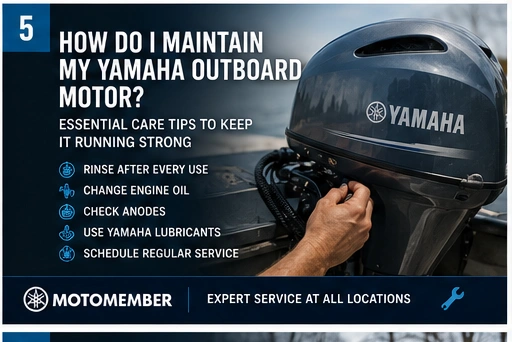
The best answer starts with your owner’s manual. Every model has specific service requirements. Still, most Yamaha outboard owners should understand the same core maintenance areas: oil, fuel, cooling, lower unit, propeller, battery, corrosion protection, and storage.
This guide gives boaters a practical overview of Yamaha outboard maintenance and when to call a professional.
Why Yamaha Outboard Maintenance Matters
Outboards live in a tough environment. Water, humidity, heat, high rpm, long storage periods, fuel aging, and corrosion can all take a toll.
Routine maintenance helps protect:
- Starting reliability
- Fuel efficiency
- Engine life
- Resale value
- Cooling performance
- Warranty confidence
- Safety on the water
Skipping maintenance may save a little money today but create expensive problems later.
Start with the Owner’s Manual
Your Yamaha owner’s manual is the first source for maintenance intervals, oil specifications, procedures, and warnings.
Yamaha owner manual resource: https://yamahaoutboards.com/owner-center/owners-manuals
Do not rely only on generic advice. A small portable motor and a larger midrange outboard may have different procedures and service requirements.
Engine Oil and Filter
Four-stroke Yamaha outboards require engine oil maintenance.
Oil protects internal parts, helps manage heat, and removes contaminants. Old oil can become acidic and less effective.
When to Change Oil
Follow the Yamaha maintenance schedule for your exact model. Many boaters think in terms of seasonal or hourly service, but your manual should guide the final decision.
A professional service department can also help if you are not comfortable changing oil yourself.
Lower-Unit Gear Oil
The lower unit contains gears that transfer power to the propeller. Gear oil protects those components under load.
Checking and replacing gear oil matters because water intrusion, metal particles, or low lubricant can lead to serious damage.
Warning Signs
Have the lower unit inspected if you notice:
- Milky gear oil
- Metal shavings
- Leaks around seals
- Impact damage
- Unusual noise
- Fishing line around the prop shaft
Fuel System Care
Fuel issues are one of the most common causes of outboard frustration.
Modern gasoline can degrade when it sits. Ethanol-blended fuel can attract moisture and create problems if neglected.
Fuel Tips
- Use fresh fuel
- Treat fuel when appropriate
- Avoid letting fuel sit untreated
- Inspect fuel lines
- Check primer bulbs
- Replace filters as scheduled
- Use approved products
Yamaha fuel-system maintenance resource: https://yamahaoutboards.com/maintenance-matters/fuel-fuel-system
Flushing the Cooling System
Flushing with clean water helps remove salt, sand, silt, and debris from the cooling system.
This is especially important after saltwater use, but freshwater boaters can also benefit when operating in muddy, sandy, or debris-heavy water.
Yamaha flushing resource: https://yamahaoutboards.com/owner-center/videos/care-maintenance/outboard-flushing-maintenance-matters
Propeller Inspection
Your propeller affects acceleration, rpm, speed, fuel economy, and handling.
Inspect it regularly for:
- Dings
- Bent blades
- Cracks
- Fishing line
- Hub issues
- Excess vibration
A damaged prop can reduce performance and put stress on the drivetrain.
Yamaha propeller resource: https://yamahaoutboards.com/maintenance-matters/propeller-solutions
Battery and Electrical Checks
Electrical problems can ruin a boating day quickly.
Check battery charge, terminals, cables, corrosion, and mounting security. Make sure accessories are not draining the battery between trips.
If your boat has multiple electronics, pumps, lights, or trolling equipment, make sure your charging setup is appropriate.
Corrosion Protection
Outboards operate in a corrosion-prone environment. Anodes, coatings, flushing, and cleaning all matter.
Inspect anodes and replace them when needed. Keep the motor clean, and pay attention to scratches or exposed metal.
Saltwater boaters should be especially proactive.
Winterization and Storage
If your boat will sit for an extended period, prepare it properly.
Storage prep may include fuel treatment, oil service, fogging or internal protection depending on model and guidance, lower-unit service, battery care, cleaning, and covering.
Yamaha winterization resource: https://yamahaoutboards.com/blog/maintenance/are-you-ready-for-winter
What Maintenance Can Owners Do Themselves?
Mechanically inclined owners may handle basic tasks, but some procedures should be performed by an authorized Yamaha dealer or trained technician.
Basic owner tasks may include visual inspections, flushing, cleaning, checking prop condition, and battery care.
More involved work may be better left to a professional, especially warranty-related service.
Why Service with MotoMember?
MotoMember supports customers across VA, PA, and MD with a strong customer experience and knowledgeable staff.
Whether you are buying a Yamaha outboard or maintaining one, having dealership support helps protect your investment.
Visit MotoMember: https://www.motomember.com
CTA: Keep Your Yamaha Outboard Ready
Do not wait until the first warm weekend to think about service. Contact MotoMember for Yamaha outboard inventory, service guidance, and ownership support.
Stop dreaming. Start riding.
Conclusion
Yamaha outboard maintenance is not complicated when you stay consistent.
Follow the manual, use the right products, keep fuel fresh, flush when needed, inspect the propeller, and handle storage properly.
A little preventive care can lead to more reliable weekends on the water.
FAQ
How often should I service my Yamaha outboard?
Follow your owner’s manual. Many boaters schedule service by hours, annually, or before seasonal storage.
Should I flush my Yamaha outboard after every use?
Flushing is especially important after saltwater use and helpful after dirty or debris-heavy water operation.
Can I change my Yamaha outboard oil myself?
Some owners can, but procedures vary by model. Warranty-related service and complex tasks should be handled by an authorized dealer.
What causes most outboard fuel problems?
Old fuel, moisture, ethanol-related issues, clogged filters, and neglected fuel systems are common causes.