
How to Find Polaris Ranger Parts

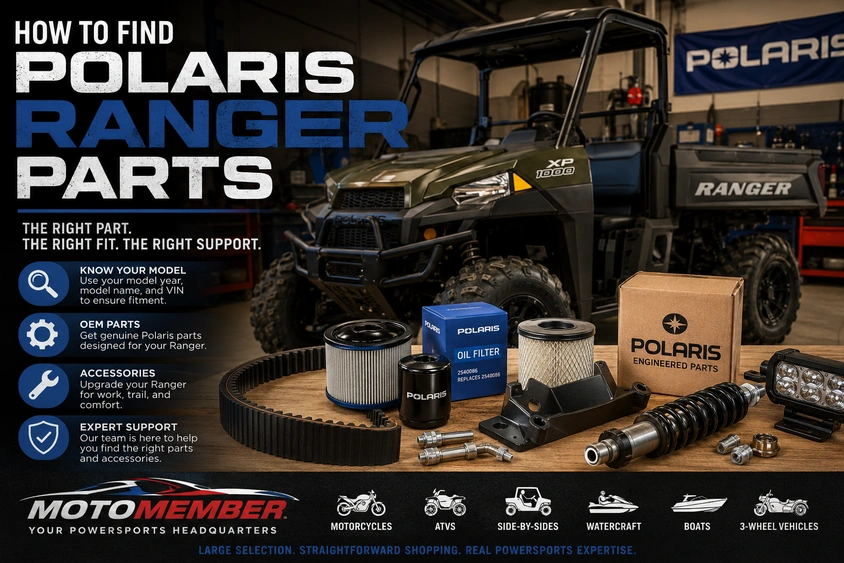
How to Find Polaris Ranger Parts
Finding the right Polaris Ranger parts should not feel like guesswork. Whether you use your Ranger for property work, trail riding, hunting, hauling, snow removal, or weekend exploring, the correct parts help keep your side-by-side dependable, safe, and ready for the next job.
Many shoppers start by asking, “How do I know which part fits my Polaris Ranger?” The answer usually comes down to three things: your model year, your exact Ranger model, and whether you need an OEM replacement part, maintenance item, accessory, or performance upgrade.
For riders in VA, PA, MD, and nearby areas, MotoMember can help you compare parts, check fitment, review accessories, and plan service support. Current availability can vary, so check MotoMember inventory or contact the team before ordering parts for a specific Ranger model.
Start With Your Exact Polaris Ranger Model
The Polaris Ranger lineup includes multiple model families, trims, engine sizes, seating configurations, and year-to-year updates. A part that fits one Ranger may not fit another, even if the vehicles look similar.
Before shopping, gather:
Your model year
Your full model name
Your VIN
Your engine size or trim package
Any installed accessories that may affect fitment
This is especially important for parts like belts, filters, brake components, body panels, windshields, doors, roof systems, winch mounts, plows, storage boxes, and electrical accessories.
Polaris provides online parts catalogs where owners can shop genuine Polaris Engineered parts and select the correct off-road vehicle category, including Ranger. Polaris also offers owner’s manuals by vehicle type, model year, and model.
Use Your VIN When Possible
Your VIN is one of the best tools for finding the right Polaris Ranger parts. It helps confirm the exact build, model year, and configuration.
This matters because many Ranger parts are model-specific. Even common maintenance items can vary across Ranger 570, Ranger 1000, Ranger XP 1000, Crew models, NorthStar editions, special editions, and older model years.
When you contact MotoMember, having your VIN ready can help the parts or service team narrow down fitment faster. It can also reduce the risk of ordering a part that looks close but does not install correctly.
Know the Difference Between OEM Parts and Accessories
When people search for Polaris Ranger parts, they may be looking for two different things: replacement parts or add-on accessories.
OEM Replacement Parts
OEM stands for original equipment manufacturer. For Polaris Ranger shoppers, OEM parts are designed to match the vehicle’s original specifications.
Common OEM-style replacement parts may include:
Drive belts
Air filters
Oil filters
Brake pads
Spark plugs
Suspension components
Body panels
Electrical components
Cooling system parts
Hardware and fasteners
OEM parts are often the right choice when restoring factory performance, handling routine maintenance, or replacing worn components.
Polaris Ranger Accessories
Accessories are add-ons that improve comfort, utility, protection, storage, or seasonal capability.
Common Ranger accessories include:
Windshields
Roofs
Doors
Rear panels
Winches
Plows
Cargo boxes
Lighting kits
Audio systems
Mirrors
Skid plates
Bumpers
Heaters for enclosed models
Cab storage solutions
Polaris provides accessory installation instructions that can be searched by part number or product name. That is helpful when you want to understand what is involved before installing an accessory.
Check the Owner’s Manual First
Your owner’s manual is one of the most useful resources for maintenance parts and service intervals. It can help you understand fluid types, inspection points, maintenance schedules, warnings, and basic ownership guidance.
Polaris allows owners to view and download manuals by selecting vehicle type, model year, and model.
Before choosing a part, consider whether the issue is a routine maintenance need or a symptom of a larger problem. For example, replacing a belt may solve normal wear, but repeated belt failure could point to clutching, operating conditions, installation issues, or another service concern.
MotoMember’s team can help you decide whether the part is a simple replacement or whether your Ranger should be inspected by a service technician.
Use the Polaris Parts Catalog
A parts catalog is especially useful when you need diagrams, part numbers, exploded views, or assembly-level details. Polaris offers online parts catalogs for its off-road products, including Ranger.
Parts diagrams can help you identify:
The exact component name
The surrounding hardware
How parts fit together
Whether clips, seals, bushings, or fasteners are also needed
Part numbers for model-specific components
This is important because the visible broken piece may not be the only item you need. A missing bushing, worn seal, damaged bracket, or single-use fastener can affect the repair.
Common Polaris Ranger Parts Owners Look For
Polaris Ranger owners usually shop for parts based on how they use the machine. A property owner who hauls firewood every week may need different support than a trail rider who runs rocky terrain or a hunter who adds storage and lighting.
Maintenance Parts
Maintenance parts are the foundation of Ranger ownership. These are the items that keep the vehicle running properly and help prevent avoidable wear.
Common maintenance parts include oil change kits, filters, spark plugs, belts, brake pads, fluids, grease, batteries, and tires.
If you are not sure which maintenance items your Ranger needs, start with your owner’s manual and then contact MotoMember with your VIN. Our team can help you compare options and discuss service scheduling.
Wear Parts
Wear parts are components that naturally degrade through use. Tires, brakes, belts, bushings, bearings, suspension parts, and steering components can wear faster depending on terrain, load, speed, weather, and maintenance habits.
For riders in Virginia, Pennsylvania, Maryland, and surrounding areas, local conditions can vary widely. Mud, rocks, wooded trails, farm lanes, gravel driveways, snow, and steep terrain can all affect wear patterns.
Utility and Work Accessories
Many Ranger owners choose accessories to make the machine more useful around the property. Winches, plows, cargo boxes, bed extenders, tool storage, lighting, and cab enclosures are popular for work-focused setups.
Before buying utility accessories, think about your real daily use. Are you hauling feed, firewood, tools, fencing supplies, hunting gear, or landscaping equipment? The right parts setup should match your workload, not just the way the vehicle looks.
Comfort and Weather Protection
Windshields, roofs, doors, rear panels, heaters, and wipers can make a Ranger more comfortable in changing weather. This is especially helpful for riders who use their Ranger year-round.
However, cab accessories must fit properly together. A windshield, roof, rear panel, and door kit may need to be compatible as a system. Ask MotoMember before mixing parts from different setups.
Trail and Protection Parts
Trail riders often look for skid plates, bumpers, rock sliders, mirrors, lighting, tires, recovery gear, and winches. These parts can improve confidence and utility, especially in rough terrain.
Safety still matters. The Recreational Off-Highway Vehicle Association promotes safe and responsible use of recreational off-highway vehicles, and its e-course reinforces risk factors and safe driving strategies.
Should You Install Polaris Ranger Parts Yourself?
Some Ranger parts are simple for experienced owners to install. Others are better handled by trained technicians.
A basic accessory may only require standard tools and careful instructions. A service-related repair involving brakes, steering, suspension, electrical systems, clutching, fuel systems, or driveline components may need professional attention.
Polaris offers accessory installation instructions for OEM accessories, which can help owners understand installation steps before starting.
Before choosing DIY installation, ask yourself:
Do I have the right tools?
Do I understand the instructions?
Could incorrect installation affect safety?
Will this require torque specs, calibration, or diagnostics?
Would a technician complete the repair more reliably?
When in doubt, contact MotoMember. Large selection. Straightforward shopping. Real powersports expertise.
Why Fitment Matters So Much
Fitment is the most important word in Polaris Ranger parts shopping. A part can be genuine, high-quality, and well-reviewed but still wrong for your specific Ranger.
Fitment issues can happen because of:
Model year changes
Crew vs. non-Crew configurations
Trim differences
Factory-installed packages
Cab systems
NorthStar or special-edition equipment
Electrical connector changes
Mounting-point differences
Aftermarket accessories already installed
This is why “Polaris Ranger parts” is only the starting point. The better search is “parts for my exact Polaris Ranger model and year.”
MotoMember can help verify fitment before you spend money on a part that may not work.
How to Shop for Polaris Ranger Parts Locally
Online catalogs are useful, but local dealership support can save time when you are unsure about fitment, installation, or service.
For riders in VA, PA, MD, and nearby areas, working with MotoMember gives you access to people who understand how customers actually use their machines. Some Ranger owners are maintaining acreage. Others are trailering to riding areas, working on farms, managing hunting land, or using a Ranger as a four-season utility vehicle.
A dealership team can help you:
Confirm your model and VIN
Look up OEM part numbers
Compare accessory options
Discuss installation requirements
Schedule service
Plan seasonal maintenance
Choose parts based on your actual use
Your Polaris Headquarters starts at MotoMember.
Questions to Ask Before Ordering Ranger Parts
Before buying parts, ask a few practical questions.
What problem am I trying to solve?
Are you replacing a broken part, improving comfort, preparing for winter, adding storage, increasing protection, or catching up on maintenance?
A clear goal helps narrow the options.
Is this part model-specific?
Many Ranger parts are not universal. Check fitment carefully and use your VIN when possible.
Do I need related hardware?
Small parts matter. Clips, gaskets, seals, brackets, bushings, bolts, and mounting kits may be required.
Will this accessory work with what I already have?
A windshield may need to work with your roof. Doors may need to work with your cab system. A plow may require a mount and winch. Lights may require wiring and switches.
Should service inspect the vehicle first?
If you are replacing parts because of noise, vibration, overheating, poor braking, hard starting, belt smell, warning lights, or steering issues, a diagnosis may be smarter than guessing.
MotoMember Expert Tip
When customers ask how to find Polaris Ranger parts, our first recommendation is simple: bring the VIN, a photo of the part, and a clear description of how you use the vehicle.
A photo helps identify damaged pieces, missing hardware, or accessory conflicts. Your use case helps the team recommend parts that fit your real needs. A Ranger used for snow plowing, farm chores, and winter cab comfort may need a different setup than a Ranger used mostly for summer trail riding.
Don’t Guess on Safety-Related Parts
Some parts affect safety directly. Brakes, tires, steering, suspension, seat belts, rollover protection components, lighting, and wheels should be selected and installed carefully.
The U.S. Consumer Product Safety Commission notes that OHV dangers include overturning, collisions, and occupant ejection.
That does not mean you should be afraid of your Ranger. It means you should maintain it properly, use appropriate safety gear, follow the owner’s manual, and avoid shortcuts on safety-related repairs.
Seasonal Polaris Ranger Parts Planning
Ranger parts needs often change with the season.
Spring
Spring is a good time to inspect fluids, filters, brakes, tires, suspension, battery condition, and trail accessories. Mud season can be hard on driveline and suspension components.
Summer
Summer riders often focus on cooling, dust protection, lighting, storage, tires, and comfort accessories. If you ride dry trails or dusty properties, air filter maintenance becomes especially important.
Fall
Fall is popular for hunting, property work, and cooler trail rides. Storage, lighting, winches, windshields, and cab accessories become more important.
Winter
Winter often brings plows, enclosed cab systems, heaters, batteries, tires, and winches into the conversation. If your Ranger helps with snow removal, prepare before the first storm.
Current availability can vary, so check MotoMember inventory or contact the team before the season changes.
Polaris Ranger Parts vs. Upgrading to a New Ranger
Sometimes parts shopping leads to a bigger question: should you repair, accessorize, or upgrade?
If your Ranger is dependable and fits your needs, parts and accessories may be the right move. But if you need more seating, better comfort, updated technology, more capability, or a different cab setup, it may be worth comparing current Polaris Ranger models.
MotoMember can help you evaluate your current unit, discuss trade-ins, compare new and used inventory, and review financing options. Stop dreaming. Start riding.
Internal Resources for Ranger Shoppers
For current inventory, dealership support, service questions, financing, trade-ins, and brand guidance, start at MotoMember.
You can also contact the MotoMember team directly to ask about Polaris Ranger parts, accessories, service appointments, and vehicle availability across Virginia, Pennsylvania, Maryland, and nearby areas.
Helpful External Resources
Polaris parts catalog: use official Polaris parts resources to identify OEM components and diagrams.
Polaris owner’s manuals: download the manual for your model year and vehicle.
Polaris accessory installation instructions: search instructions by part number or product name.
ROHVA safety resources: review off-highway vehicle safety education.
Call to Action
Need help finding Polaris Ranger parts that actually fit?
Contact MotoMember or visit the dealership team for help with OEM parts, accessories, service scheduling, trade-ins, financing, and Ranger ownership support. Our team can help you compare options, verify fitment, and choose parts based on how you ride, work, haul, tow, and explore.
For Polaris Ranger owners in VA, PA, MD, and surrounding areas, MotoMember is here to help before, during, and after the sale.
Conclusion
Finding the right Polaris Ranger parts starts with accurate information. Know your model year, exact model, VIN, and the job you want the part to do. Use official Polaris resources, review your owner’s manual, and avoid guessing when fitment or safety is involved.
MotoMember can help you identify parts, compare accessories, schedule service, and keep your Ranger ready for the next ride or workday.
FAQ
How do I know what parts fit my Polaris Ranger?
Start with your model year, exact model name, and VIN. Then use official Polaris parts catalogs or contact MotoMember for fitment help. This is the best way to avoid ordering parts that look similar but do not fit your specific Ranger.
Can MotoMember help me find Polaris Ranger parts?
Yes. MotoMember can help Polaris Ranger owners identify OEM parts, compare accessories, verify fitment, and discuss service installation. Bring your VIN and, when possible, photos of the part or area you are working on.
Should I buy OEM Polaris Ranger parts?
OEM parts are often the best choice when you want factory-style fit and replacement performance. For accessories, the right choice depends on your vehicle, budget, use case, and installation needs. MotoMember can help you compare options.
Where can I find a Polaris Ranger owner’s manual?
Polaris offers online owner’s manuals by vehicle type, model year, and model. Your manual is a helpful resource for maintenance items, inspection guidance, and ownership information.
Do I need service for Polaris Ranger parts installation?
It depends on the part. Some accessories may be manageable for experienced owners, while brakes, steering, suspension, electrical, driveline, and diagnostic repairs are often better handled by trained technicians. Contact MotoMember if you are unsure.