
How Safe Are Polaris Side by Sides?

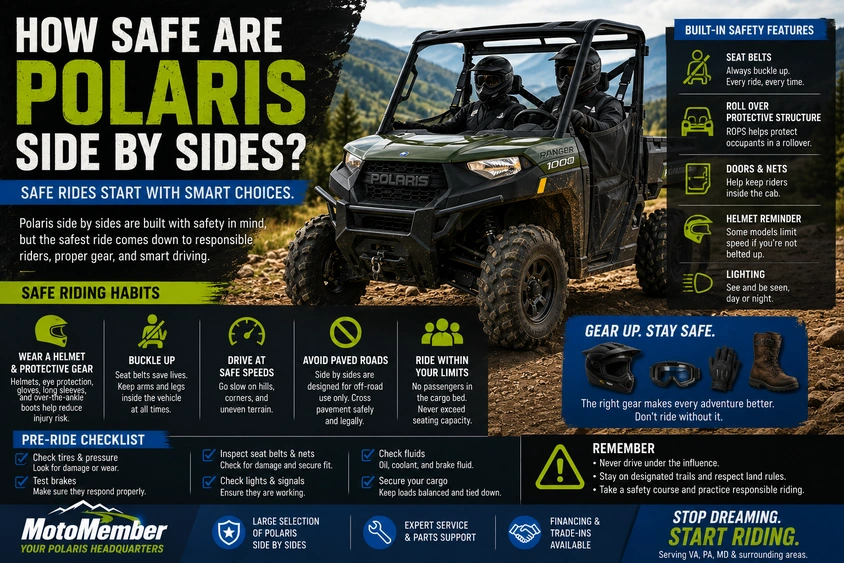
How Safe Are Polaris Side by Sides?
Polaris side by sides can be safe and capable off-road vehicles when they are operated correctly, matched to the rider’s experience level, maintained properly, and used with the right safety gear. They are built with features such as seat belts, protective structures, doors or nets depending on the model, occupant seating, lighting, and model-specific safety systems, but no side by side is safe if it is driven carelessly.
The most honest answer is this: a Polaris side by side is only as safe as the way it is used.
At MotoMember, many shoppers ask about side-by-side safety before choosing a Polaris Ranger, RZR, GENERAL, or XPEDITION. That is a smart question. These machines are powerful, useful, and fun, but they are not cars, trucks, golf carts, or toys. They are off-road vehicles designed for specific terrain, specific passenger limits, and responsible operation.
For riders in Virginia, Pennsylvania, Maryland, and nearby areas, a Polaris side by side may be used for property work, trail riding, hunting land, farm chores, weekend recreation, or family rides. Each use case brings different safety considerations. The right machine, proper gear, smart driving habits, and dealership guidance can all make ownership safer and more enjoyable.
Polaris Side by Side Safety Starts With the Driver
A side by side may feel familiar because it has seats, a steering wheel, foot pedals, and seat belts. That can make new owners feel comfortable quickly.
But a side by side does not handle like a car.
Recreational off-highway vehicles, often called ROVs or side by sides, are designed for off-road use. ROHVA says drivers should always fasten seat belts, wear helmets and protective gear, keep all body parts inside the vehicle, avoid paved surfaces except when safely and legally crossing, drive only in designated areas, use safe speeds, and never drive under the influence.
That guidance applies directly to how Polaris side by sides should be treated. The safety features matter, but driver behavior matters more.
Are Polaris Side by Sides Safer Than ATVs?
Polaris side by sides and ATVs have different safety profiles. One is not automatically safer in every situation.
A side by side usually gives riders a seated cockpit, seat belts, a rollover protective structure, steering wheel, passenger seating, and more space. An ATV gives the rider a smaller footprint and a more active riding position, but it also requires balance, body movement, and a different set of skills.
Side by sides may feel more stable because of their width and seating position, but they can still roll over, especially when driven too fast, turned sharply, used on slopes improperly, overloaded, or operated on terrain beyond the driver’s skill level.
The safer choice is the machine that fits the rider, terrain, passengers, and intended use.
Key Polaris Side by Side Safety Features
Seat Belts
Seat belts are one of the most important safety features in a side by side. The U.S. Consumer Product Safety Commission has identified seat belt use and occupant protection as important factors in reducing injuries during ROV rollover events.
Polaris owner resources for a 2025 Ranger 1000 note that the vehicle includes a helmet and seat belt reminder, and that the vehicle may be limited to 15 mph if the seat belt is not secured.
That is a strong reminder for owners: the belt is not optional. Every rider should be buckled every time.
Rollover Protective Structure
Polaris Ranger owner manual resources identify the vehicle’s rollover protective structure, often referred to as ROPS, along with seat belts, seat belt inspection, and cab nets where equipped.
A rollover protective structure is designed to help protect the occupant area when used with seat belts and proper riding behavior. It does not make the vehicle rollover-proof. It also does not help if occupants are unbelted, leaning out, hanging arms outside the vehicle, or riding in cargo areas.
Doors, Nets, and Occupant Barriers
Depending on the model, Polaris side by sides may include doors, nets, shoulder barriers, hip barriers, or other occupant retention features. CPSC notes that ROV safety discussions have included seat belt reminders, leg and foot barriers, shoulder and hip barriers, and arm and hand barriers to help restrict occupant movement during rollover events.
These features are there for a reason. Use them properly. Do not remove doors, ride with nets unsecured, or allow passengers to place arms or legs outside the vehicle.
Speed-Limiting and Reminder Systems
Some Polaris models include reminders or systems that encourage proper safety behavior. As noted above, a 2025 Ranger 1000 owner manual says the helmet and seat belt lamp reminds riders to wear a helmet and seat belt, and the vehicle may be limited to 15 mph when the seat belt is not secured.
Features can vary by model and year, so always review the owner’s manual for your exact unit.
Lighting and Visibility
Good lighting helps riders see and be seen, especially around properties, wooded areas, trails, and low-light conditions. But lights do not replace safe speeds or situational awareness.
If you use your side by side during early mornings, hunting season, dusk, or property work, talk with the MotoMember team about lighting accessories, mirrors, and visibility upgrades that fit your model.
What Makes a Polaris Side by Side Unsafe?
Driving Too Fast for Conditions
Speed is one of the biggest risks. A side by side can feel planted until terrain, turns, slopes, ruts, rocks, or loose surfaces change the situation quickly.
Safe speed depends on terrain, visibility, passengers, load, driver experience, and weather. A comfortable speed on a flat open path may be too fast in woods, mud, gravel, or uneven ground.
Not Wearing Seat Belts
Side-by-side occupants should wear seat belts every time. CPSC has highlighted the importance of seat belt use in rollover injury mitigation, and ROHVA lists seat belt use as a core safety rule.
Never assume a short ride around the property is safe without buckling up. Many incidents happen close to home or during routine use.
Not Wearing a Helmet
ROHVA recommends helmets and protective gear for ROV drivers and passengers.
A roof or roll cage does not replace a helmet. Helmets, eye protection, gloves, boots, long sleeves, and long pants all help reduce injury risk.
Riding on Pavement
ROHVA says ROVs are designed to be operated off-highway and should avoid paved surfaces except when safely and legally crossing.
Side by sides are not designed to handle like passenger vehicles on pavement. Paved surfaces can increase traction in ways that make turning and rollover behavior more dangerous.
Overloading the Vehicle
Every Polaris side by side has limits for passengers, cargo, towing, and accessories. Exceeding those limits can affect braking, steering, suspension, center of gravity, and stability.
Do not guess. Check the owner’s manual and labels on your specific vehicle.
Carrying Passengers in the Cargo Bed
The CPSC says never to have more passengers than there are seat belts and never carry passengers in cargo beds.
This is one of the simplest safety rules to follow. If there is no proper seat and seat belt, that person should not ride.
Ignoring Maintenance
Safety is not only about driving. Brakes, tires, steering, suspension, seat belts, lights, fluids, and wheel hardware all matter.
A poorly maintained side by side may not stop, steer, or respond properly when conditions change.
Polaris Ranger Safety Considerations
A Polaris Ranger is often chosen for work, property use, hunting, and utility tasks. That means it may carry tools, supplies, passengers, sprayers, firewood, feed, fencing materials, or hunting gear.
The safety priorities for a Ranger shopper usually include:
Proper passenger seating
Cargo weight limits
Towing limits
Seat belt use
Stability on slopes
Safe speeds with loads
Accessory installation
Brake and tire condition
Visibility during work
A Ranger can be an excellent property machine, but owners should treat it like a real off-road vehicle, not a casual yard cart.
Polaris RZR Safety Considerations
A Polaris RZR is usually chosen for sport riding and trail performance. That means speed, terrain, suspension, and driver skill become even more important.
RZR shoppers should think carefully about experience level, trail width, helmet use, harness or seat belt habits, passenger readiness, and whether the machine fits the terrain they actually ride.
A performance side by side should never be selected only because it looks exciting online. Fit, training, riding location, and maturity matter.
Polaris GENERAL Safety Considerations
A Polaris GENERAL sits between utility and recreation for many shoppers. It may be used for trails, property tasks, camping, hunting, and weekend rides.
That versatility is useful, but it also means owners may switch between work and recreation. Loads, passengers, speed, and terrain can change from one ride to the next.
Before choosing a GENERAL, consider how often you will carry gear, how often passengers ride, and whether your riding style is more utility-focused or sport-focused.
Polaris XPEDITION Safety Considerations
Adventure-style side by sides can encourage longer rides and more gear-heavy trips. That adds safety considerations like route planning, fuel planning, weather, communication, recovery gear, storage, lighting, and passenger comfort.
Longer rides are not only about the machine. They are about preparation.
Safety Gear Every Side by Side Owner Should Consider
Helmet
Everyone in the vehicle should wear a properly fitted helmet. ROHVA recommends helmet use for ROV drivers and passengers.
Eye Protection
Dust, branches, mud, bugs, and debris can create problems quickly. Goggles or proper eye protection are smart even when the vehicle has a windshield.
Gloves
Gloves help with grip and hand protection, especially during colder rides, muddy use, and longer trail days.
Boots
Over-the-ankle boots provide better protection than sneakers or sandals. Footwear matters around mud, rocks, tools, cargo, and uneven ground.
Long Sleeves and Long Pants
Protective clothing helps reduce scrapes, sun exposure, brush contact, and debris impact.
Safety Tips for Families
Side by sides are popular with families because passengers can ride together. That is also why safety habits need to be clear before the first ride.
Only carry passengers in designated seats with seat belts. Do not let children ride in cargo beds. Make sure passengers can sit correctly, keep their feet planted, remain belted, and keep hands and arms inside.
ROHVA says ROVs are not toys and advises that drivers should be at least 16 and have a valid driver’s license.
Parents should also consider helmets, supervision, speed, terrain, and whether a child is physically and mentally ready to ride as a passenger.
Safety Tips for Property Owners
Many side-by-side incidents happen during everyday property use because routine trips feel low-risk.
For riders in VA, PA, MD, and nearby areas, property use may include hills, gravel lanes, pastures, woods, wet grass, mud, creek crossings, snow, or uneven ground. These surfaces can change quickly with weather.
Before using a side by side for property work:
Walk unfamiliar terrain first
Use low speeds near people or animals
Avoid steep sidehills when possible
Secure cargo
Do not exceed passenger limits
Use lights in low visibility
Inspect brakes and tires
Wear your seat belt every ride
The safest property owners are usually the ones who do not get casual just because they know the land.
Safety Tips for Trail Riders
Trail riding adds variables such as other riders, blind corners, rocks, ruts, water, dust, tight turns, elevation changes, and changing trail conditions.
Drive at a speed that allows you to stop within your visible distance. Leave space between vehicles. Use hand signals or communication when appropriate. Never assume the trail ahead is clear.
Ride only where permitted, follow posted rules, and avoid riding beyond your skill level.
Safety Tips for Hunting Use
Hunters often use side by sides early in the morning, after dark, in remote areas, or while carrying gear.
That makes lighting, storage, communication, speed, and passenger discipline especially important. Secure firearms and equipment properly, follow all applicable laws and land rules, and avoid mixing fatigue, darkness, and rushed driving.
A side by side can be a helpful hunting tool, but it still requires the same safety habits as any other off-road ride.
Safety Tips for Accessories and Modifications
Accessories can improve comfort and usability, but they should be chosen carefully.
Roofs, windshields, doors, mirrors, winches, plows, heaters, lighting, audio systems, cargo boxes, and larger tires can all change how a side by side is used. Some may affect weight, visibility, electrical demand, clearance, or handling.
Before adding accessories, ask:
Does this fit my exact model?
Will it affect weight or balance?
Will it affect visibility?
Will it interfere with safety features?
Was it installed correctly?
Does it change maintenance needs?
MotoMember can help shoppers choose accessories that match the vehicle and intended use.
Maintenance Is a Safety Issue
A safe side by side is a maintained side by side.
Before riding, inspect:
Tires and tire pressure
Brakes
Steering feel
Seat belts
Lights
Fluids
Suspension
Wheel hardware
Cargo security
Doors or nets
Battery condition
Leaks or unusual noises
A short pre-ride inspection can prevent a small issue from becoming a dangerous one.
MotoMember Expert Tip
Before buying a Polaris side by side, think about your least experienced passenger.
Many shoppers choose based on the driver, but real-world safety often depends on everyone in the vehicle. A spouse, child, friend, worker, or hunting partner may be less familiar with off-road riding. That affects how much power, seating, protection, visibility, and comfort you should prioritize.
Our team can help you compare Polaris Ranger, RZR, GENERAL, and XPEDITION models based on how you actually plan to ride. We can also talk through helmets, accessories, service, financing, trade-ins, and model availability.
Current availability can vary, so check MotoMember inventory or contact the team before visiting.
Are Polaris Side by Sides Good for Beginners?
They can be, but the right model matters.
A new owner may feel more comfortable in a side by side than on an ATV because the controls feel familiar. But comfort should not lead to overconfidence.
Beginners should start with easy terrain, low speeds, no aggressive maneuvers, and a clear understanding of seat belts, helmets, braking, turning, slopes, and passenger rules.
ROHVA offers safety information and driver guidance for recreational off-highway vehicles, including rules for seat belts, helmets, paved surfaces, designated riding areas, and responsible operation.
Should You Take a Side by Side Safety Course?
Yes, training is a smart idea, especially for new owners, families, younger drivers, or anyone moving from ATVs, motorcycles, cars, or trucks into side-by-sides.
Instruction helps riders understand how ROVs handle, how to turn properly, how to manage slopes, how to use safety features, and how to avoid common mistakes.
Even experienced riders can benefit from reviewing safety basics.
Call to Action
Have questions about Polaris side-by-side safety, model selection, accessories, or ownership? Visit MotoMember to compare current Polaris inventory, talk with a knowledgeable team, review financing options, and get practical guidance before you buy.
MotoMember serves powersports customers across Virginia, Pennsylvania, Maryland, and nearby areas with Polaris side by sides, service support, accessories, trade-in help, and long-term ownership guidance.
Your Polaris headquarters starts at MotoMember. Large selection. Straightforward shopping. Real powersports expertise.
Start at MotoMember.com or contact the team to compare Polaris Ranger, RZR, GENERAL, and XPEDITION options.
Conclusion
So, how safe are Polaris side by sides? They can be safe, useful, and confidence-inspiring when used responsibly, maintained correctly, and operated with proper gear and training.
The safest Polaris side-by-side owners wear helmets, buckle seat belts, keep arms and legs inside, avoid paved-road use, drive at safe speeds, respect passenger limits, maintain the vehicle, and choose a model that matches their terrain and experience.
For riders in VA, PA, MD, and surrounding areas, MotoMember can help you compare Polaris side by sides, understand ownership basics, choose accessories, and make a smarter long-term decision.
Stop dreaming. Start riding safely.
FAQ
Are Polaris side by sides safe?
Polaris side by sides can be safe when operated responsibly, maintained properly, and used with seat belts, helmets, protective gear, and correct passenger limits. Like any off-road vehicle, they can be dangerous when driven too fast, overloaded, used on improper terrain, or operated without safety gear.
Do you need to wear a helmet in a Polaris side by side?
ROHVA recommends that ROV drivers and passengers wear helmets and other protective gear. A roof or rollover protective structure does not replace a helmet.
Are seat belts required in a Polaris side by side?
Every rider should wear a seat belt every ride. ROHVA lists seat belt use as a core ROV safety rule, and CPSC safety materials emphasize seat belt use and occupant protection in ROVs.
Can kids ride in a Polaris side by side?
Children should only ride when they can sit properly in a designated seat, wear the seat belt correctly, keep feet planted, wear proper protective gear, and keep their body inside the vehicle. Never carry passengers in the cargo bed.
Where can I compare Polaris side by sides near VA, PA, or MD?
MotoMember serves riders across Virginia, Pennsylvania, Maryland, and surrounding areas with Polaris side-by-side inventory, financing help, accessories, trade-ins, and service support. Visit MotoMember.com or contact the team for current availability.