
Fishing Jon Boat Storage: How Much Do You Need?

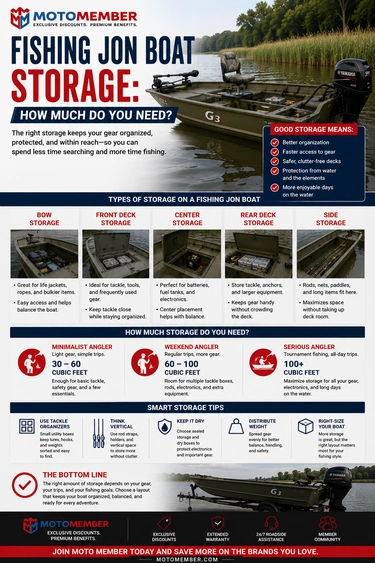
How Much Storage Do You Need in a Fishing Jon Boat?
The right amount of fishing jon boat storage depends on how you fish, how many people you bring, and how much gear comes with you every trip.
A bass angler carrying six rods, tackle trays, a trolling motor battery, electronics, and a cooler needs a different layout than a crappie angler with long rods and bait gear. A catfish angler may need more open floor space for anchors, rod holders, bait, and coolers. A duck hunter who also fishes may need storage that works for rods in spring and decoys in fall.
G3 Gator Tough jon boats give shoppers several storage paths. The G3 20 SC, for example, includes under-seat storage, side rod holders, bow storage, a livewell, and wide open areas for casting and movement. The G3 20 CC uses a center console with upright rod holders for six rods, a 14-gallon livewell under the seat, and a 31-gallon divided bow livewell with side storage.
For shoppers in VA, PA, MD, WV, and nearby areas, MotoMember can help compare G3 layouts, Yamaha power, trailers, accessories, financing, service, and long-term ownership support.
Quick Answer: How Much Storage Do You Need?
Most fishing jon boat buyers need enough storage for five categories: rods, tackle, safety gear, batteries/electronics, and trip gear.
For casual fishing, a small bow storage box, rod holders, one tackle area, and space for a cooler may be enough. For serious fishing, you may want bow storage, under-seat storage, side rod storage, lockable compartments, tackle tray storage, battery space, livewell access, and a clean open deck.
| Fishing Style | Storage Priority |
|---|---|
| Pond fishing | Small tackle, PFDs, anchor, battery, rods |
| Bass fishing | Rod storage, tackle trays, electronics, trolling motor batteries |
| Crappie fishing | Long rod space, tackle trays, bait storage, electronics |
| Catfishing | Rod holders, anchor storage, cooler space, bait gear |
| River fishing | Secured storage, rod protection, safety gear, anchor system |
| Fishing and hunting | Open floor space, removable storage, gear flexibility |
| Family fishing | PFD access, dry storage, snacks, clothing, extra seats |
A good rule: buy enough storage to keep the deck clear, but not so much built-in storage that the boat loses its open utility.
Why Storage Matters More Than Shoppers Think
Storage is not just about convenience. It affects safety, comfort, and how well the boat fishes.
Loose gear creates problems fast. Rods get stepped on. Tackle bags slide. Anchor rope tangles. Batteries take up walking space. Life jackets get buried. Coolers block livewell lids. Passengers trip over nets, tools, or loose tackle boxes.
A fishing jon boat should feel open, but not empty. The best setups give every important item a dedicated place while still leaving room to stand, cast, move, net fish, and reach safety gear.
Many shoppers compare horsepower first. Experienced anglers often compare deck flow first.
Start With Your Real Gear List
Before choosing a jon boat, write down everything you normally bring.
Include rods, tackle boxes, soft plastics, hooks, line, pliers, landing net, anchor, rope, life jackets, throwable device, battery, charger, trolling motor, fish finder, cooler, rain gear, snacks, phone, tools, dock lines, and spare clothing.
Then add the items you bring on longer trips. That might include extra fuel, bait, a second battery, a larger cooler, spare rods, night lights, a first-aid kit, or hunting gear.
This is the easiest way to avoid underbuying storage. A boat that looks roomy at the dealership can feel crowded once your real fishing day is loaded onboard.
Rod Storage: The First Priority
Rod storage should be planned early because rods are long, fragile, and easy to damage.
Bass anglers may carry several casting and spinning rods. Crappie anglers may carry long rods that need extra room. Catfish anglers may use heavier rods that need secure holders. River anglers may need rods stowed before running shallow water.
G3 center-console layouts are helpful for anglers who want built-in rod organization. The G3 18 CC includes side rod storage and six upright rod holders at the console, along with a center-console livewell and space for optional electronics.
Side-console layouts can also work well because they keep more interior space open. The G3 20 SC includes side rod holders along with under-seat storage and bow storage, making it a strong layout for anglers who carry multiple rods.
Tackle Storage: Built-In vs Portable
Tackle storage depends on how organized you like to be.
Built-in tackle trays are great because they keep gear secure and reduce clutter. Portable tackle bags are flexible because you can load only what you need for the day. Many anglers use both.
The G3 18 SC is a useful example because G3 highlights bow storage, under-seat storage, and tackle trays in front of the console. That gives anglers dedicated storage without turning the whole boat into a closed-compartment layout.
For a multi-species angler, portable storage may be smarter. You can bring bass tackle one weekend, crappie gear the next, and catfish tackle for a night trip without permanently filling the boat with the wrong gear.
Battery and Electronics Storage
Batteries need secure, planned storage.
A trolling motor battery, starting battery, electronics battery, and onboard charger can take up more space than expected. Battery placement also affects weight balance, shallow-water performance, and how the boat handles under load.
Electronics need clean mounting locations, protected wiring, and access to power. G3’s 18 SC and 20 SC list Humminbird electronics options and Minn Kota trolling motor options, which shows why battery and electronics planning should happen before final rigging.
Do not treat batteries like loose cargo. They should be secured, accessible, protected, and easy to charge after a fishing trip.
Safety Gear Storage
Safety gear needs storage, but it also needs access.
The U.S. Coast Guard says federal law generally requires a Coast Guard-approved wearable life jacket in good condition and proper size for each person onboard, and boats greater than 16 feet must carry a Coast Guard-approved throwable device, except canoes and kayaks. Pennsylvania also requires a throwable device for boats 16 feet or more, and it must be immediately available.
That means your life jackets and throwable device should not be buried under tackle, coolers, batteries, or decoy bags.
A good fishing jon boat setup keeps safety gear reachable from the cockpit. Use storage that protects gear, but do not hide it so well that nobody can grab it quickly.
Cooler and Livewell Space
Coolers and livewells both affect storage.
A cooler can take up valuable floor space, especially on smaller jon boats. A livewell adds water weight when full and may use storage volume that could otherwise hold tackle or gear.
The G3 20 CC has two livewell locations: a 14-gallon livewell under the console seat and a 31-gallon divided bow livewell with side storage. The G3 20 SC takes a different approach, combining a side-console layout with under-seat storage, bow storage, side rod holders, and a livewell.
Bass and crappie anglers may value livewell access more. Catfish anglers may prioritize cooler placement and open floor space. Match the layout to the way you actually handle fish.
Anchor and Rope Storage
Anchor storage is easy to overlook until the first windy day.
A loose anchor can damage the boat, tangle lines, or create a tripping hazard. Anchor rope should be stored in a bucket, bag, compartment, or dedicated area where it can deploy cleanly.
Catfish anglers and river anglers should pay special attention here. Anchoring near current, ledges, channel edges, or structure requires a cleaner setup than simply tossing an anchor under a bench.
A good storage plan gives the anchor a home and keeps rope away from feet, rods, hooks, and prop or jet areas.
Dry Storage vs Open Storage
Dry storage is great for phones, wallets, registration paperwork, spare clothing, first-aid supplies, and tools.
Open storage is better for wet gear, anchors, decoys, bait buckets, rope, and items you need to grab often. Not every compartment needs to be sealed or lockable. In fact, too much closed storage can make a jon boat feel less flexible.
The best fishing jon boat usually has a mix: dry storage for essentials, rod storage for protection, tackle organization for efficiency, and open deck space for real fishing movement.
Lockable Storage: When It Matters
Lockable storage is useful if you carry electronics, rods, tackle, tools, or personal items and the boat is parked at a ramp, hotel, campsite, dock, or storage area.
It is less important if you fish short trips, unload everything after each use, or keep the boat in a secure garage.
Do not choose a boat only because it has more lockable compartments. Choose it because the compartments match the way you carry gear. A lockable box in the wrong spot is less useful than open storage in the right spot.
How Much Storage for Bass Fishing?
Bass anglers usually need more rod and tackle storage than they think.
A normal bass setup may include five to eight rods, soft plastics, hard baits, jigs, terminal tackle, line, pliers, a landing net, a trolling motor battery, electronics, rain gear, and a cooler.
The G3 18 CC is a strong bass-friendly layout because it offers side rod storage, upright rod holders, optional electronics space, and two livewells. The G3 20 CC adds more room and a larger bow layout, including a divided bow livewell with side storage.
Bass anglers should prioritize rod protection, tackle tray access, bow space, and electronics visibility.
How Much Storage for Crappie Fishing?
Crappie anglers need storage for long rods, small tackle, bait, electronics, and seating comfort.
A crappie setup may include jig boxes, plastics, floats, hooks, minnows, multiple long rods, rod holders, a landing net, trolling motor batteries, and electronics. Long rods can make a small boat feel crowded quickly.
Side-console boats often work well for crappie because they leave the middle of the boat more open. The G3 18 SC and 20 SC are strong examples because both emphasize open fishing space and organized storage.
For spider-rigging or long-line trolling, choose more open storage and fewer obstacles.
How Much Storage for Catfishing?
Catfish anglers need storage differently.
Rod holders, anchors, anchor rope, bait, coolers, heavy tackle, gloves, towels, lights, and landing nets often matter more than small tackle trays. Night fishing adds more gear: headlamps, navigation lights, backup batteries, warm clothing, and food.
A 20-foot side-console jon boat can be an excellent catfish platform because it keeps the interior open. The G3 20 SC’s wide open areas, under-seat storage, side rod holders, bow storage, livewell, and console courtesy light make it a practical catfish-friendly layout.
Catfish storage should focus on open floor space, rod-holder layout, anchor organization, and cooler placement.
How Much Storage for River Fishing?
River anglers need secure storage.
Rods should not bounce around while running. Tackle should be contained. Batteries should be secured. Anchors and safety gear should be easy to reach. If the water is rocky or shallow, loose gear can become a real problem.
The G3 18 CCJ Jet Jon includes port-side rod holders and an optional trolling motor path for precise, quiet fishing control, making it a useful example for shallow-water anglers who still need deck organization.
For river fishing, storage should be simple, secure, and low-clutter. You want gear to stay put when the boat hits current, wakes, or shallow-water chop.
How Much Storage for Fishing and Hunting?
Fishing-and-hunting buyers should avoid over-specialized storage.
Permanent fishing storage can get in the way during duck season. Permanent hunting storage can get in the way during fishing season. Removable boxes, flexible rod holders, open deck space, and modular accessories can be smart.
MotoMember’s G3 resources note that jon boat buyers often add accessories such as trolling motors, batteries, chargers, fish finders, anchors, rod holders, lighting, flooring, covers, storage boxes, and safety gear. Planning those accessories early helps shoppers choose the right model and budget more accurately.
If your boat has to fish in spring and hunt in fall, flexibility may be more valuable than maximum built-in storage.
Storage by Boat Size
A 16-foot jon boat may be enough for simple fishing, small water, and light gear.
A 17-foot jon boat gives more room for console layouts, rod storage, tackle, and a partner.
An 18-foot jon boat is often the best balance for anglers who want real storage without stepping into a larger towing and storage footprint.
A 20-foot jon boat makes sense if you fish with more people, carry more rods, use more electronics, run bigger water, or need room for catfish, crappie, or mixed-use gear.
Bigger storage is helpful only if you can still tow, store, launch, and clean the boat comfortably.
MotoMember Expert Tip
Before choosing a fishing jon boat, pack your gear at home like you are leaving for a full day.
Put rods, tackle, cooler, batteries, anchor, PFDs, net, rain gear, electronics, tools, and personal items in one place. Then sort them into three groups: must be reachable, can be stored, and can stay home.
Many shoppers think they need more storage. What they really need is better storage discipline.
Our team can help you compare G3 side-console, center-console, Loose Jon, Package Jon, and Jet Jon layouts based on your real gear load.
Regional Buying Advice for VA, PA, MD, WV, and Nearby Areas
For anglers in Virginia, Pennsylvania, Maryland, West Virginia, and nearby areas, storage needs can vary by water and season.
Small-lake anglers may need simple tackle and rod storage. River anglers may need secure compartments and anchor organization. Crappie anglers may need long-rod planning. Catfish anglers may need cooler and night-fishing storage. Duck hunters who also fish may need open floor space and removable storage.
MotoMember is a full-service powersports and marine dealership group serving shoppers through sales, financing, service, and parts support. Current availability can vary, so check MotoMember inventory or contact the team before planning around one exact G3 configuration.
Safety Considerations
Storage should make the boat safer, not just cleaner.
Do not overload compartments. Do not block walkways. Do not bury safety gear. Do not let tackle, batteries, coolers, or rope slide around the deck.
Virginia DWR states that operators of motorboats with a 10 hp or greater engine need to take a boating safety course. Before launching, check life jackets, throwable device, navigation lights, anchor storage, battery security, and weather.
A well-organized jon boat is easier to fish from and easier to operate safely.
Call to Action
Your G3 Gator Tough Headquarters starts at MotoMember.
Explore current G3 availability, compare storage-friendly jon boat layouts, and talk with the MotoMember team about Yamaha power, trailers, rod storage, tackle storage, livewell needs, electronics, trolling motors, batteries, accessories, financing, trade-ins, service, towing, and storage.
Large selection. Straightforward shopping. Real powersports and marine expertise.
Stop dreaming. Start riding—and boating—with MotoMember.
Conclusion
So, how much storage do you need in a fishing jon boat?
You need enough storage to keep rods protected, tackle organized, batteries secured, safety gear reachable, anchors controlled, and the deck clear. You do not need so much storage that the boat loses the open, practical layout that makes a jon boat useful in the first place.
For many anglers, an 18-foot side-console or center-console G3 Gator Tough offers the best balance. For heavier gear loads, a 20-foot G3 20 SC or 20 CC may make more sense. For custom setups, a G3 Loose Jon can be built around your exact storage needs. For shallow river fishing, a G3 Jet Jon should keep storage secure and simple.
MotoMember can help shoppers in VA, PA, MD, WV, and nearby areas compare G3 storage layouts and choose a fishing jon boat that fits their water, gear, trailer, storage space, and season.
FAQ
How much storage does a fishing jon boat need?
A fishing jon boat needs enough storage for rods, tackle, safety gear, batteries, electronics, anchors, cooler space, and personal items. The right amount depends on your fishing style and how many people you bring.
Is more storage always better in a jon boat?
No. Too much built-in storage can reduce open floor space. The best jon boat storage keeps gear organized while preserving room to stand, cast, move, and fish safely.
Which G3 jon boat has good storage for fishing?
The G3 20 SC is a strong storage-friendly option with under-seat storage, side rod holders, bow storage, livewell space, and wide open areas. The G3 20 CC adds upright rod holders, two livewells, and bow side storage.
What storage matters most for bass fishing?
Bass anglers should prioritize rod storage, tackle trays, electronics space, trolling motor battery storage, livewell access, and a clean bow deck.
How do I compare G3 jon boat storage at MotoMember?
Check MotoMember inventory or contact the team directly. Availability, model year, motor package, trailer setup, colors, accessories, pricing, and incoming units can change by season and location.