
Best Fishing Boat Storage Features

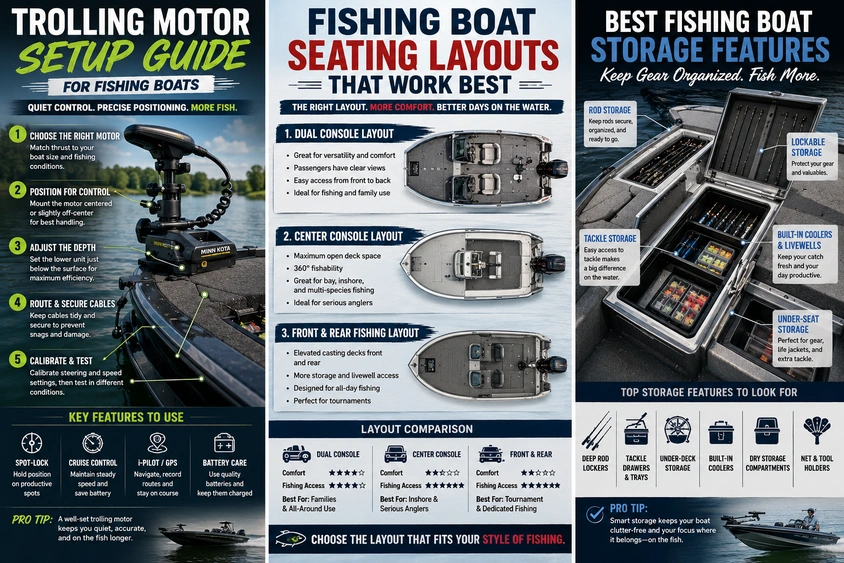
Best Fishing Boat Storage Features for Tackle and Gear
The best fishing boat storage features do more than keep your boat looking clean. They help you fish more efficiently, move safely, protect expensive gear, and enjoy the water without digging through clutter every time you need a lure, net, life jacket, or tool.
Storage is one of the easiest features to overlook when shopping for a fishing boat. Many buyers focus first on length, horsepower, color, price, or seating. Those things matter, but storage affects every trip.
A great fishing boat should have practical places for rods, tackle boxes, soft plastics, life jackets, batteries, anchors, dock lines, tools, coolers, rain gear, electronics, cleaning supplies, and family items. The right layout depends on how you fish, where you fish, and who rides with you.
MotoMember helps anglers across Virginia, Pennsylvania, Maryland, West Virginia, and nearby areas compare fishing boats, G3 Boats, SunCatcher pontoons, trailers, outboard packages, accessories, financing, trade-ins, parts, and service support. MotoMember lists dealership locations in Purcellville, VA; Manassas, VA; and Chambersburg, PA.
Why Storage Matters in a Fishing Boat
Fishing boats collect gear quickly.
A bass angler may bring several rods, multiple tackle trays, soft plastics, rain gear, electronics, culling tools, and a landing net. A crappie angler may carry long rods, jig boxes, bait containers, extra line, live bait, and electronics. A catfish angler may bring anchors, ropes, bait coolers, rod holders, lights, gloves, big nets, and heavy tackle.
Weekend anglers and families add even more: snacks, towels, sunscreen, life jackets, extra clothing, dock lines, phone bags, coolers, and kids’ gear.
Without smart storage, all of that ends up underfoot. That creates frustration and can also create safety issues when people step over rods, loose tackle, anchor rope, or open bags.
The best storage layout keeps gear protected, easy to reach, and out of the way.
Start With How You Fish
Before comparing storage compartments, think about your fishing routine.
Do you fish bass, crappie, catfish, panfish, or multiple species? Do you fish alone or with a partner? Do you bring family? Do you carry long rods? Do you use live bait? Do you fish at night? Do you launch on small lakes, rivers, backwaters, or larger reservoirs?
A tournament-style bass angler may prioritize rod lockers and tackle compartments. A river angler may care more about open deck space, anchor storage, and easy cleanup. A family angler may need life jacket storage, cooler space, and dry compartments for personal items.
G3’s lineup includes several fishing and recreation categories, including Sportsman, Angler V, Gator Tough Jon, Bay, and SunCatcher pontoon options, which gives shoppers different storage layouts to compare.
Rod Storage: Protect the Gear You Use Most
Rod storage is one of the most important fishing boat storage features.
Rods are long, awkward, and easy to damage. Loose rods on the deck can create trip hazards, broken tips, tangled line, damaged guides, and frustration when the bite turns on.
A good rod storage setup should protect rods while running, trailering, and storing the boat. It should also make it easy to grab the next setup without digging.
Rod Lockers
Rod lockers are ideal for anglers who carry multiple setups. They keep rods contained and protected when the boat is underway.
When comparing rod lockers, ask:
How many rods can it hold?
What rod lengths fit?
Is the locker easy to open with other gear on deck?
Does it protect reels and rod tips?
Is it lockable?
Can rods be stored rigged or only broken down?
G3’s 2026 Sportsman 1610 page lists port-side rod storage that holds six rods, and its model page also highlights bow storage and side tackle tray storage on that specific model.
Side Rod Storage
Side rod storage can be useful on smaller fishing boats or layouts where a full center rod locker is not practical. G3’s 2026 Sportsman 1810 PFX page highlights side rod storage with a port-side rod locker on that model.
For anglers who switch techniques often, side storage can keep rods accessible without leaving everything loose on the floor.
Open Rod Storage
Some jon boats and utility layouts may rely on more open rod storage or aftermarket rod holders. That can work well, especially for river anglers, catfish anglers, and buyers who want a simpler layout.
The key is planning. Loose rods should still have a safe place to go while running, launching, and trailering.
Tackle Storage: Keep Lures and Small Gear Organized
Tackle storage can make or break a fishing day.
Hooks, jigs, crankbaits, plastics, sinkers, floats, weights, swivels, pliers, line, scents, and tools all need a home. If your tackle system does not match the boat, you will spend more time searching and less time fishing.
Tackle Tray Storage
Built-in tackle tray storage is helpful because it gives boxes a designated place. This keeps compartments cleaner and makes it easier to sort gear by species, season, or technique.
Bass anglers may organize by lure type. Crappie anglers may separate jigs, plastics, floats, and live-bait gear. Catfish anglers may need space for hooks, sinkers, leaders, floats, tools, and scent-proof containers.
When comparing boats, bring the dimensions of your tackle boxes or take note of what size trays you use. Not every compartment fits every storage system.
Quick-Access Storage
Not all tackle belongs deep in a compartment.
Your most-used gear should be reachable. Think pliers, scissors, line, favorite jigs, sunscreen, fish grips, measuring board, and a towel.
A good boat has a balance of deep storage and quick-access storage. Deep storage protects gear. Quick-access storage keeps you fishing.
Dry Storage: Protect Personal Items and Soft Gear
Dry storage matters for phones, wallets, registration documents, spare clothing, rain gear, towels, camera equipment, and snacks.
No boat storage should be assumed completely waterproof unless the manufacturer specifically says so, but better compartment design can help protect gear from spray, rain, and normal boating mess.
When shopping, open the storage lids and look closely. Check whether compartments have raised lips, gasketed lids, drainage channels, or simple open bins. Ask how the storage handles rain, washdown, and normal freshwater use.
For family boating, dry storage becomes even more important. Kids and guests bring more items than anglers expect.
Bow Storage: Keep the Deck Clear
Bow storage is valuable because many anglers spend a lot of time fishing from the front deck.
A clean bow makes casting, using a trolling motor, landing fish, and moving around easier. Storage near the bow can hold tackle, life jackets, tools, anchor gear, or smaller bags, depending on layout.
G3’s Sportsman 1610 model page highlights large item bow storage designed to keep the deck clear on that specific boat.
That is the goal for any good fishing boat storage layout: keep the areas where you stand and fish as clear as possible.
Under-Seat Storage: Useful but Easy to Overload
Under-seat storage can be helpful for life jackets, towels, small bags, dock lines, and family gear. It is especially useful on boats where deck compartments are limited.
The downside is that under-seat storage can become a catch-all. If everything gets thrown under the seats, it may become hard to find what you need.
Use under-seat storage intentionally. Keep safety gear accessible, separate wet and dry items, and avoid packing it so tightly that passengers cannot use the seating comfortably.
Livewell and Cooler Storage
Livewells and coolers are not the same as storage compartments, but they affect storage planning.
A livewell can hold fish or bait. A cooler may hold food, drinks, bait, ice, or harvested fish depending on the trip. Both take space and affect how people move through the boat.
G3’s Sportsman 1810 PFX page lists a bow livewell with a split lid on that model, while the Sportsman 1610 page lists a stern livewell with side tackle tray storage.
When comparing boats, ask where the cooler will go. A cooler that blocks the walkway, livewell lid, or fishing position will become annoying quickly.
Battery and Charger Access
Battery storage is not exciting, but it matters.
Fishing boats may carry starting batteries, trolling motor batteries, onboard chargers, electronics power, and related wiring. Good battery access makes inspection, charging, replacement, and service easier.
Ask where the batteries are located and how easy they are to reach. Can you check terminals? Can you remove a battery without taking half the boat apart? Is there room for the charger? Is wiring protected?
MotoMember’s service resources include maintenance, repair support, accessory installation, battery service, and seasonal prep, which can help shoppers plan the full ownership setup before and after purchase.
Anchor and Rope Storage
Anchor storage is especially important for river anglers, catfish anglers, panfish anglers, and family boaters who stop in coves or near shore.
Anchor rope can become a trip hazard if it is not contained. Wet rope can also make compartments messy.
Look for a practical anchor locker or dedicated storage area. If the boat does not have one, ask how anchor gear can be stored safely.
For river anglers, anchor access matters even more because current can make boat positioning part of the fishing strategy.
Net, Paddle, and Tool Storage
Large items are often the hardest to store.
A landing net, paddle, push pole, boat hook, spare prop, basic tool kit, first-aid kit, and emergency gear all need a place. If they do not have a home, they usually end up loose on the floor.
Before buying, list your long and bulky items. Then step into the boat and identify where each one will go.
This is where showroom comparisons are valuable. A boat may look spacious online but feel crowded once real gear is included.
Lockable Storage
Lockable storage can be useful for rods, tackle, electronics, documents, and personal items.
It is especially helpful if the boat will be stored outside, parked at a marina, used on travel trips, or trailered with gear onboard. Lockable storage is not a replacement for common-sense security, but it can add convenience and peace of mind.
Ask which compartments lock and which do not. Also ask whether electronics are removable or permanently mounted.
Storage for Safety Gear
Safety gear should never be buried.
Life jackets, throwable devices where required, fire extinguishers where required, sound devices, first-aid supplies, navigation lights, dock lines, and emergency tools should be easy to access.
A storage layout that hides safety gear under heavy tackle boxes is not practical. When choosing a boat, decide where safety equipment will live before the first trip.
G3 owner resources include boating safety and laws information, owner manuals, warranty information, and boating tips, which can help owners review equipment and operating guidance.
Storage for Family Trips
A fishing boat used by family needs more storage than a fishing-only boat.
Family gear may include towels, snacks, sunscreen, extra clothing, water bottles, kids’ life jackets, phone bags, swim gear, rain jackets, and trash bags. That gear needs to coexist with rods and tackle.
A SunCatcher pontoon may offer more passenger-focused space for relaxed family days, while a Sportsman, Angler V, or Gator Tough Jon may better support fishing-first storage needs. G3’s site lists SunCatcher pontoons alongside its fishing boat categories, giving families several directions to compare.
Storage Differences by Boat Type
Different boat types solve storage differently.
Jon Boats
Jon boats often emphasize open space and simplicity. That can be great for anglers who want flexible gear placement, easy cleanup, and utility use.
The tradeoff is that some jon boats may have fewer built-in compartments than more finished fishing boats. Buyers may need to plan rod holders, tackle bags, anchor storage, and aftermarket solutions more carefully.
G3’s Gator Tough Jon Series includes Package Jon, Tunnel Jon, and Loose Jon options, with Package Jon models offered as boat, motor, and trailer packages.
Aluminum Multi-Species Boats
Aluminum multi-species boats often offer a strong balance of rod storage, tackle storage, seating, livewell access, electronics space, and family usability.
This category is a strong fit for anglers who fish bass, crappie, catfish, panfish, and mixed freshwater.
Deep-V Fishing Boats
Deep-V boats may offer more comfort and storage for bigger water, longer days, and family passengers. They can be useful for anglers who want more protection and a more confident feel on larger lakes or reservoirs.
Fishing Pontoons
Fishing pontoons can offer excellent passenger and comfort storage, especially for family recreation. The tradeoff is that fishing-specific rod and tackle storage may vary widely by model and layout.
New vs. Used Boat Storage Inspection
Storage inspection is especially important when shopping used.
Open every compartment. Check lids, hinges, latches, carpet, drainage, odors, moisture, cracks, stains, wiring, and signs of mildew. Look for soft spots around storage areas and make sure lids close securely.
Check rod lockers for length, interior condition, and moisture. Check tackle compartments for broken trays or missing inserts. Check battery compartments for corrosion or poor wiring.
A used boat can be a smart purchase, but storage condition tells you a lot about how the boat was cared for.
MotoMember Expert Tip
Bring your gear list before you shop.
You do not need to bring every rod and tackle box to the showroom, but you should know what you carry. Count your rods. Note rod lengths. List your tackle boxes, cooler size, anchor gear, life jackets, electronics, batteries, charger, net, rain gear, and family items.
Then compare boats around your real equipment.
Many shoppers ask, “How much storage does it have?” A better question is, “Does this storage fit the way I fish?”
The MotoMember team can help you compare layouts, storage access, rod lockers, livewells, battery compartments, trailer needs, accessories, financing, trade-ins, and service support around your actual fishing routine.
Why Compare Fishing Boats at MotoMember
MotoMember gives anglers in VA, PA, MD, WV, and surrounding areas a regional dealership resource for comparing fishing boat storage layouts in person.
That matters because storage is hard to judge from photos alone. You need to open compartments, stand on the deck, check rod locker length, imagine cooler placement, and see how the layout feels with passengers and gear.
MotoMember supports shoppers with new inventory, used inventory, service, parts, accessories, financing resources, and straightforward contact options.
Large selection. Straightforward shopping. Real powersports and marine expertise.
Your fishing boat search starts at MotoMember.
Call to Action
Ready to compare the best fishing boat storage features for tackle and gear?
Contact MotoMember or visit the team in Purcellville, Manassas, or Chambersburg to compare current fishing boat inventory, G3 Boats, Sportsman models, Gator Tough Jon boats, Angler V options, SunCatcher pontoons, trailers, outboard packages, accessories, financing, trade-ins, parts, and service support.
Tell the team how you fish, what gear you carry, how many people ride with you, and where you launch most often.
MotoMember can help you choose a fishing boat layout that keeps your rods protected, tackle organized, deck clear, and trips easier from launch to cleanup.
Stop dreaming. Start riding — and boating — with MotoMember.
Conclusion
The best fishing boat storage features are the ones that fit your real fishing life.
Rod lockers protect expensive gear. Tackle compartments keep lures organized. Dry storage protects personal items. Bow storage clears the deck. Battery access simplifies service. Anchor storage improves safety. Cooler and livewell planning keeps the cockpit usable. Family storage makes weekend boating more enjoyable.
Before choosing a boat, compare the full layout, not just the number of compartments. Open every lid. Picture your rods, tackle, safety gear, cooler, batteries, anchor, net, electronics, and passengers onboard.
For anglers across Virginia, Pennsylvania, Maryland, West Virginia, and nearby areas, MotoMember can help make the buying process clearer with practical dealership guidance and current inventory support.
FAQ
What storage features matter most in a fishing boat?
The most important fishing boat storage features include rod lockers, tackle compartments, dry storage, battery access, anchor storage, livewell or cooler space, safety gear storage, and room for bulky items like nets and rain gear.
How much rod storage do I need?
It depends on how you fish. Bass anglers may carry many technique-specific rods, while panfish or weekend anglers may carry fewer. Count your normal rods and note their lengths before comparing rod lockers.
Is dry storage important on a fishing boat?
Yes. Dry storage helps protect phones, wallets, registration documents, clothing, towels, rain gear, and personal items. No compartment should be assumed waterproof unless specified, so ask how each storage area is designed.
What should I check in used boat storage compartments?
Check for odors, moisture, stains, cracks, broken hinges, loose latches, mildew, soft spots, poor drainage, wiring issues, and rod locker damage. Open every compartment before buying.
Can MotoMember help with fishing boat storage accessories?
Yes. MotoMember can help shoppers compare current fishing boat inventory, storage layouts, accessories, parts, service, financing, trade-ins, and ownership support. Ask about rod holders, tackle organization, covers, batteries, chargers, safety gear, and trailer accessories for the exact boat you are considering.