
2027 Yamaha R9 Detailed Guide

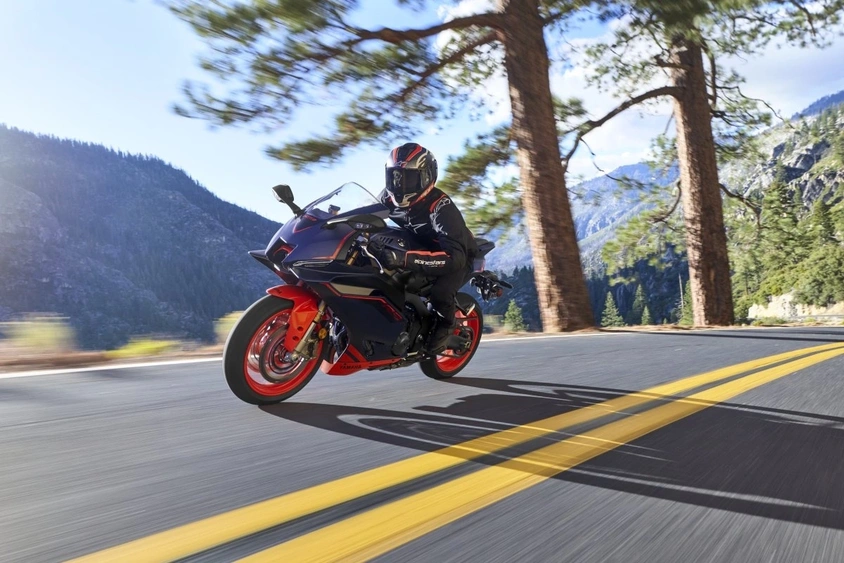
Explore the 2027 Yamaha2027 Yamaha R9 in Detail
The 2027 Yamaha YZF-R9 is Yamaha’s modern middleweight supersport built around the brand’s 890cc CP3 three-cylinder engine. It is designed to sit between the more approachable YZF-R7 and the higher-performance YZF-R1/R1M class, giving riders a serious sportbike with track capability, strong street usability, advanced electronics, and true R-Series styling.
Yamaha’s U.S. site currently lists the 2027 YZF-R9 with an 890cc liquid-cooled DOHC inline-three engine, 430-pound wet weight, 32.7-inch seat height, 55.9-inch wheelbase, KYB fully adjustable suspension, Brembo Stylema front calipers, a six-axis IMU, and a full rider-aid package.
What Is the 2027 Yamaha R9?
The R9 is Yamaha’s answer to the changing supersport market. Instead of chasing only high-rpm 600cc race-replica performance, Yamaha built the R9 around the larger, torquier CP3 platform. That means it should appeal to riders who want real-world pull, modern electronics, track-day capability, and aggressive R-Series design without jumping straight to a literbike.
Yamaha describes the R9 as a new breed of performance street bike with supersport capability and rider-friendly accessibility. The bike uses a dedicated supersport chassis, advanced electronics, and R-Series bodywork wrapped around the 890cc CP3 engine.
For MotoMember shoppers in VA, PA, MD, and nearby areas, the R9 is the type of motorcycle that could make sense for experienced street riders, weekend canyon/backroad riders, and track-day customers who want something more serious than an R7 but more manageable than an R1.
2027 Yamaha R9 Key Specs
Category 2027 Yamaha YZF-R9
Engine 890cc liquid-cooled DOHC inline 3-cylinder
Valvetrain 4 valves per cylinder
Bore x Stroke 78.0mm x 62.1mm
Compression Ratio 11.5:1
Fuel Delivery Fuel injection with YCC-T
Transmission 6-speed
Clutch Assist & Slipper clutch
Final Drive Chain
Front Suspension 43mm KYB inverted fork, fully adjustable
Rear Suspension KYB single shock, fully adjustable
Front Brakes Dual 320mm hydraulic discs with ABS
Rear Brake 220mm hydraulic disc with ABS
Front Tire 120/70ZR17 Bridgestone Battlax Hypersport S22F
Rear Tire 180/55ZR17 Bridgestone Battlax Hypersport S22R
Seat Height 32.7 in
Wheelbase 55.9 in
Wet Weight 430 lb
Fuel Capacity 3.7 gal
Estimated Fuel Economy 48 MPG
Warranty 1-year limited factory warranty
Specs above are from Yamaha’s U.S. 2027 YZF-R9 specifications page. Yamaha notes that MSRP does not include tax, title, prep, or destination charges, and that wet weight includes fluids and a full tank of fuel.
Engine: 890cc CP3 Triple
The heart of the 2027 Yamaha R9 is the 890cc CP3 inline-three. This engine layout is important because it gives the R9 a different personality than traditional inline-four supersports.
A 600cc inline-four typically rewards high-rpm riding. The R9’s larger three-cylinder engine should feel stronger in the middle of the rev range, which matters for street riding, corner exits, passing, and track days where riders want drive without constantly chasing the top of the tach.
Yamaha says the R9 receives a unique ECU tune and optimized gear ratios to deliver broad, torquey power for street and track use. The engine also features forged pistons, forged connecting rods, offset cylinders, ceramic-composite cylinder bores, and Yamaha Chip Controlled Throttle, or YCC-T.
Why the CP3 Engine Matters
The R9 is not simply an MT-09 with fairings. The CP3 engine is familiar, but Yamaha positions the R9 as a dedicated supersport package. That means the engine character is paired with sportbike geometry, bodywork, braking hardware, suspension, and electronics intended for aggressive riding.
For many riders, this is the sweet spot. You get strong usable torque, modern throttle control, and a more flexible powerband than a classic 600cc supersport, while still getting a serious chassis and track-capable equipment.
Transmission, Clutch, and Quickshifter
The 2027 R9 uses a 6-speed transmission with a multiplate wet Assist & Slipper clutch. Yamaha also lists a third-generation Quick Shift System that allows clutchless upshifts and downshifts under both acceleration and deceleration.
That matters for both street and track riders. The slipper clutch can help smooth aggressive downshifts, while the quickshifter helps maintain momentum and reduce rider workload during spirited riding.
For a rider moving up from an R3, R7, MT-07, or older sportbike, the quickshifter and electronics package will likely be one of the biggest “modern bike” differences.
Chassis: Dedicated Supersport Frame
Yamaha gives the R9 a dedicated Deltabox gravity-cast frame. Yamaha says it is the lightest aluminum frame ever offered on a Yamaha supersport, and the company also highlights nearly 50/50 weight distribution.
That is a major part of the R9’s identity. The bike is not only about engine size. The frame, suspension, brakes, and rider position are what separate it from Yamaha’s naked MT-09 platform.
The listed 430-pound wet weight also puts the R9 in a practical middle ground. It is not a featherweight beginner bike, but it is considerably more approachable than many full-size liter-class superbikes for riders who want real supersport performance without unnecessary intimidation.
Suspension: Fully Adjustable KYB Hardware
The R9 uses a 43mm KYB inverted front fork with adjustable preload, high-speed compression, low-speed compression, and rebound damping. Rear suspension is a KYB single shock with adjustable preload, high-speed compression, low-speed compression, and rebound damping. Front travel is listed at 4.7 inches, and rear travel is 4.6 inches.
This is important because adjustability lets riders tune the bike for body weight, riding pace, tire choice, road conditions, and track use.
MotoMember Expert Tip
Before buying a sportbike like the R9, think beyond horsepower. Suspension setup, tire condition, brake feel, riding position, and rider confidence matter just as much. Our team can help you compare the R9 against the R7, MT-09 SP, and other Yamaha models to decide whether you want a dedicated supersport or a more upright street-focused bike.
Brakes: Brembo Stylema Front Calipers
The 2027 Yamaha R9 gets serious braking equipment. Yamaha lists dual 320mm front hydraulic discs with ABS and a 220mm rear disc with ABS. Yamaha also highlights Brembo Stylema monoblock front brake calipers, a Brembo radial master cylinder, stainless steel brake lines, and aggressive pad compounds.
This is one of the features that separates the R9 from more budget-friendly sportbikes. Strong brakes matter on the track, but they also matter during real-world riding where feel and control can be just as important as outright stopping power.
Electronics: Six-Axis IMU and Rider Aids
The electronics package is one of the R9’s strongest selling points. Yamaha lists a six-axis Inertial Measurement Unit, or IMU, based on technology from the YZF-R1. That IMU works with wheel-speed sensors to support several rider aids.
Key systems include:
Nine-mode Traction Control System
Three-mode Slide Control System
Three-mode Lift Control System
Brake Control System
Four-level Power Delivery Mode
Lean-sensitive ABS/brake control
Quick Shift System
Yamaha Y-Connect smartphone connectivity
Five-inch full-color TFT display
Yamaha says the intervention levels can be adjusted, and systems can also be turned off depending on rider preference and conditions.
For street riders, the key benefit is adaptability. You can soften response for wet roads or unfamiliar routes, then choose sportier settings for track days or aggressive backroad riding.
Design and Aerodynamics
The R9 uses modern Yamaha R-Series styling, including the signature M-shaped front duct, sharp bodywork, angled LED position lighting, a tail wing, and functional MotoGP-inspired front winglets.
The look is aggressive, but it is not just cosmetic. The R9 is meant to visually and functionally connect to Yamaha’s R-Series family while creating a new middleweight supersport identity.
For riders who want a bike that looks like a serious track machine but still makes sense for street use, this is a major part of the appeal.
Ergonomics and Fit
The R9 has a listed 32.7-inch seat height, 55.9-inch wheelbase, 22.6-degree rake, and 3.7 inches of trail.
Those numbers tell part of the story, but rider fit is personal. A 32.7-inch seat height may feel manageable for some riders and tall for others depending on inseam, boot choice, seat shape, and suspension sag.
Many shoppers start by asking, “Can I ride this every day?” The honest answer depends on your tolerance for supersport ergonomics. Compared with an MT-09, the R9 will feel more committed and forward-leaning. Compared with an R1, it may feel more accessible, but it is still a real sportbike.
R9 vs R7: Which Yamaha Sportbike Makes More Sense?
The R7 is usually the better choice for newer sport riders, budget-conscious shoppers, and riders who want a lighter, simpler twin-cylinder sportbike. The R9 is for riders who want more power, more electronics, stronger brakes, and a more premium supersport platform.
Choose the YZF-R7 if you want:
Lower cost of entry
Less power and less intimidation
A great platform for developing sport-riding skills
A simpler middleweight sportbike
Choose the YZF-R9 if you want:
More engine performance
Advanced IMU-based rider aids
Brembo braking hardware
Fully adjustable KYB suspension
A more serious track-day platform
A modern alternative to old-school 600cc supersports
R9 vs MT-09: Supersport or Naked Bike?
The R9 and MT-09 are connected by Yamaha’s CP3 family, but they serve different riders.
The MT-09 is better for upright comfort, daily riding, city use, and riders who want strong performance without supersport body position. The R9 is better for riders who want fairings, track-day capability, sharper sportbike focus, wind protection at speed, and R-Series styling.
Before choosing a model, consider how much time you spend commuting, riding highways, doing longer days, or attending track events. The R9 will likely feel more special when ridden hard, while the MT-09 may feel easier to live with every day.
Who Should Buy the 2027 Yamaha R9?
The R9 is best suited for experienced riders who want a high-performance sport motorcycle but do not necessarily want a 1000cc superbike.
It makes sense for:
Experienced street riders moving up from an R7, Ninja 650, CBR650R, GSX-8R, or similar bike
Track-day riders who want modern electronics and strong torque
Yamaha fans who want a CP3-powered R-Series bike
Riders who want more street usability than a peaky 600cc supersport
Sportbike shoppers who want premium brakes and adjustable suspension
It may not be the best fit for:
Brand-new riders
Riders who prioritize comfort over performance
Long-distance touring shoppers
Riders who mainly commute in heavy traffic
Anyone who does not want supersport ergonomics
Buying Tips for VA, PA, MD, and Nearby Riders
For riders in Virginia, Pennsylvania, Maryland, and surrounding areas, the R9 could be a great fit for backroad riding, weekend trips, track days, and sport-focused ownership. But before choosing one, consider a few practical points.
First, compare insurance quotes. Sportbike insurance can vary significantly depending on age, location, riding history, and coverage.
Second, budget for gear. A helmet, armored jacket, gloves, riding pants, and boots are part of responsible sportbike ownership.
Third, consider your local roads. If your riding includes rough pavement or long highway days, suspension setup and ergonomics matter.
Fourth, think about service support. A performance motorcycle is more enjoyable when you have a dealership that can help with maintenance, tires, accessories, and ownership questions.
Call to Action
Interested in the 2027 Yamaha YZF-R9? Visit MotoMember to check current Yamaha inventory, ask about incoming R9 availability, compare Yamaha sportbike options, explore financing, value your trade, and speak with a team that understands real-world sportbike ownership.
Your Yamaha Headquarters starts at MotoMember. Stop dreaming. Start riding.
Conclusion
The 2027 Yamaha R9 is one of the most important modern Yamaha sportbikes because it blends CP3 torque, R-Series styling, advanced electronics, premium brakes, and a dedicated supersport chassis. It is not simply a beginner-friendly sportbike, and it is not a full liter-class superbike. It sits in the middle with a very clear mission: deliver serious performance that more riders can actually use.
For shoppers comparing the R7, MT-09, R1, and other middleweight sportbikes, the R9 should be high on the list. Current availability can vary, so check MotoMember inventory or contact the team before planning around a specific color, delivery timing, or configuration.
FAQ
Is the 2027 Yamaha R9 officially listed in the U.S.?
Yes. Yamaha’s U.S. motorsports site currently has a 2027 YZF-R9 model page and specifications page.
What engine does the 2027 Yamaha R9 use?
The 2027 Yamaha R9 uses an 890cc liquid-cooled DOHC inline three-cylinder engine with fuel injection and Yamaha Chip Controlled Throttle.
How much does the Yamaha R9 weigh?
Yamaha lists the 2027 YZF-R9 at 430 pounds wet, which includes standard equipment, fluids, and a full tank of fuel.
Is the Yamaha R9 good for beginners?
The R9 is likely better for experienced riders. Its 890cc engine, supersport ergonomics, advanced braking system, and performance focus make it more serious than entry-level motorcycles like the YZF-R3 or more approachable middleweights like the YZF-R7.
What is the difference between the Yamaha R9 and R7?
The R9 has a larger 890cc three-cylinder engine, more advanced electronics, higher-spec brakes, fully adjustable suspension, and a more premium supersport package. The R7 is simpler, less powerful, and generally more approachable for developing riders. R9 specs, features, electronics, chassis, and buying tips.